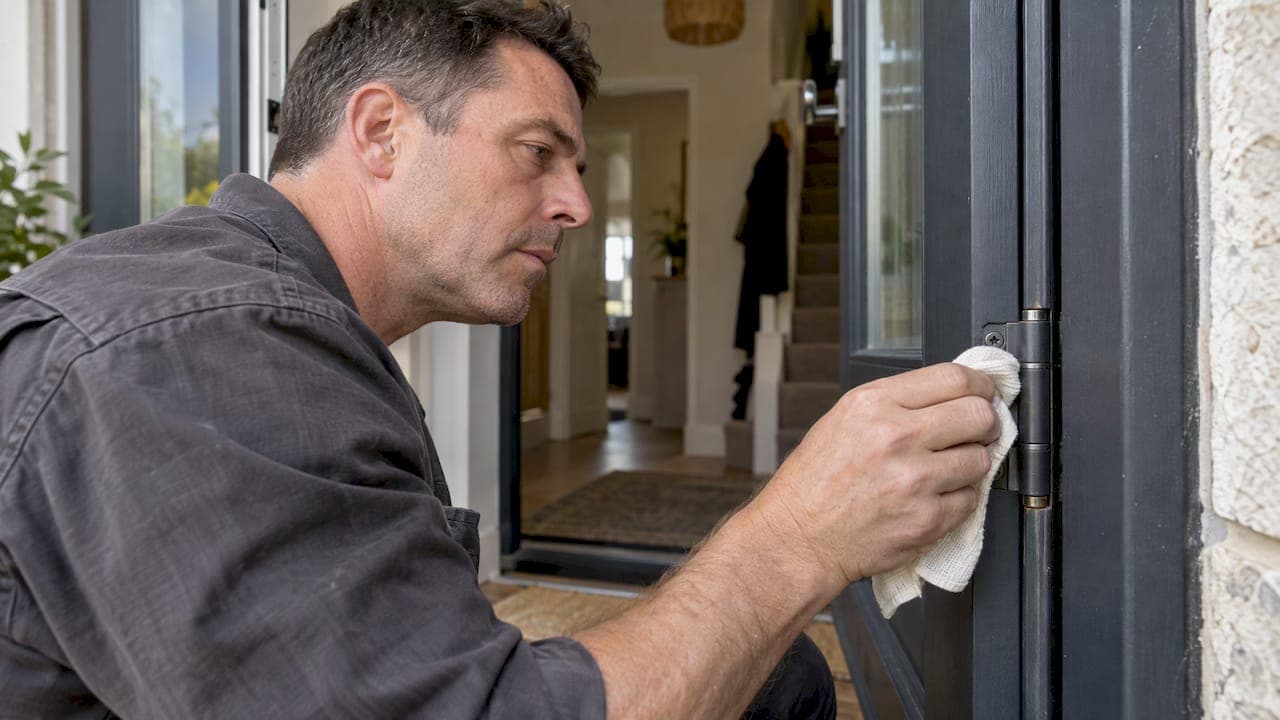
Looking after a sprayed uPVC finish is simple: go gently while it cures, wash it with warm water, a drop of mild detergent and a soft cloth, and keep solvents, abrasives and aerosol lubricants away from it. The same rules cover sprayed kitchen cabinets, with more frequent wiping because of grease. The rest of this guide gives the detail: the first few weeks, a cleaning routine, the products that do damage, and the hardware and drainage jobs that matter more than most owners realise.
TL;DR
- Treat a fresh respray as touch-dry, not cured. Avoid scrubbing, taping, hanging things on it and hard knocks for the first weeks, and follow your sprayer's own advice on timing.
- Clean with warm water, mild detergent and a soft microfibre cloth. Skip bleach, ammonia, acetone, scouring pads and anything labelled solvent-based.
- Wash exteriors every 3 to 6 months. Wipe kitchen surfaces weekly, and the cooker and sink areas as spills happen.
- Never spray WD-40 or similar aerosols on sprayed frames. Use light engineering oil on hinges and locks, applied to the metal only.
- Clear the weep holes twice a year. Blocked drainage causes more window trouble than the paint ever will.
Table of Contents
- Why aftercare matters more on a respray than on new uPVC
- The first days and weeks: dry is not cured
- How to clean sprayed uPVC
- What to keep away from a sprayed finish
- Hinges, locks and weep holes: the upkeep that protects the paint
- Kitchen respray aftercare: cabinets, doors and drawer fronts
- Perspective: what we see after the spray gun goes quiet
- Common problems and what to do
- Looking after your warranty
- When a respray is the right call
- Talk to us about a respray in South Wales
- FAQ
- Sources
Why aftercare matters more on a respray than on new uPVC
New uPVC arrives with colour running right through a factory-made profile. A respray is a coating bonded to the surface. A good one, applied in the right conditions after proper preparation, is tough. But it is a coating, and you look after coatings differently from solid plastic.
Many owners assume uPVC is maintenance-free. Conservation guidance quoted in a Historic England document criticises how heavily the replacement-window trade has marketed that idea. In practice the people who fit and repair frames will tell you the same thing: neglected hinges, locks and drainage slots are what shorten the life of a window, not the colour on it.
That is good news for anyone considering a respray instead of replacement. Keep the basics in order and a sprayed frame can look sharp for years. If you want the longer view on lifespan, we cover it in how long uPVC spray lasts.

The first days and weeks: dry is not cured
A surface that feels dry to the touch is not finished hardening. Paint makers draw this line clearly: Benjamin Moore explains the difference between dry time and cure time and advises waiting until paint has fully cured before cleaning. The advice is written for interior walls and cabinets, but the principle applies to any coating: early on, it is softer than it looks.
Cure times depend on the coating, the temperature and the humidity, so ask whoever sprayed your job for their specific guidance. Until then, a sensible routine looks like this:
- Leave it alone. Do not wash, wipe hard or scrub for the first stretch, even if you spot a speck of dust or a fingerprint.
- No tape on the finish. Masking tape, decorative film and stickers can lift fresh coating when removed.
- Open and close gently. Windows and doors can be used as normal, but do not slam them or let them knock against furniture, blinds or window restrictors.
- Keep things off the surface. Do not hang wreaths, hooks or heavy curtains from sprayed frames or doors. On kitchens, avoid leaning appliances, bins or stacked trays against fresh cabinet edges.
- Keep water gentle. No pressure washing, no steam cleaners, and no scrubbing at rain spots. Rain on an exterior is not a problem; it is the abrasion and heat that cause damage.
- Ventilate the kitchen. Run the extractor and open a window when cooking in the early weeks so steam and grease do not sit on fresh cabinet faces.
If you do see a problem in this period, such as a mark, a chip or a soft patch, photograph it and contact your sprayer rather than trying to fix it yourself. Home touch-ups with the wrong paint tend to show.
How to clean sprayed uPVC
Once the finish has settled, routine cleaning is quick. Frame manufacturers publish near-identical advice. Anglian's operating and cleaning guide recommends plenty of clean, warm soapy water, and Albion's care guide says washing-up liquid, warm water and a soft cloth are all you need, with nothing solvent-based in any glass spray. That advice is for factory frames, but a sprayed coating is, if anything, less forgiving of harsh products.
A simple routine
- Frequency: exterior frames, doors, fascias and gutters every 3 to 6 months. Near the coast, under trees or beside a busy road, lean towards the shorter end.
- Method: brush off loose dirt and cobwebs first. Wash with a soft microfibre cloth or sponge in warm water with a small amount of mild, non-abrasive detergent. Rinse with clean water and dry with a clean cloth if you can.
- Quick wipes: bird droppings, sap and road film are best removed soon, before they bake on. A damp cloth is usually enough.
- Fascias and gutters: a soft brush on a pole and a bucket of soapy water does the job from the ground. If it needs a ladder, think carefully about whether the job is worth the risk, and hire a window cleaner or roofline specialist if it is.
- Glass: clean it separately, and keep the cloth and spray away from the frame edges where possible.
If your frames have already faded or chalked before you have them sprayed, our guide to cleaning faded uPVC frames before repainting walks through the steps.
What to keep away from a sprayed finish
The list of things to avoid is short and consistent across the guidance we checked. According to the Anglian guide, abrasive cleaners, scouring pads and solvent-based products, including bleach, ammonia and acetone, are the main offenders.
| Avoid | Why it causes trouble | Use instead |
|---|---|---|
| Bleach, ammonia, acetone, white spirit | Solvents can soften or dull a coating | Warm water, mild detergent |
| Scouring pads, abrasive creams, wire wool | Scratch and polish through the finish, leaving patchy gloss | Soft microfibre cloth |
| Pressure washers held close | Force can lift edges and drive water into seals | Soft brush and a bucket, or a gentle hose rinse |
| Steam cleaners | Heat and moisture at the edges of the coating | Damp cloth |
| WD-40 and similar aerosols | Practitioners warn solvent-based sprays can attack the finish and even the uPVC itself | Light engineering oil on metal parts, silicone spray where the manufacturer specifies it |
| Stickers, tape, adhesive hooks | Lift the coating when removed | Screw-free alternatives away from the surface |
One small point on pressure washing: manufacturers differ, and a gentle rinse with a garden hose is rarely a problem. A narrow jet at close range is. If in doubt, don't.
Can you use WD-40 on sprayed uPVC windows?
No. This is the most common mistake we hear about. The Anglian guide warns against solvent-based aerosol products around frames. For moving parts, light engineering oil is the usual recommendation, and KJM's maintenance handbook notes that a silicone spray can ease a sticking weatherseal. Apply either to a cloth first and wipe it onto the part, so nothing drips onto the coating.
Hinges, locks and weep holes: the upkeep that protects the paint
This is the part people skip, and it affects how the finish ages.
Lubricate every 6 to 12 months. According to the Axiom Eco Homes maintenance guide, hinges, handles and locking mechanisms should get a little light engineering oil to keep them smooth. A seized mechanism means you force the sash, and forcing a sash means stress on the frame and knocks to the coating at the edges.
Clear the weep holes twice a year. Weep holes are the small drainage slots on the bottom edge of uPVC and aluminium frames. The same guide recommends clearing debris with a soft brush or compressed air, because blocked slots let water pool inside the frame. Spring and autumn are easy dates to remember.

Check the seals and silicone. If you notice gaps, cracking or mould in the sealant around the frame, get it re-sealed. Water getting behind a frame will lift paint from the inside out, whoever sprayed it. The silicone itself matters at the preparation stage too: we explain why in spraying over silicone on uPVC.
Doors need more attention. Front doors take the most knocks: keys, letterbox flaps, shopping bags, door closers. A clear, soft bumper where a handle meets the wall and a gentle hand on the key are cheap ways to protect the paint around the lock.
Floor thresholds take a beating too. Thresholds and door bars that are worn or loose can catch the bottom edge of a door and scuff it. Solid brass door bars and floor trims are one way to give a doorway a tougher, tidier finish where flooring meets the door.
Kitchen respray aftercare: cabinets, doors and drawer fronts
Kitchens get harder wear than windows. Heat, steam, grease, hands and cleaning products all meet the same few surfaces every day. A well-sprayed kitchen copes, but it likes a little discipline.
Daily and weekly habits
- Wipe spills quickly, especially oil, tomato, coffee, turmeric and curry sauces. A damp microfibre cloth does it.
- Weekly wipe-down of door and drawer fronts, particularly around handles and above the hob, where grease collects. If grease builds up, you end up reaching for harsher products, which is what you want to avoid.
- Dry as you go. Do not let water sit on edges, plinths and the base of cabinets next to the sink or dishwasher. A quick pass with a dry cloth is enough.
- Use the extractor whenever you cook, and keep the kettle and steam away from the underside of wall units.
- Mild detergent only. Washing-up liquid diluted in warm water works. No multi-purpose sprays with bleach or degreaser strong enough to smell from across the room.
The cleaning frequency in the Anglian guidance (every 3 to 6 months outside, weekly in high-use kitchen areas) is a good rule of thumb. We have a full walkthrough in how to clean sprayed kitchen cabinets safely.
Things that catch people out
- Heat sources. Keep kettles, toasters and air fryers from blowing steam up at cabinet edges. Heat deflectors by the oven are worth fitting if a door sits close.
- Soft-close and hinge adjustment. If a door catches or a drawer front rubs, adjust the hinge rather than forcing it. Rubbing is the usual way a sprayed edge gets chipped.
- Bumpers. Small clear bumpers on door corners stop knocks and noise.
- New handles. If you change handles later, use the existing holes where you can. Drilling new holes means bare material and chips around the edge.
- Hanging towels on oven doors and drawer fronts rubs the same patch over and over. Use a rail.
Perspective: what we see after the spray gun goes quiet
We spray UPVC and kitchens in South Wales, and nothing else. Because the same people quote, prepare and spray each job, we also tend to hear first when something is wrong, and the pattern is very consistent.
Very few finishes fail because the paint was wrong. When we see a problem, it is almost always something small that went on for a long time: a solvent cleaner used every week, an aerosol sprayed on a stiff lock, a drain slot full of leaves, a kitchen with no extractor running. None of those is dramatic, and all of them are avoidable with five minutes twice a year.
The other thing we would say is that aftercare begins before the spraying. Careful cleaning, keying and masking is what gives a coating its grip, and no amount of good habits can replace it. That is why we explain the process in our eight-point preparation checks and are happy to talk through them before you book anything.
If you remember one thing: warm water, a soft cloth and patience. It is dull advice, and it works.
— Mitchell
Common problems and what to do
| What you notice | Likely cause | What to do |
|---|---|---|
| Dull or patchy shine in one spot | Abrasive cleaning or repeated rubbing | Stop scrubbing, use a soft cloth only, and ask your sprayer about re-coating that panel |
| Small chip at a door edge or hinge | Knock or catch during use | Photograph it, keep it dry and clean, and contact your sprayer rather than dabbing with household paint |
| Streaks running from the bottom of a frame | Blocked weep holes or leaking sealant | Clear the weep holes, check the silicone, then rewash |
| Tacky or soft feel soon after spraying | Still curing, or harsh cleaner used | Stop cleaning, leave it, and call your sprayer if it persists |
| Green or black film on north-facing frames | Algae or mould in damp spots | Wash gently with soapy water and a soft brush, and repeat more often |
| Sticky hinge or lock | Dry or dirty mechanism | Clean it, then apply a small amount of light engineering oil to the metal |
Looking after your warranty
A written warranty is only useful if you can show you have looked after the work. Keep your paperwork somewhere you will find it, note the colour code and finish, and photograph the job when it is finished. If you ever sell, a transferable warranty and a record of the finish are useful things to hand to a buyer.
Our own work comes with a written five-year transferable warranty, and we only take payment on completion after you have walked round the job with us. Read the terms on any warranty you are given, whoever the sprayer is, and ask what it expects from you in terms of care.
When a respray is the right call
Aftercare is easy to live with, and it pays off best when the work was needed in the first place. A respray makes sense where frames or kitchen doors are sound but tired, faded, stained or just the wrong colour. It is not a fix for failed seals, blown double glazing or broken hinges. Those need repair first.
If you are comparing options, can you spray uPVC is the right place to start, and our note on interior versus exterior spraying explains why the two are treated differently.
Talk to us about a respray in South Wales
We hand-spray uPVC windows, doors, conservatories, fascias and garage doors, plus kitchen cabinets, drawer fronts, end panels, islands and handleless conversions, across South Wales including Cardiff and Swansea. Published price ranges are £80 to £2,200 for window spraying, £250 to £650 for door spraying and £350 to £850 for fascia and gutter spraying. Kitchens are quoted per project: see kitchen respraying or kitchen cupboard spraying. Whatever you choose, you get aftercare advice written for your finish.
FAQ
How long does uPVC spraying last?
It depends on the coating, the preparation, the exposure and how the surface is looked after. Regular gentle cleaning and keeping hinges and drainage in order help the finish last. We go into more detail in our durability guide.
Can you use WD-40 on uPVC windows?
Not on sprayed frames. Solvent-based aerosols can soften or damage the coating, so use light engineering oil on the hinges and locks, applied to a cloth first, or a silicone spray where the frame manufacturer specifies one.
When can I clean a freshly sprayed kitchen or window?
Touch-dry is not the same as cured, so leave scrubbing and heavy cleaning until your sprayer says the finish has hardened. Until then, only wipe off a spill gently with a soft, damp cloth.
Can I pressure wash sprayed uPVC?
It is best avoided. A close, narrow jet can lift coating edges and push water behind seals. A soft brush, soapy water and a gentle hose rinse clean exteriors perfectly well.
Sources
- Operating, cleaning and maintenance guide, Anglian
- Window Maintenance UK 2026 Guide, Axiom Eco Homes
- uPVC Windows & Doors Maintenance Guide, KJM Group
- uPVC window, door and conservatory care guide, Albion Windows
- How to Clean and Maintain Freshly Painted Walls and Cabinets, Benjamin Moore
- Traditional Windows, Historic England (via Saltash Town Council)