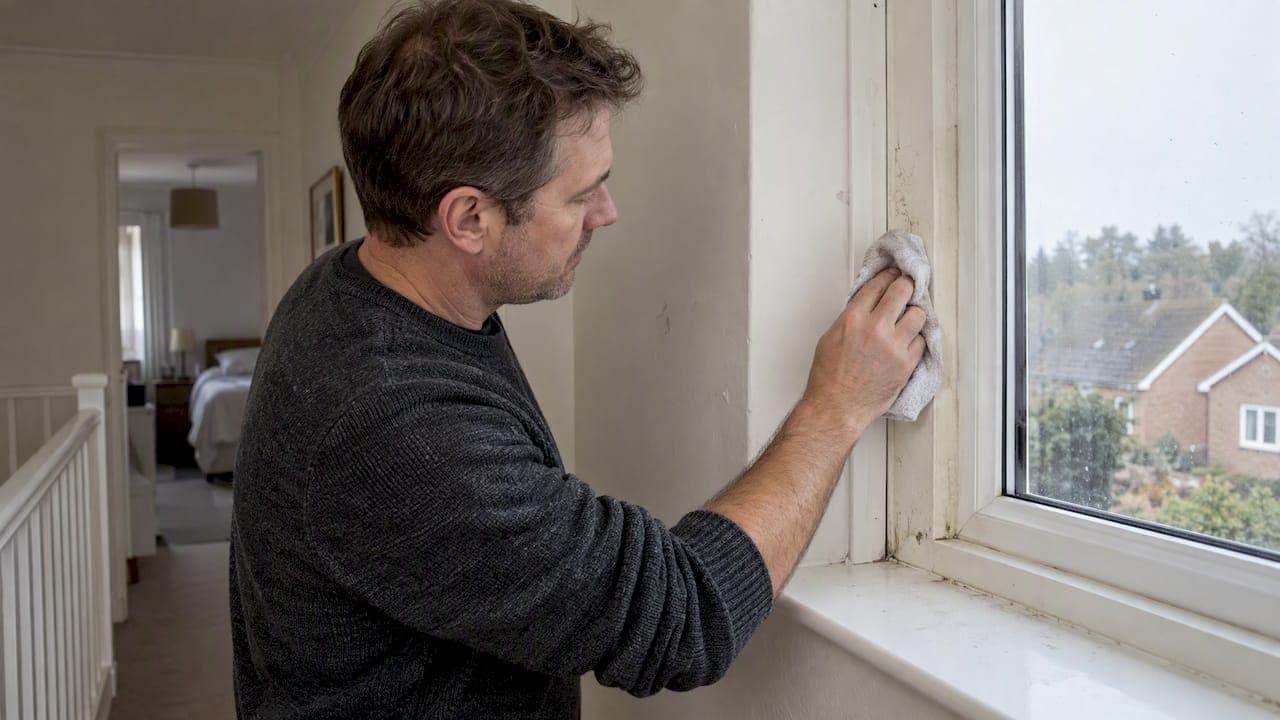
Start by cleaning. Most faded looking uPVC frames are suffering from dirt or deposits sitting on the surface, not permanent damage. If a careful clean does not bring back the white, the plastic itself has aged and you will need to repaint or arrange a professional respray to restore an even finish.
TL;DR:
- Compare a sheltered patch with an exposed area: a whiter sheltered spot suggests UV ageing, while gritty residue usually points to surface dirt.
- Start with warm water and mild dish soap using a soft cloth; avoid bleach, solvents, and abrasive pads, which can scratch or chemically dull uPVC.
- DIY painting requires thorough cleaning, degreasing, light abrasion, a plastic compatible primer, and two to three thin coats, each fully cured before use.
- A professional hand sprayed respray offers a more even finish; ask about coating materials, written warranty terms, and insurance before hiring.
- If frames are warped or seals fail, replacement may be necessary; UK replacement windows and doors must meet Building Regulations and usually require certification.
Table of Contents
- What causes uPVC frames to fade, yellow or look dull
- Safe cleaning steps that often restore faded appearance
- Can you paint uPVC frames, or is a professional respray better?
- Step-by-step DIY painting and preparation checklist
- When to call a professional resprayer and what to expect
- Ongoing maintenance to keep frames looking their best
- A practical take on restoring faded frames
- Refinishing Studio: a durable alternative to DIY or replacement
- FAQ
- Sources
What causes uPVC frames to fade, yellow or look dull
Sunlight is the main culprit. UV exposure breaks down the polymer and pigments inside the plastic over time, and that kind of change does not wash off because it has happened within the material rather than on top of it. Surface soiling behaves differently: dirt, algae and soot sit on the outside and usually lift away with cleaning.
Harsh chemicals and abrasive scrubbing cause a third type of damage that can look a lot like fading but is really scratching or chemical dulling.
A simple test tells you which problem you have:
- Compare a sheltered patch (behind a hinge or under a sill) with an exposed area; a sheltered patch that stays whiter points to weathering rather than dirt.
- Run a finger over the surface; a gritty or sticky residue usually means soiling rather than ageing.
- Check whether the dullness is even or patchy; even dulling across the whole frame suggests UV ageing, while patchy marks are often deposits.
Safe cleaning steps that often restore faded appearance
Most cosmetic discolouration responds to a careful, low-risk cleaning routine. Work through these steps in order and stop as soon as the frame looks right:
- Wash with warm water and a mild washing-up liquid, using a soft cloth or sponge, then rinse thoroughly and dry with a clean towel.
- If grime remains, use a plastic-safe, non-abrasive cleaner such as HG all plastic cleaner, testing it on an inconspicuous patch first.
- For stubborn marks, try a dilute vinegar solution, then a baking soda paste, then a squeeze of lemon juice, moving from mildest to strongest and rinsing between each.
- Use a soft brush to work cleaner into grooves and corners, then rinse and dry again.
Avoid bleach, methylated spirits, solvents, cream abrasives, scouring pads and steel wool. These can scratch or chemically dull the surface and leave damage that is harder to fix than the original fading, a point manufacturer guidance consistently makes.
Pro Tip: Always test any cleaner on a small hidden area first and wait a few minutes to check for a reaction before treating the whole frame.

Can you paint uPVC frames, or is a professional respray better?
Yes, you can paint uPVC, but the surface needs the right preparation and the right products. Plain household paint will not adhere properly and tends to peel within months.
A DIY paint job can work well if you:
- Use a primer formulated for plastic or uPVC, followed by a specialist uPVC paint or a flexible exterior-grade paint.
- Accept that durability depends heavily on how thoroughly you clean, degrease and abrade the surface beforehand.
- Expect to redo small touch-ups over time, since hand-applied coats are more prone to uneven wear than sprayed finishes.
A professional hand-spray respray typically produces a more even, factory-style finish because the coating is applied under controlled conditions with commercial-grade products, which is why it is often the recommended route when you want a long-lasting, uniform result rather than a patchwork of touch-ups.
If fading has gone hand in hand with other problems, such as warped frames or failing seals, full replacement might be on the table instead of cosmetic work, especially since there are important tests for UK conservatory roof building regs to consider when replacing parts. That changes the scope of the job considerably: replacement windows and doors in the UK must meet Building Regulations and usually need certification through a competent-person scheme such as FENSA or Certass, requirements that simple cleaning or respraying does not trigger.
Step-by-step DIY painting and preparation checklist
Patchy, peeling paint on uPVC almost always comes down to skipped preparation. Follow this order to avoid the common pitfalls:
- Clean and degrease the frame thoroughly, using the cleaning steps above, and let it dry completely.
- Lightly scuff the surface with a fine abrasive pad to help the primer key in, then wipe away all dust and residue.
- Mask off glass, seals, hardware and any trim you want to keep paint-free.
- Apply a plastic-compatible primer and let it cure for the time stated on the tin before moving on.
- Apply two to three thin, even coats of a uPVC-specific or flexible exterior paint, allowing each coat to dry fully.
- Leave the finished frame to cure fully before opening the window or exposing it to rain.
Rushing the cure time is the most common mistake, since a sash closed too soon can stick and peel the fresh paint straight off.
Pro Tip: Paint on a mild, dry day; cold or damp conditions slow curing and weaken adhesion.
When to call a professional resprayer and what to expect
A respray starts to make sense once cleaning and DIY painting have been tried, or when you simply want a durable, even finish without the uncertainty of a home paint job. Weighing up replacement versus restoration often comes down to exactly this trade-off between cost and finish quality.
A proper professional respray generally includes:
- An on-site assessment of the frames and surrounding surfaces before any work starts.
- Full cleaning, degreasing and light abrasion to prepare the surface.
- Hand-spray application of a durable coating in a chosen colour.
- Protection of glass, brickwork and landscaping during the job, followed by curing time.
- A written warranty covering the finish.
Our respray work is applied by hand using a sprayed finish and backed by a warranty. Whoever you choose, ask about the materials used, the exact warranty terms, and whether the business carries insurance for work on your property.
Ongoing maintenance to keep frames looking their best
A quick wipe with warm soapy water every few weeks keeps dirt from building into the kind of grime that needs stronger cleaners. Rinsing off road salt, pollen and general airborne grime before it sits for months makes the biggest difference.
- Apply a protective product such as HG vinyl protector after cleaning to help resist re-soiling and keep colour looking fresher for longer.
- Keep abrasive pads, bleach and solvents away from frames permanently, not just during a big clean.
- Treat any dullness that will not lift with gentle cleaning as a sign of ageing rather than dirt, and plan for paint or a respray rather than repeating harsher cleans.
Pro Tip: Give frames a light rinse after storms or high pollen days; it takes two minutes and prevents deposits from setting in.
A practical take on restoring faded frames
Clean first, every time. It is the cheapest option and it solves most cases, so there is no reason to reach for paint or a respray before testing a gentle wash. When a sheltered patch test shows the colour is genuinely gone rather than hidden under grime, a careful DIY paint job or a professional respray are the two realistic paths, and the right one depends on how much durability and evenness matter to you.
— Mitchell
Refinishing Studio: a durable alternative to DIY or replacement
When cleaning and painting have reached their limits, we offer hand-spray respraying for uPVC windows, doors and fascias that restores an even, factory-style finish without the cost or disruption of full replacement. Every job is prepared, sprayed and finished by the same team, with a written five-year warranty and no subcontractors involved.

- UPVC window spraying covers individual frames with prices varying widely depending on the scope of the job.
- UPVC door spraying is offered for a uniform finish that matches your windows, with prices depending on the specifics of the job.
- Larger jobs, including fascia and gutter spraying, are quoted with price ranges that depend on the property.
Get in touch through our UPVC window spraying page to arrange a site visit and a written quote.
FAQ
How to whiten an uPVC window frame?
Wash the frame with warm water and mild washing-up liquid using a soft cloth, then rinse and dry thoroughly. If staining remains, a plastic-safe cleaner such as HG all plastic cleaner tackles tougher deposits, though deep yellowing from ageing will not fully reverse with cleaning alone.
Does black uPVC fade over time?
Yes, dark colours including black can fade or turn patchy with prolonged UV exposure, since the pigments break down in the same way lighter colours do. A sheltered patch that stays darker than the exposed frame is a quick way to confirm whether ageing is the cause.
My uPVC window frame is peeling. What can I do to fix it?
Peeling usually means a previous paint job was applied without the right primer or proper surface preparation. Strip any loose paint, clean and lightly abrade the frame, then repaint with a plastic-compatible primer and a uPVC-specific topcoat, or arrange a professional respray for a longer-lasting fix.
How do you paint internal uPVC window frames?
Clean and degrease the frame, then lightly scuff the surface so primer can key in properly. Mask off glass and hardware, apply a plastic-compatible primer, and finish with two to three thin coats of an interior-grade paint suited to plastic, letting each coat cure fully before use.
Sources
- How do I get my uPVC window frames white again? - HG
- How titanium dioxide protects outdoor plastics
- Replacement windows and doors - Building Control Partnership