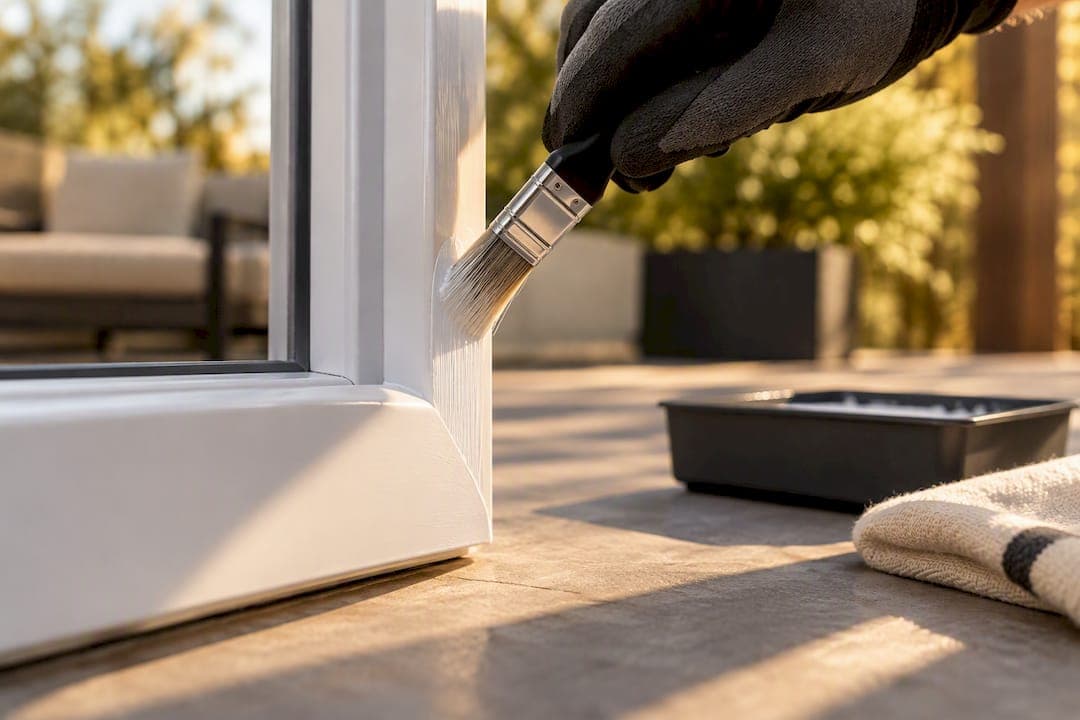
Yes, paint will stick to uPVC, but only if you prepare the surface properly and use a plastic-bonding primer or a specialist uPVC paint system. Standard household paints usually fail within a season because they cannot grip the smooth factory finish. If you want a result that lasts without redoing the job, a professional respray is worth considering alongside the DIY route.
TL;DR:
- Proper surface preparation, including cleaning, light abrasion, and priming with a plastic-bonding primer, is essential for paint to adhere and last on uPVC.
- Self-priming uPVC paints like Pentura can simplify application but generally do not last as long as a dedicated primer and topcoat system in exposed environments.
- Spray application provides the smoothest finish and best durability, especially for large areas, while brushes and rollers are suitable for small repairs and trims with careful, thin coats.
- Even with correct preparation and products, painted uPVC typically requires more maintenance and may fail within a few years if exposed to harsh weather or contaminants left beneath the paint.
- Professional resprays are recommended for large, weathered, or heavily textured frames, offering longer-lasting results backed by warranties compared to DIY paint jobs.
Table of Contents
- Can you paint uPVC and get a finish that lasts?
- Preparing uPVC so paint will stick: a step-by-step checklist
- Which primers and paints will actually stick to uPVC?
- Spray, brush or roller: which application method works best?
- How long does painted uPVC actually last?
- When does a professional uPVC respray make more sense than DIY?
- DIY or professional respray: how to decide
- How Refinishing Studio can help you get a lasting finish
- Sources
- FAQ
Can you paint uPVC and get a finish that lasts?
Technically, yes, you can paint uPVC. The problem is that its factory finish is designed to be smooth and non-porous, which is exactly what makes paint hard to bond to. Standard household paints will usually fail without proper preparation and a plastic primer, according to Harris Brushes.
Painting works best as a cosmetic refresh rather than a permanent fix, particularly on older frames that are structurally sound but faded or discoloured. It suits homeowners who want to change colour without full replacement, but it carries real risks.
- Peeling or flaking if adhesion fails at any stage of the process.
- Irreversible changes to the factory finish once you sand and prime it.
- Earlier and more frequent maintenance than an untouched uPVC surface would need.
Preparing uPVC so paint will stick: a step-by-step checklist
Preparation decides whether the paint bonds or lifts within months. Trade advice consistently points to the same sequence: clean, key, repair, then prime.
- Wash the surface with a specialist plastic cleaner or isopropyl alcohol to strip grease, traffic film and general grime.
- Wipe down with a solvent to remove silicone residue and hand oils, since ordinary soap and water often leave a thin film behind that blocks adhesion.
- Lightly abrade the surface with a fine 220 to 320 grit abrasive to create a key, working evenly so you avoid visible scratch marks.
- Repair any chips, cracks or damaged edges and feather them smooth so the repaired area does not show through the new coat.
- Check the surface is fully dry and at a suitable temperature before you mask glass, seals, handles and hinges to protect them from primer and paint.
Manufacturer guidance from Tikkurila follows this same pattern: clean, feather, degrease, then prime with an adhesion primer before applying the topcoat.
Pro Tip: Run your fingers over the abraded surface before priming. If it still feels glassy in patches, go over it again: those smooth spots are where paint will lift first.

Which primers and paints will actually stick to uPVC?
Not every paint that claims to work on plastic will hold up outdoors. The distinction that matters is between plastic-bonding primers, self-priming uPVC paints, and general-purpose exterior paints.
A plastic-bonding primer creates a chemical and mechanical key that ordinary paint cannot achieve on its own, which is why skipping it is the single biggest cause of peeling, as explained in these Contractors' primer rules homeowners need for pool enclosures. Self-priming uPVC paints are more convenient, since they combine primer and topcoat in one product, but their exposure ratings vary and are worth checking against the technical data sheet before you commit.
- Zinsser Bullseye 1-2-3 is widely used as an adhesion primer ahead of a trade-grade topcoat.
- The Tikkurila Otex adhesion primer paired with Panssari Akva is a recognised primer-and-topcoat system for uPVC.
- Pentura uPVC paint is marketed as a self-priming option suitable for direct application.
Some self-priming uPVC paints, including Pentura's, are formulated for direct adhesion without a separate primer, though Pentura's own guidance notes that trade experts still favour a primer plus topcoat system for the longest-lasting results in exposed locations. All-in-one products save a step, but a dedicated primer followed by a professional-grade topcoat generally gives more durability where the frame takes direct weather.
Spray, brush or roller: which application method works best?
Spraying gives the smoothest, most consistent finish on uPVC and is the method professionals default to for large, flat areas such as whole window runs or door panels. It avoids brush marks and gives even control over film thickness, which Homes & Gardens notes has a direct effect on how long the coating lasts.
Brush and roller work still has a place for trims, small repairs and touch-ups, provided you apply thin, even coats rather than one heavy layer that risks sagging or trapping solvent underneath.
- Follow the recoat times on the product's data sheet rather than guessing by touch.
- Avoid painting in high humidity, strong wind or direct sun, since all three affect how the coating cures.
- Mask glass, seals and hardware carefully to control overspray and keep edges crisp.
How long does painted uPVC actually last?
Lifespan depends heavily on the product system used, how well the surface was prepared, and how exposed the frame is to sun, rain and temperature swings. A well-prepped frame with a proper primer and trade topcoat will outlast a rushed job with a bargain all-in-one paint by a wide margin, though exact figures vary by brand and site.
- Contamination left under the paint, such as silicone or hand oils, is one of the most common causes of early failure.
- Thermal expansion and contraction in uPVC can stress a coating that was applied too thickly or without enough flexibility.
- Regular cleaning with mild, non-abrasive products and periodic inspection of seals help a painted finish last longer.
- A small flaking patch usually calls for a spot repair, while widespread lifting across a frame means a full recoat is the more sensible option.
When does a professional uPVC respray make more sense than DIY?
Professional resprayers tackle the same adhesion problem as a DIYer, but with tighter control at every stage. Invisible contaminants, hand oils and silicone residues in particular, are a common cause of premature failure, and professionals rely on solvent-based cleaning to strip them completely before priming, according to Ken Rhodes. Hand-spray technique also gives much tighter control over film thickness than a brush or roller.
- Specialised focus on uPVC and kitchen surfaces means each job follows a consistent preparation routine.
- Hand-spray application delivers a finish across a wide choice of RAL, BS and custom colours.
- Foiled frames and heavily weathered surfaces, which are harder to get consistent results on, benefit from professional-grade equipment and controlled conditions.
- The work is backed by a five-year transferable warranty and a track record of many completed projects, positioning it as a documented alternative to DIY for homeowners who want a guaranteed result.
A professional respray tends to make more sense when you are changing colour significantly, working on frames that are heavily weathered or foiled, or painting a large exterior area exposed to the elements year-round.
DIY or professional respray: how to decide
My rule of thumb is simple: small, sheltered frames such as a single interior window are reasonable DIY projects. Large colour changes, foiled finishes or frames that take the brunt of the weather are where DIY paint jobs most often fail early. Factor in the time, tools and real risk of redoing the work if the prep gets rushed, then use the checklist above to decide your next step.
— Mitchell
How Refinishing Studio can help you get a lasting finish
If the prep list above feels like more time and risk than you want to take on, Refinishing Studio offers a hand-sprayed alternative built specifically for uPVC and kitchen surfaces across South Wales. Every job is quoted, prepped and sprayed by the same team, with no subcontractors, and backed by a five-year transferable warranty.

- UPVC window spraying covers full window frames with a factory-standard hand-sprayed finish.
- UPVC door spraying suits front and back doors that need a colour change without replacement.
- Fascia and gutter spraying extends the same finish to the rest of the exterior, with cost details on the South Wales pricing page.
You can also check typical durability and process detail on how uPVC spraying holds up over time before requesting a quote through Refinishing Studio's uPVC spraying page.
Sources
For product specifics, check the Tikkurila uPVC guidance, Pentura's uPVC paint advice and manufacturer technical data sheets referencing BS 6150:2006+A1:2014 before buying materials, alongside a practical preparation checklist.
- The easy way for painting uPVC doors, windows and more | Harris Brushes
- How do I paint UPVC? | Tikkurila UK
- Can you paint uPVC windows? — Homes & Gardens
- What paint to use on uPVC | Pentura Paints
- Can you paint uPVC windows? — Ken Rhodes
FAQ
What paint will stick to uPVC?
Paint formulated for plastics, used with a plastic-bonding primer such as Zinsser Bullseye 1-2-3, sticks reliably to uPVC. Systems like Tikkurila Otex with Panssari Akva, or self-priming options such as Pentura uPVC paint, are designed specifically for this surface.
What are the downsides of painting uPVC?
The main downsides are peeling if the prep or product choice is wrong, and permanently altering the factory finish once you sand and prime it. It also tends to need more frequent maintenance than an untouched uPVC surface, and contamination left under the paint is one of the most common causes of early failure, according to Ken Rhodes.
What paint will stick to PVC plastic?
The same principle applies as for uPVC: a plastic-bonding primer followed by a paint rated for plastic substrates, or a self-priming plastic paint designed for direct application. Always check the product's technical data sheet for the specific plastic type before applying.
What should you avoid using on uPVC?
Avoid standard household emulsion or gloss paint with no plastic-bonding primer, since it typically fails to grip the smooth factory surface and will usually fail within a season, per Harris Brushes. Also avoid heavy abrasive cleaners on the finished coating and skipping the degreasing step, since silicone and oil residue left behind are common causes of paint lifting.