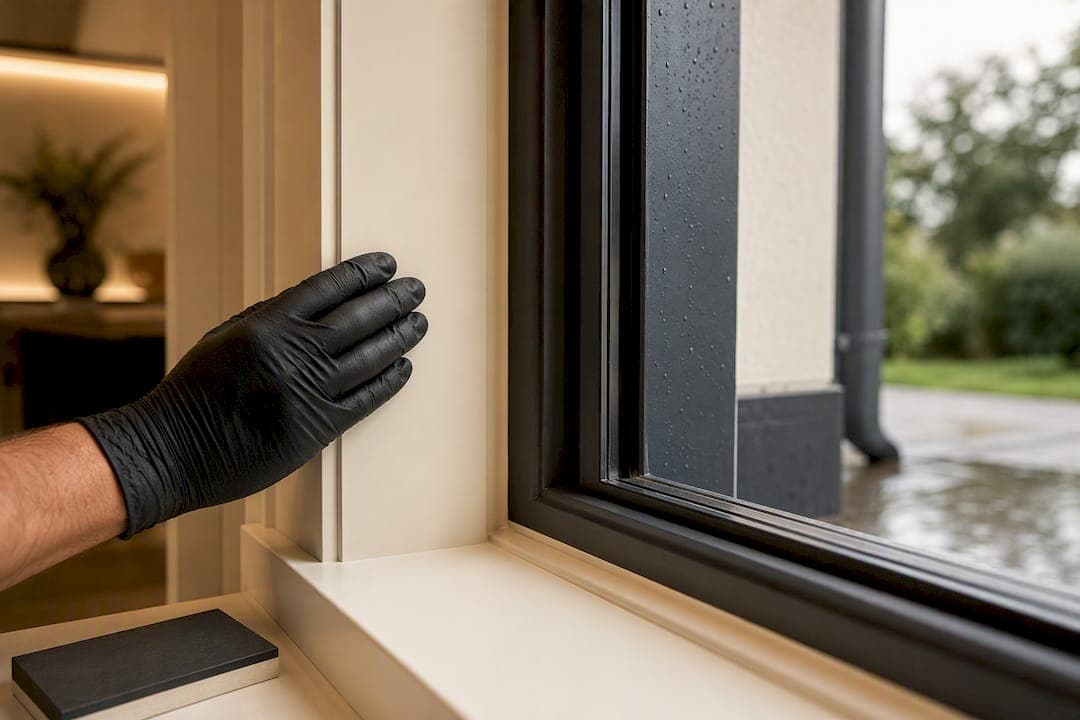
Yes, spraying UPVC indoors is entirely feasible, and in some ways it's simpler than exterior work. The real difference is exposure: interior surfaces never face UV, rain or thermal cycling, so the coating can be lighter, while exterior work needs a tougher system and proper preparation to earn its keep. Small interior jobs suit a confident DIYer; full exterior resprays are where a professional pays for themselves.
TL;DR:
- Interior UPVC spraying is simpler and less demanding than exterior work because it avoids UV exposure and weather risks but requires careful masking to prevent overspray damage.
- Exterior UPVC spraying demands a 2K polyurethane coating for UV and weather resistance, plus intensive masking, scaffolding, and scheduling around weather conditions for best results.
- Cost differences are significant, with professional exterior resprays costing between £1,800 and £3,000 and lasting 10 to 15 years, compared to under £50 for DIY indoor touch-ups that often fail within two years.
- Proper surface preparation, including cleaning and abrading, is crucial for durability, with exterior surfaces needing heavier keying and masking than interior surfaces.
- DIY sprayers should avoid full exterior projects without professional guidance, as incorrect prep, weather, and equipment choices can cause lasting failures.
Table of Contents
- Inside vs outside spraying UPVC: the trade-offs that matter
- Preparation checklist: what changes between a room and a façade
- Which coatings and spray methods suit each job
- What it actually costs and how long each option lasts
- Safety, ventilation and the weather windows nobody warns you about
- When DIY stops being the sensible option
- The honest verdict on interior versus exterior spraying
- Get a professional UPVC respray quote from Refinishing Studio
- Sources
- FAQ
Inside vs outside spraying UPVC: the trade-offs that matter
The interior side of the house is forgiving in ways the exterior never will be. Spray a window reveal or an internal door and you're not fighting UV degradation, driving rain, or the constant expansion and contraction that comes with a UK summer-to-winter swing. Colour matching indoors is also easier because you're working under consistent light, not chasing how a shade looks at midday versus dusk.
What indoor work punishes instead is carelessness with overspray. A living room with fabric sofas, carpets and skirting boards gives you almost no margin for drift, and ventilation becomes the limiting factor rather than the weather forecast.
Exterior spraying flips the risk profile entirely:
- It needs a 2K polyurethane coating to survive UV, frost and thermal movement without cracking.
- Masking is harder: brickwork, guttering, and glass all need protecting, often from a ladder or scaffold tower.
- Scheduling depends on dry, mild weather windows rather than your own diary.
- South-facing elevations take the most punishment and fail fastest without proper prep, according to trade analysis from Spray Genius.
As a rule of thumb: window reveals, internal doors and conservatory roof linings are good interior candidates. Whole-house exteriors, front doors facing the street, and anything south-facing are where professional-grade 2K coatings and proper access equipment stop being optional.
Pro Tip: If you're only refreshing a room's window reveals, do one reveal first and live with it for a few days before committing to the whole house. Paint that looks perfect under spray lights can read differently once daylight hits it.
Preparation checklist: what changes between a room and a façade
Preparation is where most DIY jobs go wrong, and it's also where the interior and exterior routes diverge most sharply.
- Clean and degrease first. UPVC holds silicone residue and household grease that stops paint keying properly; a dedicated UPVC cleaner or sugar-soap solution works for both settings, but exterior frames usually carry years of ingrained grime that need a second pass.
- Abrade the surface. A light scuff with a fine abrasive pad is usually enough on newer UPVC. Older, chalking or heavily weathered exterior frames need a heavier key to give the coating something to grip.
- Mask with intent. Indoors, reveals need careful hand-guarding so overspray doesn't drift onto walls, ceilings or the opposite side of the room. Trade guidance from Spraylux notes that professional sprayers often reduce fan settings and isolate rooms entirely for larger interior tasks.
- Assess access before you start. Ground-floor exterior frames are manageable with ladders; anything above first-floor height starts to need scaffolding or a tower, which is where the cost and complexity of exterior jobs jumps.
A homeowner's guide to respraying UPVC covers this preparation stage in more depth if you're planning a first attempt yourself.
Which coatings and spray methods suit each job
The coating you choose matters more than almost anything else you decide on this project. 2K polyurethane is the professional standard for exteriors because it chemically cross-links as it cures, giving it flexibility and UV resistance that ordinary paint can't match, which is exactly why trade sprayers won't put anything else on a south-facing frame, per Spray Genius.
1K aerosol and multi-surface sprays are a different tool for a different job. Products like Pentura's interior UPVC aerosols are formulated specifically for indoor use, come in RAL and British Standard colours, and dry quickly in a 400ml format that suits a window reveal or a single door, according to Pentura. They're not a substitute for 2K on an exterior wall.
Equipment choices follow the same logic:
- Aerosols suit small, contained interior touch-ups with minimal setup.
- HVLP spray guns give a finer, more even finish and are what most trade sprayers use.
- Airless systems cover large exterior areas fast but need more skill to avoid overspray.
Ventilation matters more indoors than most homeowners expect. Solvent-based products release fumes that build up quickly in an enclosed room, so open windows aren't optional, and water-based alternatives exist for anyone who wants to avoid solvent smell altogether.
What it actually costs and how long each option lasts
Cost and lifespan are where the two approaches genuinely diverge. A full professional exterior respray typically runs between £1,800 and £3,000, covering masking, degreasing, abrasion and multiple coats of 2K paint, according to Checkatrade's cost guide. That price reflects labour-intensive prep as much as the paint itself.
DIY interior work costs a fraction of that. A window reveal or single door needs little more than an aerosol, a UPVC cleaner and some masking tape, often for well under £50.
Lifespan tells the real story, though:
- Professional 2K exterior systems typically last 10 to 15 years.
- DIY single-pack paints and brush-on products commonly fail within a year or two once UV and weathering get to work, per Checkatrade.
Divide cost by expected lifespan and the professional route often works out cheaper per year, even with the higher upfront price. A more detailed breakdown of how long UPVC spraying lasts is worth reading before you decide which route to take.
Safety, ventilation and the weather windows nobody warns you about
Indoor spraying demands more caution around ventilation and odour than most people expect. Solvent fumes build up fast in a closed room, so plan to vacate the space for a few hours and wear a proper respirator, not a dust mask.
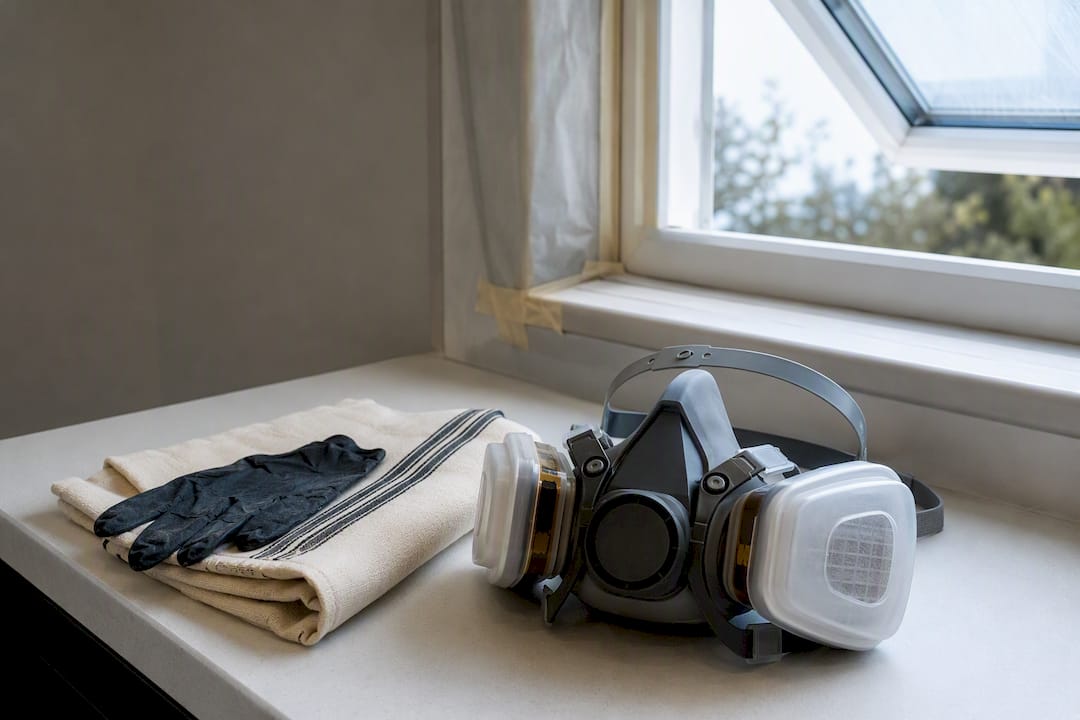
Overspray management indoors means moving furniture out entirely where possible, using hand guards around reveals, and covering anything you can't move. Manufacturer guidance suggests paint is touch-dry within about an hour but can take several days to fully cure, according to Fresh Look Exteriors, so keep windows shut and avoid handling frames until then.
Exterior work answers to the weather, not your calendar. Damp, cold or high-wind days ruin adhesion and finish quality, which is why professional jobs get scheduled around dry spells rather than fixed dates.
Pro Tip: Always test on a small, hidden section first, whether indoors or out. It reveals adhesion problems and true colour before you've committed a whole frame.
If you want general painting fundamentals for a small interior project, these decorating tips cover masking and brush technique that translate reasonably well to spray work.
When DIY stops being the sensible option
Written articles on UPVC and kitchen refinishing by Mitchell draw on years of watching where DIY resprays go wrong and where professional prep genuinely earns its cost. The company specialises in UPVC and kitchen surface respraying using a hand-spray technique, backed by a warranty and numerous completed projects.
That specialism matters most on exteriors, where access, masking and coating choice all need to be right first time. A professional survey usually takes stock of your frames, discusses colour and finish, and gives you a realistic quote before any spraying starts, so you know what you're paying for before committing.
The honest verdict on interior versus exterior spraying
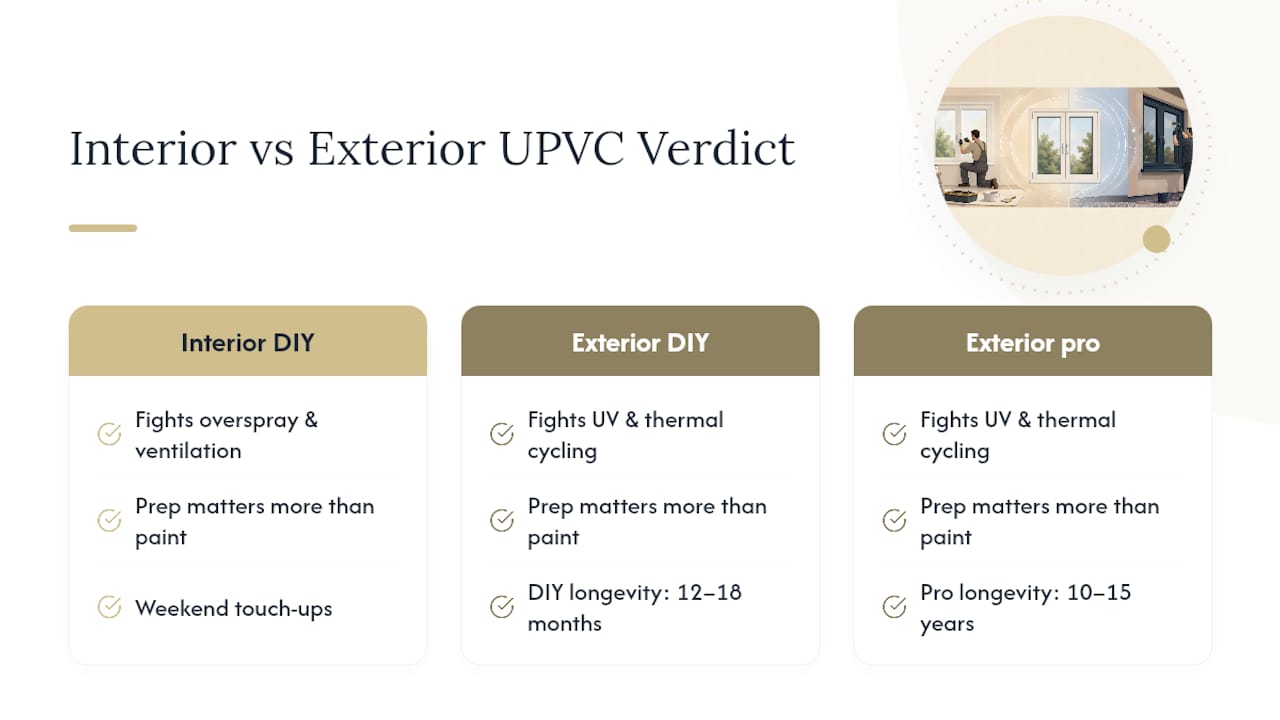
Most guides treat UPVC spraying as one job with one answer, and that's the wrong frame entirely. Interior and exterior work are governed by different physics: one fights overspray and ventilation, the other fights UV and thermal cycling. Pretending the same aerosol tin solves both problems is how so many DIY exterior jobs end up chalking within a couple of years.
What gets underrated is preparation time, not paint choice. Homeowners fixate on which coating to buy when the bigger variable is whether the surface was properly degreased and abraded first. A mediocre 2K coating applied over a well-prepared frame will usually outlast a premium product sprayed onto grease and silicone residue.
My advice: treat interior touch-ups as a legitimate weekend project, but treat a full exterior respray as a specialist job. The maths on longevity alone, ten to fifteen years against twelve to eighteen months for DIY exterior paint, makes that distinction worth taking seriously before you pick up a spray gun.
— Mitchell
Get a professional UPVC respray quote from Refinishing Studio
If your exterior frames are chalking, faded or simply the wrong colour for a refreshed house, replacement isn't the only fix. A hand-spray technique applies factory-standard 2K finishes directly onto existing UPVC windows, doors, fascias and conservatories, backed by a transferable warranty, at a fraction of what full replacement costs.

For a fast, accurate quote, have a few things ready: a rough list of what needs spraying (windows, doors, fascias, garage doors), some photos of current condition, and your preferred colour or finish, whether that's a RAL shade, a British Standard match, or something custom. The UPVC spraying service page covers the full range of surfaces covered and what a survey involves. If you'd rather see finished results first, browse the main site for completed projects across South Wales, then get in touch to book a survey and quote.
Sources
For deeper detail on any of the points above, these are worth a read: the Checkatrade cost guide for realistic UK pricing, Spray Genius for why 2K beats DIY paint long-term, and Pentura's product page for interior aerosol options.
FAQ
Is it worth spraying UPVC windows rather than replacing them?
Yes, for most homeowners. A professional respray costs a fraction of full replacement and, using 2K polyurethane, lasts 10 to 15 years, which makes it worth it unless the frames themselves are structurally failing.
How long does UPVC spraying actually last?
Professional 2K polyurethane systems typically last 10 to 15 years, while DIY single-pack paints or aerosols commonly fail within 12 to 18 months due to UV and weathering, according to Checkatrade.
How much does it cost to have UPVC windows resprayed?
A full-service professional exterior respray typically costs between £1,800 and £3,000, covering masking, cleaning, abrasion and multiple coats of specialist paint, per Checkatrade. DIY interior touch-ups with aerosols can cost under £50.
Do window fitters or sprayers work from the inside or outside?
It depends on the job. Fitting and full exterior resprays are usually done from outside for access to the whole frame, while reveals, sills and internal doors are sprayed from inside the room, with careful masking to control overspray.
Can I spray UPVC myself indoors?
Small interior jobs, such as a single door or window reveal, are realistic for a careful DIYer using a 1K aerosol product designed for indoor use, provided ventilation and masking are handled properly.