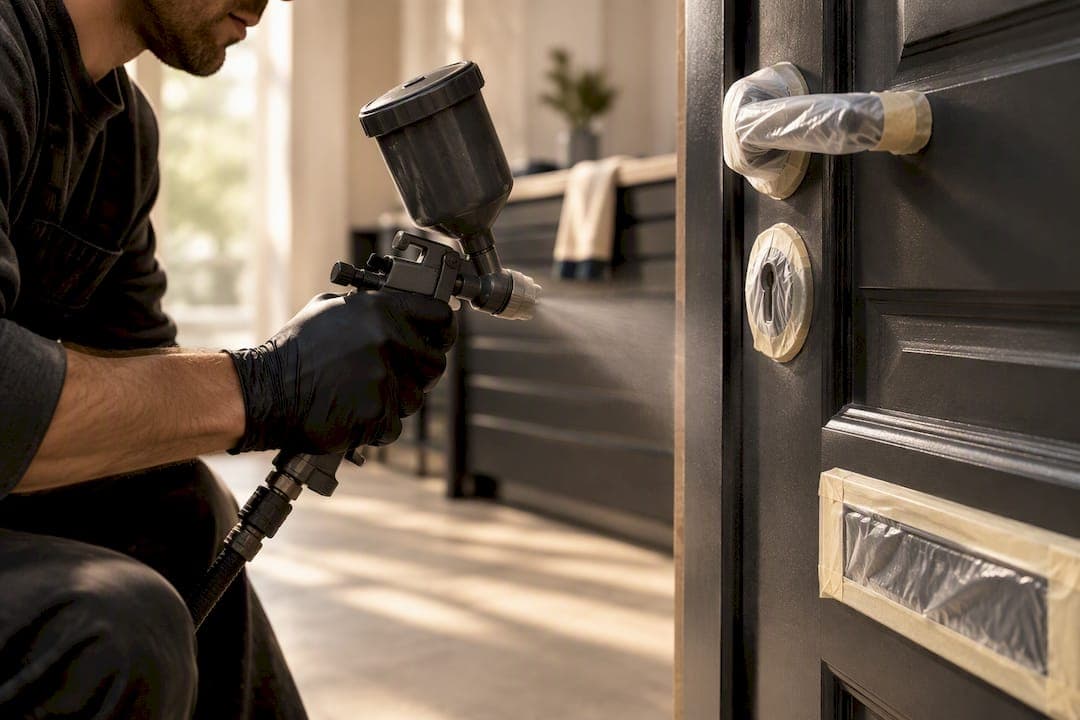
Yes, professional spray teams can respray external doors with hinges, handles and letterboxes left fitted, and for most sound doors this is the standard approach rather than the exception. The main caveat is safety and coating chemistry: some professional finishes need controlled ventilation and trained operators, not a DIY setup. If your door is structurally sound, book an on-site survey to confirm it is a good candidate before anything gets masked.
TL;DR:
- Most professional spray services can respray doors with hardware left fitted if the masking is thorough and the surface is properly prepared.
- Cost typically ranges from £150 to £350 per door, with higher prices for complex or heavily glazed doors, and a standard turnaround within a single day.
- Safety measures are critical, especially for coatings containing isocyanates, and proper ventilation, protective gear, and clearance testing are non-negotiable.
- Homeowners should demand a written survey, detailed quote, warranty, and clarification on whether hardware removal is necessary before booking a service.
- Hand-spraying provides a superior finish to rollers, making it the preferred method for achieving a factory-quality look, especially on panelled or glazed doors.
Table of Contents
- What a professional door respray service actually includes
- How the process runs from survey to finished door
- Getting the masking and prep right when hardware stays fitted
- What it costs and how long it takes
- The safety rules that matter more than the finish
- How to vet a door-spraying specialist before you book
- Why we favour hand-spray resprays over full replacement
- Get a free survey and a written quote
- Sources
- FAQ
What a professional door respray service actually includes
A typical respray service covers most door materials you will find on a house: uPVC, composite, timber and glazed styles such as French or stable doors. The finish itself is usually chosen from RAL, BS or custom colour references, in matt, satin or gloss depending on the look you want and how the door will weather.
What separates a proper service from a quick coat of paint is what happens around the spraying itself. A complete guide to spraying melamine cabinets makes a similar point about kitchen surfaces: the prep and masking stages decide the finish quality as much as the paint does.
Expect a written quote to itemise:
- A site survey to check the door's condition and confirm suitability for spraying
- Masking of glass, frames, letterboxes and any hardware left in place
- Surface preparation, priming where the substrate needs it, and the spray application itself
- A cure and inspection stage, followed by a written warranty covering the finish
Glazed doors bring their own considerations. Spraying uPVC French doors with the glazing bars and hardware retained is common practice, provided the masking is thorough.
How the process runs from survey to finished door
The sequence is fairly consistent across reputable operators, even if the products and timings vary slightly.
- Survey: a technician checks hinge and lock operation, seal condition and any damage that spraying will not fix.
- Masking: glass, frames, letterboxes and hardware are covered without being removed, using tapes and films suited to the substrate.
- Preparation: the door is cleaned, decontaminated and lightly abraded, with primer applied where the surface needs better adhesion.
- Application: the finish is hand-sprayed in the specified number of coats, following a set drying and cure schedule.
- Inspection: the finish is checked once cured, and any touch-ups happen in situ before the job is signed off.
Most of this happens in a single visit, which is why the on-site survey matters. It is the point where a technician decides whether hardware can stay fitted or whether something needs to come off first.
Pro Tip: Ask the contractor how they check operation of hinges and locks after spraying, not just before it. A finish that traps moving parts is a masking failure, not a paint one.

Getting the masking and prep right when hardware stays fitted
Leaving hardware in place relies on the masking being genuinely good, not just quick. Low-tack tape, stretch film and purpose-made plugs for keyholes and letterboxes all protect fittings without leaving a residue that shows through the new coat.
That said, removal is sometimes the better call. Loose or corroded fittings, and intricate decorative hardware with fine detailing, are harder to mask cleanly and easier to damage if left on. There is also a genuine trade-off around edges: spraying around fitted hardware can leave a slightly softer line at the join than you would get with the fitting removed. Skilled hand-spray work minimises this, but it rarely disappears entirely.
Good contractors will also protect what is not being painted:
- Adjacent brickwork and render, taped or sheeted off before any spraying starts
- Glass panes and glazing bars, masked to avoid overspray fogging
- Door frames, unless the frame is included in the job
Cleaning matters here too. Guidance on soft-washing before painting recommends a gentle wash and keeping the nozzle a short distance from the surface, which is the same logic professionals apply before priming a door: get the surface genuinely clean before anything sticks to it.
What it costs and how long it takes
Representative UK price guides put a typical professional respray of a single external door in the £150 to £350 range, with composite and glazed front doors often landing towards the top of that band.
A single-door respray typically costs between £150 and £350, depending on size, glazing and whether the frame is included. That range covers most standard front and back doors; double doors, elaborate glazing or additional frame work push costs higher.
Refinishing Studio's own uPVC door spraying service is priced from £250 to £650 per door, reflecting the same variables of size, condition and complexity.
Turnaround tends to follow a similar pattern across the trade:
- Survey and quote, usually arranged before any work is booked
- Spraying itself, often completed within a single site visit
- Cure and inspection, which can extend the total time before the door is back in daily use
The safety rules that matter more than the finish
This is the part homeowners often skip, and it is the one with real health consequences. Some professional coatings, particularly two-pack (2K) polyurethane systems, contain isocyanates. HSE guidance on isocyanate spraying warns that spraying these produces an invisible airborne mist that can cause occupational asthma, and recommends the work be done in a suitable spray booth or room with proper ventilation and respiratory protective equipment.
The detail matters. HSE's HSG276 guidance explains that spray booths and rooms should run under negative pressure, be smoke-tested for leaks, and have a measured clearance time before anyone re-enters without protection.
Even well-built spray booths can retain mist in vortices along the walls, which is why clearance testing and negative-pressure checks matter, not just having an enclosure at all.
Ask any contractor directly:
- Where the spraying happens, and whether it is a proper booth or room
- What respiratory protection operators wear during spraying and clearance
- How they measure clearance time before the area is considered safe
Open-air spraying of isocyanate-containing coatings is not something to attempt without this kind of setup, which is one reason DIY spraying suits some coatings and not others.
How to vet a door-spraying specialist before you book
A good specialist will happily answer questions that a corner-cutter avoids.
- Ask whether they provide a written survey before quoting, not just a phone estimate.
- Ask how they mask hardware, glass and frames, and whether removal is ever recommended.
- Ask which paint system they use and whether it requires a booth or controlled room.
- Ask what the warranty covers and for how long, in writing.
- Confirm whether spraying happens on-site or the door is removed and sprayed off-site.
Watch for red flags: no survey offered, vague answers about ventilation or respiratory protection, or reluctance to put a warranty in writing. The same scrutiny applies to kitchen cabinet spraying, where prep and masking quality drive both price and finish.
Pro Tip: A written quote should name the paint system, the number of coats and the warranty length. If it only states a total price, ask for the breakdown before you sign.
Why we favour hand-spray resprays over full replacement
We built Refinishing Studio around hand-spray respraying because most doors and kitchens do not need replacing, they need refinishing done properly. Every job carries a five-year warranty, and we do not use subcontractors. Respraying tends to make more sense financially than replacement when the door itself is structurally sound; replacement is still the right call when frames are failing or seals have gone. A local survey settles which applies to your door.
— Mitchell
Get a free survey and a written quote
If your doors are sound but tired-looking, a respray with hardware left in place is often the simplest way to get a factory finish without the cost or disruption of new doors.

One local specialist offers a free on-site survey that covers the door's condition, whether hardware can stay masked in place or needs removing, and provides a firm quote range before any work starts. They perform hand-spray finishes backed by a warranty, without subcontractors.
- A survey that checks hinges, seals and hardware before quoting
- A written quote itemising prep, masking, coats and warranty
- A finish sprayed and inspected on the day, not rushed off-site
Book a survey through our uPVC door spraying page and get a written price before you commit to anything.
Sources
- 2-pack isocyanate paints - HSE
- How Much Does It Cost To Spray uPVC Doors - The Spraying Team
- How Much Does uPVC Window Spraying Cost in 2026? (UK Price Guide)
FAQ
How much does it cost to get a door sprayed?
A single external door typically costs between £150 and £350 to have professionally sprayed, depending on size and glazing. Composite and heavily glazed doors tend to sit at the higher end of that range.
Is a paint sprayer worth it for doors?
For a one-off door, a sprayer is only worth buying if you already have somewhere safe and ventilated to use it. Professional coatings, particularly 2K systems, need the enclosed spraying conditions HSE describes, which most homes cannot provide.
Can you spray cabinet hardware?
Cabinet and door hardware can usually be masked and left in place during spraying, provided it is sound and not overly decorative. Loose, corroded or intricate fittings are better removed first to protect both the hardware and the edge quality of the finish.
Is it better to roll or spray doors?
Spraying gives a smoother, more even finish than rolling, particularly on panelled or glazed doors, which is why professional respray services use hand-spray techniques rather than rollers. Rolling can still work for simple flat doors where a factory-level finish is not the goal.