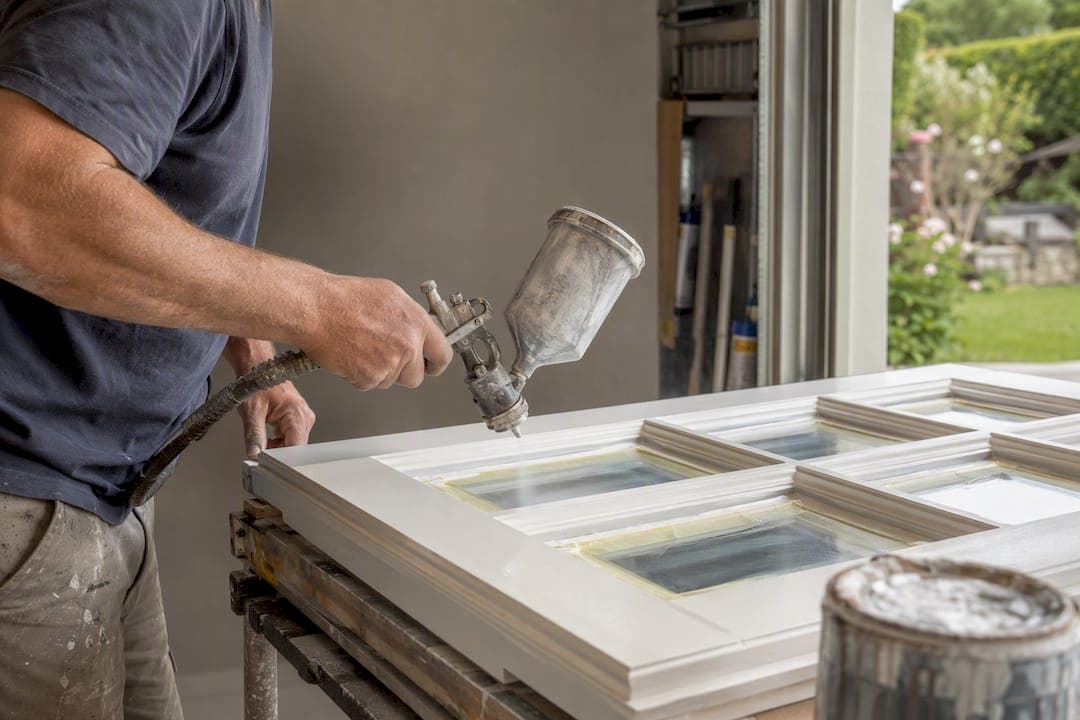
Yes, you can spray uPVC French doors, and it's one of the most cost-effective ways to transform a tired frame without replacing the whole unit. Aerosol kits handle small jobs and interior touch-ups well. For a flawless, factory-standard finish that holds up to years of Welsh weather, a professional hand-spray is the route worth paying for.
- DIY works when: you're covering a small area, colour accuracy isn't critical, or you're practising on an internal door first.
- Professional works when: you want a warranty, a consistent finish across multiple panes, or you're spraying a full French door set facing the weather.
- Next step: measure your door, check the glazing bar count, and either buy a test can or request a quote before committing to either route.
Key Takeaways
Professional hand-spraying delivers a longer-lasting, more consistent finish on uPVC French doors than DIY aerosols, particularly across multi-pane frames.
| Point | Details |
|---|---|
| DIY suits small jobs | Aerosols cost roughly £15 to £20 per can and cover about 2 square metres, best for single doors or low-stakes areas. |
| Masking is the real DIY challenge | Multiple glazing panes make French doors harder to mask cleanly than flat panel doors. |
| Professional quotes reflect prep, not just paint | Average professional uPVC door spraying costs around £230 per door, covering prep, spraying, and cure control. |
| Preparation determines longevity | Degreasing, keying, and controlled curing explain most of the durability gap between DIY and professional results. |
| Refinishingstudio offers a proven professional route | Over 1,000 completed South Wales projects, no subcontractors, and a five-year transferable warranty on every job. |
Table of Contents
- DIY aerosol vs professional hand-spray: which one fits your door?
- What does it cost to respray uPVC French doors?
- How do you spray a uPVC French door yourself?
- Why does a professional respray look and last different?
- Which colour and finish should you choose?
- How long does a sprayed finish actually last?
- How do you choose between DIY and a professional, and what should you ask?
- What proof points show a studio can deliver?
- What actually matters more than the aerosol you pick
- Ready to get your French doors sprayed properly?
- Frequently asked questions
- Sources
DIY aerosol vs professional hand-spray: which one fits your door?
Aerosol kits win on upfront cost and speed. You can buy a can, prep a door on a Saturday, and have a new colour by Sunday. The catch is coverage: most 400ml cans manage roughly 2 square metres per can, so a full French door set with multiple glazing bars eats through cans fast, and getting a smooth, brush-mark-free finish around all those small panes takes patience most first-timers underestimate.
Professional hand-spraying costs more but solves the two things aerosols struggle with: even coverage across complex mouldings, and a cure process controlled enough to last.
- Aerosols: low cost, fast turnaround, best for small or low-visibility areas, limited durability without careful prep.
- Professional spray: higher upfront cost, factory-standard finish, handles multi-pane French doors cleanly, backed by a warranty.
- Rule of thumb: one door, low stakes, DIY. A full French door set on the front of the house, call a specialist.
What does it cost to respray uPVC French doors?
Budget matters here, so let's get specific. DIY materials are cheap on paper: a 400ml can of uPVC-specific aerosol runs roughly £15 to £20 and covers about 2 square metres. A standard French door set, with its frame, mullions, and multiple panes, can easily need three or four cans once you factor in a primer coat and a top coat, so the "cheap" option often lands closer to £60 to £80 in materials alone before you've bought masking tape, degreaser, or a decent respirator.
Statistic Callout: UK cost guides put average professional uPVC spraying at around £230 per door, with whole-house jobs typically ranging from £900 to £1,800 depending on scale and prep required.
That per-door figure covers labour, professional-grade coatings, and the prep work that actually makes a respray last. What pushes a quote up or down?
- Glazing complexity: more panes mean more masking time, which is billed as labour.
- Hardware: handles, hinges, and locks that need removing and refitting add time.
- Surface condition: flaking paint, UV damage, or old stickers require extra prep before spraying.
- Colour choice: custom RAL matches or dark colours over light substrates sometimes need extra coats.
- Travel and access: rural addresses or hard-to-reach doors can add a call-out charge.
Watch for quotes that don't specify the number of coats, whether masking is included, or what happens if the uPVC underneath is damaged. A comparison of respraying versus full replacement is worth reading before you commit either way, since replacement costs can run several times higher for the same visual result.
How do you spray a uPVC French door yourself?
If you're going the DIY route, treat it like a proper decorating job, not a five-minute aerosol session. Here's the realistic workflow.
- Gather your kit. You'll need a uPVC-specific aerosol (not generic spray paint), a degreaser, fine-grit sanding pads or a scotch-brite pad, masking tape and film, a dust mask or respirator, and disposable gloves.
- Clean and degrease. Wash the door thoroughly to remove grime and silicone residue, then wipe down with a degreaser. Skipping this step is the single biggest reason DIY finishes peel early.
- Key the surface. Lightly sand or scuff the uPVC with a fine abrasive pad so the paint has something to grip. Many specialist aerosol products are formulated to bond without a primer, but a light key still improves adhesion.
- Mask everything. This is where French doors get tedious: every glass pane, handle, hinge, and letterbox needs covering. Masking liquid can speed this up on doors with lots of small panes rather than taping each one by hand.
- Spray in thin coats. Hold the can 20 to 30 centimetres from the surface and apply light, even passes rather than one heavy coat. Most products are touch-dry within 5 to 15 minutes, but that's not the same as cured.
- Let it cure properly. Full curing takes 24 to 48 hours. Don't remove masking or handle the door heavily before then, and avoid spraying in damp or cold conditions, which slows curing further.
Pro Tip: Spray a scrap section or hidden panel first. uPVC surfaces vary in texture and age, and a test patch tells you how many coats you actually need before you commit the whole door.
The point where most DIYers hit a wall is masking. Multiple small panes and ornate glazing bars make French doors notably harder to mask cleanly than a flat panel door, and any gaps show up immediately once the paint's on. If you're staring down four or more glazing sections and dreading the tape, that's usually the signal to get a quote instead.
Why does a professional respray look and last different?
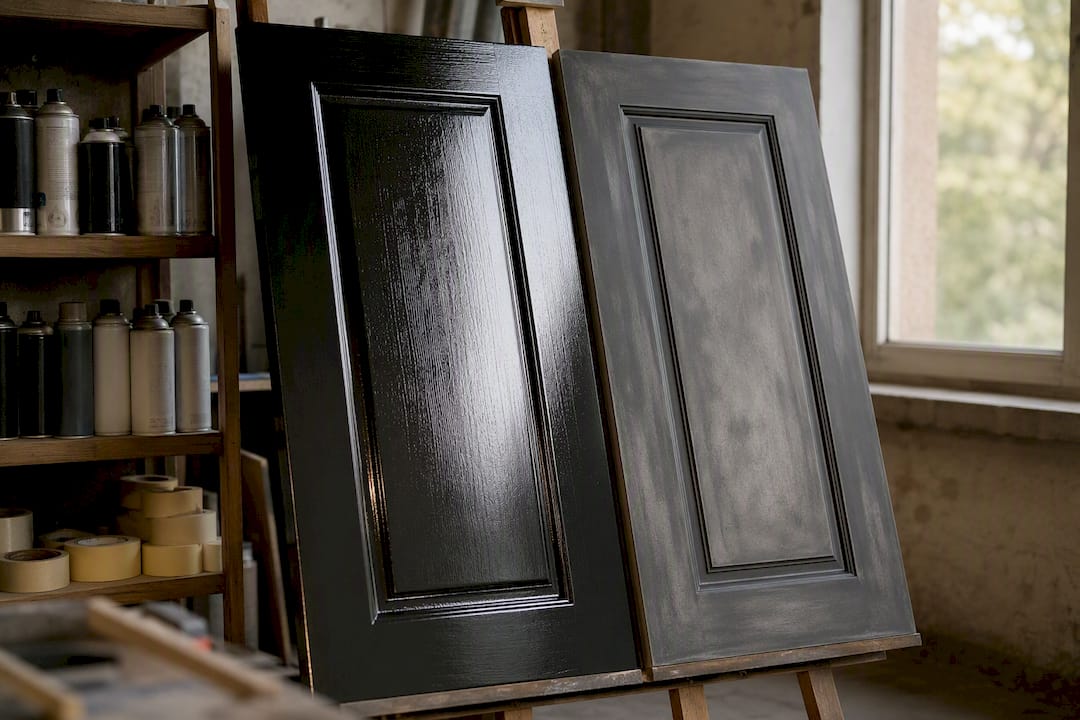
A professional job isn't just "the same aerosol, but by someone else." The difference starts before any paint touches the door.
Studios inspect the substrate first, checking for cracks, UV degradation, or old coatings that need stripping back rather than sprayed over. Preparation typically goes further than a home sander can manage: full degreasing, methodical keying, and complete removal of hardware rather than masking around it. The spraying itself happens in controlled conditions with equipment designed for even coverage across mullions and glazing bars, which is exactly the area DIY jobs struggle with.
Statistic Callout: Professional uPVC respraying is widely marketed around factory-standard finishes and multi-year warranties, with specialist providers commonly offering five or more years of guaranteed performance.
That warranty is the real value proposition. It's not just marketing language; it reflects confidence in a prep and cure process that's harder to botch than a weekend DIY job.
- Time: a single French door set typically takes a day for prep and spraying, plus cure time before full use.
- Access: you'll need to keep the area accessible and avoid heavy use of the door while it cures.
- Quality checks: reputable studios inspect the finish before calling the job complete, catching thin spots or missed edges DIY jobs often miss.
If you're weighing this against full replacement, the service page for uPVC door spraying breaks down what's included in a typical professional job.
Which colour and finish should you choose?
Colour accuracy matters more on French doors than on a single panel door, because any mismatch between the door and its frame or neighbouring windows stands out. Professionals typically match against RAL or BS colour references rather than eyeballing a swatch, which is why a specified RAL code on your quote is a good sign.
Sheen level affects both looks and durability. Matt finishes hide minor surface imperfections but can show dirt more readily; satin and eggshell strike a middle ground; gloss looks sharp but highlights every flaw underneath. Interior door guidance from One Day Doors & Closets covers similar trade-offs, and the same logic applies outdoors, just with UV exposure added to the mix.
- Test a small panel before committing to a full respray, especially with darker colours.
- Dark shades absorb more UV and heat, which can accelerate fading on south-facing doors.
- Check the full range of finish options before deciding between matt, satin, eggshell, or gloss.
How long does a sprayed finish actually last?
Aerosol finishes, done well, can hold up for a couple of years before touch-ups are needed, especially on doors with less sun and weather exposure. Some aerosol manufacturers claim considerably longer performance, occasionally citing figures up to a decade for specialist systems, but that's under ideal application conditions rarely replicated in a home garage.
Statistic Callout: Professional hand-sprayed finishes are commonly backed by warranties covering multiple years, reflecting a level of prep and cure control that DIY conditions struggle to match.
Wipe the door down every few months with mild soap and water, and check hinges and edges for early chipping. Small chips can often be touched up with matching paint before they spread. Cold, damp application conditions, skipped degreasing, and heavy door use before full curing are the three things most likely to shorten a finish's life, whichever method you choose. Our breakdown of respray longevity covers the maintenance routine in more detail.
How do you choose between DIY and a professional, and what should you ask?
Start with a simple checklist: how big is the job, how important is a flawless finish, do you need a warranty, can you tolerate a day or two of restricted door access, and what's your actual budget ceiling.
- Ask for a written scope. What prep is included, how many coats, and which product or system will be used.
- Ask about warranty terms. Is it transferable if you sell the property, and what does it actually cover.
- Ask if they subcontract. A studio using its own trained sprayers, rather than passing the job on, tends to be more accountable for the result.
- Ask for a portfolio. Before-and-after photos of similar French door jobs tell you more than any sales pitch.
- Ask about insurance and cure testing. Reputable contractors carry public liability cover and check the finish has cured before calling the job done.
Pro Tip: A quote with no mention of prep steps or coat count is a red flag. Vague quotes usually mean vague results.
What proof points show a studio can deliver?
Refinishingstudio specialises in professional respraying of uPVC and kitchen surfaces across South Wales, and nothing else, which means every job gets the same focused attention rather than being squeezed between other trades.
- Over 1,000 completed projects across South Wales, covering doors, windows, conservatories, and kitchens.
- A guaranteed five-year warranty on every job, transferable if the property changes hands.
- No subcontractors: the team that quotes the job is the team that sprays it.
- Finishes assessed against factory-standard durability benchmarks before handover.
That combination of scale and specialism, over a thousand jobs in one region focused on two surface types, is what lets a studio spot problems a generalist decorator might miss.
What actually matters more than the aerosol you pick
Most advice on this topic gets stuck on product comparisons: which can, which brand, which finish. That misses the real variable. Preparation and curing conditions explain most of the gap between a respray that looks good for six months and one that still looks sharp in five years, far more than which specific aerosol sits in your hand.
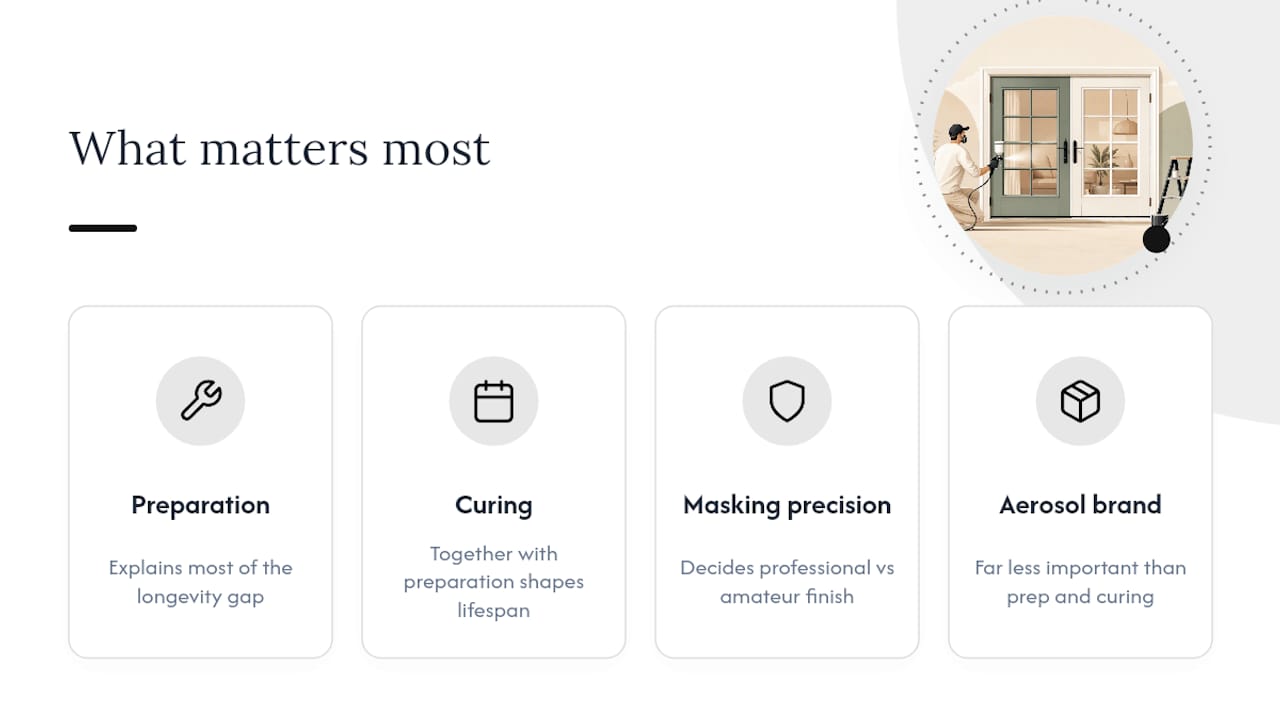
The conventional DIY guide treats masking as a minor inconvenience. On a French door with six or eight small panes, it's the step that decides whether the job looks professional or amateur, and it's the step most homeowners rush.
If there's one thing to prioritise, it's honesty about scope. A single interior door, low stakes, spray it yourself and treat any imperfection as a learning cost. A full French door set on a home's front elevation, facing weather and neighbours' opinions, is a different calculation entirely. The saving from doing it yourself rarely justifies the risk of a patchy finish on the most visible door in the house.
Ready to get your French doors sprayed properly?
Refinishingstudio is the alternative to a full door replacement for homeowners across South Wales who want a factory-standard finish without the five-figure cost of new units. Every job comes with a five-year transferable warranty, no subcontractors, and over 1,000 completed projects behind the technique.
Getting a quote is straightforward: send through your door dimensions and a photo, choose from the full range of finishes, and you'll get a price before any work is booked in. Browse the project portfolio to see comparable French door jobs, then head to the uPVC spraying service page to request your quote.
Frequently asked questions
Can you spray uPVC French doors without removing them? Yes, both DIY aerosols and professional sprayers typically work with the door in situ, provided hardware and glass are properly masked or removed first.
What's the best paint for uPVC French doors? Use a uPVC-specific formulation rather than generic spray paint. Products designed for plastic substrates bond better and resist peeling far longer than standard aerosols.
How long does uPVC door spray paint take to dry? Most aerosols are touch-dry within 5 to 15 minutes, but full curing takes 24 to 48 hours before the door should see heavy use.
Do I need special ventilation or protective gear to spray uPVC doors? Yes. Spray in a well-ventilated area, wear a respirator rated for solvent fumes, and use gloves and eye protection. Fumes from aerosol paints build up quickly in enclosed spaces.
Is professional respraying worth it over replacement? For most homes, respraying costs a fraction of full replacement while achieving a comparable visual upgrade, particularly when backed by a multi-year warranty.
Sources
- UPVC Aerosol Spray Paint Kit Any Pantone Colour | CCPaints
- uPVC spraying cost guide: 2026 UK Prices
- Innov8 Coatings uPVC Spray Paint 400ml Satin Finish for Windows & Doors