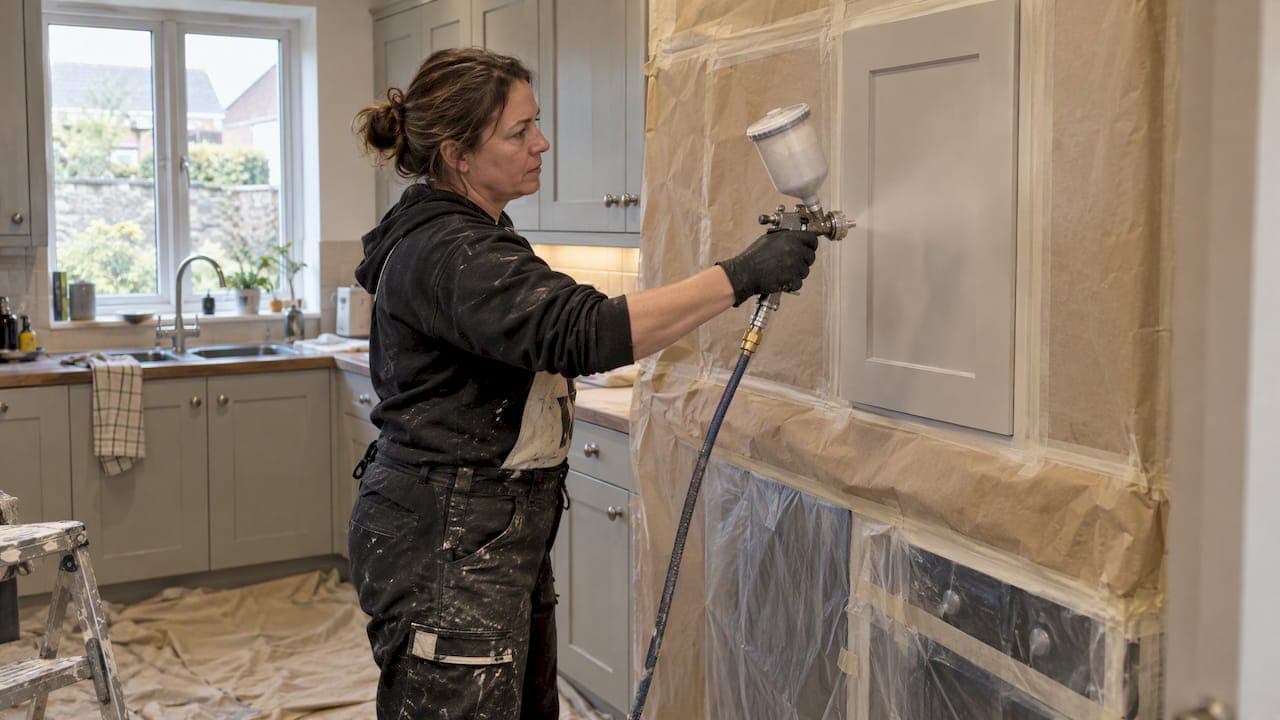
Most professional kitchen resprays take between 2 and 7 working days, with a typical job landing around 3 to 5 days. The exact kitchen respray timescale depends on how many doors need spraying, whether they are removed for offsite booth work, and how much repair the surfaces need. Working days are also different from full cure time, which continues after the crew has left.
TL;DR:
- The typical kitchen respray takes between 2 and 7 working days, depending on the size, complexity, and whether doors are spray-painted offsite.
- Larger or more ornate kitchens, especially with complex paneling or glazed units, may extend to 7 days, with preparation often determining the schedule.
- Offsite booth spraying adds transport and curing time, usually increasing total days by one or two, but offers a more uniform, dust-free finish.
- Full curing of spray coatings can take days to weeks beyond initial drying, requiring careful handling and gentle cleaning during the first two weeks.
- If the cabinet carcasses are damaged or warped, replacing may be necessary, as spraying only fixes surface finishes and not structural issues.
Table of Contents
- How long does a kitchen respray usually take?
- What makes a respray faster or slower than the quote?
- A day-by-day look at a typical respray schedule
- Respray versus full replacement: which fits your schedule?
- Getting your home ready for the work
- When is the finish actually cured, not just dry?
- How a specialist respray provider schedules the work
- Getting the balance right between speed and finish
- Get a written timeline for your kitchen respray
- Further reading on kitchen respray timing
- FAQ
How long does a kitchen respray usually take?
Published guidance groups kitchen resprays into three rough bands. A small kitchen, think a handful of units or a single galley run, tends to need around 2 days, while a typical family kitchen runs closer to 3 to 5 days once you account for more doors, drawer fronts, and an island. Large or complex kitchens, especially those with ornate panelling or extensive glazed units, can stretch to 7 days.

These ranges are planning guidance rather than promises. A contractor's quote should say explicitly what falls inside the quoted days, because "5 days" means different things depending on what's included.
A typical quoted schedule covers:
- Initial degreasing and cleaning of every surface due to be sprayed.
- Removal of doors, drawer fronts, and hardware where the job calls for booth spraying.
- Filling, sanding, and priming to correct dents, chips, or old finish imperfections.
- The spraying itself, usually applied as several light coats rather than one heavy pass.
- Reassembly and rehang once coatings are dry enough to handle safely.
What's often left out of the headline figure is full cure time. A surface can be dry to the touch and safe to rehang within the quoted days, but the coating keeps hardening for longer afterwards. Homebuilding's guidance on spray painting kitchen cabinets makes the point that preparation, not the spraying step itself, is what tends to drive the schedule, since sanding, priming, and filling take far longer than laying down paint. If a quote reads suspiciously short, it's worth asking whether that preparation time has been properly costed in, or whether corners are being cut to hit a number.
What makes a respray faster or slower than the quote?
Two kitchens of similar size can take very different amounts of time, and the gap usually comes down to a handful of variables rather than luck.
- Door count and size: more doors, drawer fronts, and end panels simply mean more surfaces to prep and coat.
- Existing condition: dents, water damage, or stain bleed-through from old timber need extra filling and sealing before anything gets sprayed.
- Previous finish: a high-gloss surface typically needs more preparation to key and de-gloss than a matt or satin one, as Homebuilding's guide on painting gloss kitchen cabinets notes.
- Coat count: darker colours, colour changes, or a durable satin or gloss topcoat often need more light coats than a simple refresh in a similar shade.
- Offsite workshop transport: doors taken away for booth spraying add transport and booth-curing time on both ends of the job.
- Site access and hidden damage: awkward access, appliances that need disconnecting, or damp discovered once panels come off can all add days.
Pro Tip: Ask your contractor to separate "working days on site" from "days doors are away at the workshop" in writing, so a 5-day quote doesn't quietly become a 5-day wait before your kitchen is usable again.
A day-by-day look at a typical respray schedule
No two kitchens follow an identical timeline, but a typical mid-sized job with offsite door spraying tends to follow a recognisable pattern.
- Pre-visit survey: the contractor assesses door count, surface condition, and access, then puts together a written schedule showing what happens on each day.
- Day 1, preparation: surfaces are degreased, hardware and doors are removed where needed, defects are filled, and everything left in place is masked off.
- Day 2, priming and first coats: primer goes on, either in situ or at an offsite workshop, followed by the first light spray coats.
- Days 3 to 4, build coats and inspection: further coats are applied with light sanding between them where the finish demands it, and the work is checked for coverage and consistency before anything is signed off.
- Days 4 to 7, curing, reassembly, and final check: doors are cured, transported back if they went offsite, rehung, and the whole kitchen gets a final inspection.
Kitchens finished entirely on site tend to sit at the shorter end of this pattern, since there's no transport time built in. Jobs involving an offsite spray booth, which typically produces a more controlled, factory-style finish, usually add a day or two for the return trip and booth-curing time alone. That's a fair trade for many homeowners, since booth spraying reduces dust contamination and gives a more even coat, but it does mean asking upfront how the transport window fits into the quoted total.
Respray versus full replacement: which fits your schedule?
If your timeline is tight, the gap between respraying and replacing a kitchen is one of the clearest arguments in favour of a respray. A full replacement involves ordering bespoke or semi-bespoke cabinetry, which can mean weeks of lead time before installation even starts, on top of the installation itself. A respray, by contrast, is typically measured in days rather than weeks.
- Lead time: replacement cabinetry often needs ordering weeks in advance, while a respray can usually be booked and completed far sooner.
- Disruption: replacement means ripping out units, which is noisier, messier, and harder to live around than spraying existing carcasses in place.
- Cooking arrangements: a respray can often be phased so part of the kitchen stays usable, whereas a full strip-out generally takes the whole room offline.
- When replacement still wins: if the carcasses themselves are damaged, warped, or structurally unsound, no amount of spraying will fix that, and replacement becomes the only sound option despite the longer wait.
For kitchens with sound cabinet boxes and tired doors or finishes, timescale alone often tips the decision towards a respray.
Getting your home ready for the work
A few simple steps on your side keep the quoted days realistic and stop avoidable delays creeping in.
- Clear worktops and cupboard contents, and label doors and drawers if your contractor asks you to, so reassembly goes smoothly.
- Get the scope confirmed in writing, including whether doors travel offsite and how long that transport adds to the total.
- Sort basic meal and pet arrangements for the days the kitchen is out of action, since even a phased job limits normal use.
- Agree a communication window with your contractor for updates, and ask what happens to the schedule if hidden damage turns up once doors come off.
Pro Tip: If you're timing the respray around a house move, a related read on respraying before or after moving in covers how to sequence the work against your moving date. For broader guidance on managing daily life while a kitchen is out of action, general advice on living at home during a kitchen remodel covers the basics of meals and access, even though it's written for a different market.
When is the finish actually cured, not just dry?
Surface dry and fully cured are not the same thing, and mixing them up is how new finishes get damaged in the first fortnight. A sprayed coating is typically dry to the touch within hours, which is why doors can often be rehung the same day they're finished. Full hardness is a slower process: spray-applied coatings, particularly two-pack and polyurethane systems, can take days to weeks to reach full cure, depending on the product used. That gap between handling and full hardness is the main reason aftercare instructions matter as much as the spraying itself.
For the first 7 to 14 days:
- Do wipe spills promptly with a soft, damp cloth rather than leaving liquids to sit.
- Do handle doors gently when opening and closing, since the coating is still hardening underneath.
- Don't use abrasive cleaners, scourers, or strong solvents on the new finish.
- Don't hang heavy items or lean objects against freshly sprayed surfaces.
Skipping this aftercare window is also the most common way a five-year warranty gets invalidated before it's even tested, so it's worth treating those first two weeks as part of the job rather than as an afterthought.
How a specialist respray provider schedules the work
A specialist respray provider typically focuses on UPVC and kitchen respraying, applying hand-sprayed, factory-standard finishes and backing jobs with a warranty. That focus shapes how quoted timescales are built.
- Every job starts with a survey that sets a written schedule, so the client knows upfront what each day covers rather than receiving a single vague total.
- Where doors are taken to an offsite workshop for spraying, the quote accounts for removal, transport, booth curing, and delivery back for rehang, rather than treating those as hidden extras.
- There are no subcontractors involved: the people who survey and quote the job are the same ones prepping and spraying it, which keeps the schedule consistent from start to finish.
- The kitchen respraying service covers cabinets, doors, drawer fronts, end panels, islands, and handleless conversions, so the scope of what's quoted is clear before work starts.
Getting the balance right between speed and finish
A fast turnaround is only worth it if the finish holds up, and the two aren't always in tension the way a rushed quote might suggest. If a contractor's proposed timeline looks shorter than the ranges most guidance quotes for a kitchen of similar size, ask what's been trimmed out, because prep time is almost always where corners get cut first.
A written schedule that spells out exactly what happens on each day, including whether doors leave the property, protects you from surprises far better than a single headline number. If the finish or the deadline genuinely matters, ask for a sample panel before committing to the full job. It costs little and tells you more about the final result than any quoted day count ever will.
— Mitchell
Get a written timeline for your kitchen respray
Once you know roughly how many days your kitchen respray should take, the next step is getting that timeline in writing rather than relying on a verbal estimate. Refinishing Studio's kitchen respraying service covers cabinets, doors, drawer fronts, islands, and handleless conversions across South Wales, backed by a five-year warranty and completed without subcontractors.

If you'd rather start with cupboards and doors alone, the kitchen cupboard spraying page covers that narrower scope. Either way, ask for a free survey and a written schedule that states clearly whether your doors are sprayed on site or taken offsite, and how that affects the total number of days before your kitchen is back in use.
Further reading on kitchen respray timing
- Kitchen respray cost guidance, covering typical day ranges and what to check in a quote.
- Spray painting kitchen cabinets, on preparation as the main driver of project time.
- Gloss kitchen respray case detail, covering warranty and process steps for a professional respray.
FAQ
Is a kitchen respray worth it?
For kitchens with sound cabinet boxes, a respray is often worth considering because it typically takes days rather than the weeks a full replacement needs, while still giving a factory-style finish. It suits homeowners who want a quicker, less disruptive refresh over a full strip-out and rebuild.
What's the average cost of kitchen respray?
Prices for kitchen respraying vary depending on door count, condition, and finish, with quotes provided after a survey. You can request a personalised quote through the kitchen respraying service page.
What cabinet colour is outdated?
There's no single colour that's universally "outdated", since kitchen colour trends shift gradually and vary by region and property style. A respray gives you the flexibility to change colour entirely, including bolder or custom shades, without replacing the cabinet boxes themselves.
How long after painting cabinets can I use them?
Sprayed cabinet doors are usually dry enough to handle and rehang within hours, but full cure for spray-applied coatings can take days to weeks depending on the product used. It's best to treat the first 7 to 14 days as a careful handling period, avoiding heavy use or harsh cleaning products during that time.