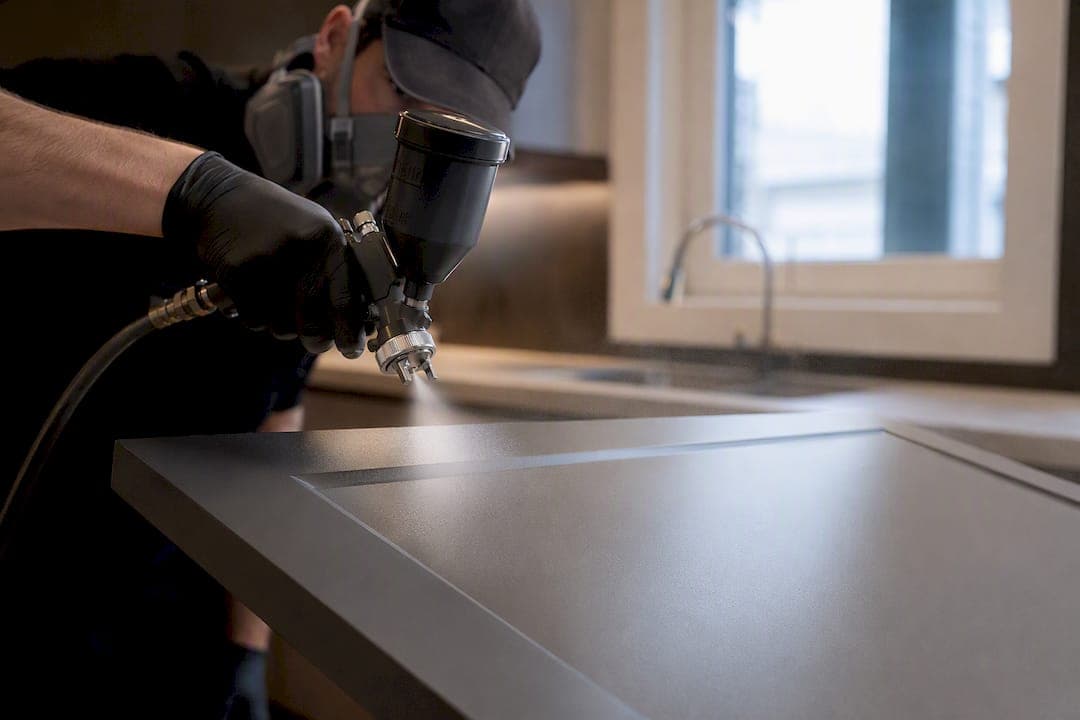
Respray before moving in whenever your schedule allows it. Working in an empty property gives contractors continuous access, a cleaner finish and a proper curing window before furniture, boxes and daily life put it under strain. The only real exception is when major repairs, renovations or a genuinely tight moving window are still unresolved. Delay if that's your situation, and let disruption and curing time guide the final call.
TL;DR:
- Scheduling a respray at least 3 to 7 days before moving in ensures a cleaner finish and proper curing, especially for kitchen cabinets and UPVC exteriors.
- Postponing resprays is advisable if major renovations or repairs are still planned within a year, as redoing paintwork later is often necessary.
- Priority surfaces for spraying include kitchen cabinets and external UPVC fixtures, which become difficult to access once furniture or appliances are installed.
- Waiting to respray allows you to see color effects under your actual lighting and avoid wasting money on repainting areas that will be torn apart soon.
- Book a professional respray 4 to 8 weeks before move-in, and fix any repairs or prep surfaces thoroughly to ensure a high-quality, long-lasting finish.
Table of Contents
- Respray before or after move in: a quick decision checklist
- Why respraying before you move in usually gives better results
- When waiting to respray after you move in is the better choice
- Which surfaces to respray first, and which can wait
- How to plan and schedule a respray around your move
- The trade's view: when we'd say wait, and when we wouldn't
- Get your respray booked before the move
- Sources
- FAQ
Respray before or after move in: a quick decision checklist
Run through these four questions before you book anyone. Most readers can settle the "before or after" question in under a minute.
- Do you have at least 3 to 7 consecutive days before move-in? If yes, favour a pre-move respray. That's roughly the window professional crews need for kitchen cabinets or a full UPVC exterior to be sprayed, cured and ready.
- Are major repairs or renovations planned within the next 12 months? If yes, delay. Repainting fresh doors, cabinets or fascias only to knock through a wall or replace worktops six months later is wasted money.
- Are you a short-term renter, or does your tenancy agreement restrict alterations? If yes, stick to cosmetic, reversible options and check with your landlord before any permanent respray.
- Is the work hard to access once furniture and appliances are in place? Kitchen cabinets boxed in by a fridge freezer, or trickle-vented UPVC windows behind curtains, fall into this category. If yes, prioritise the job now rather than working around it later.
If you tick "yes" to the first and fourth questions and "no" to the middle two, book the respray before you collect the keys to your new front door.
Why respraying before you move in usually gives better results
Three factors decide the outcome of any respray: access, application method and curing time. An empty property wins on all three.
- Speed and cost. Painters and sprayers working in an unfurnished home don't lose hours moving sofas, laying dust sheets around ornaments, or masking around a fitted kitchen table. Reports from professional painters suggest empty homes can finish 30 to 50 percent faster than occupied ones, and that efficiency tends to show up in the final invoice too.
- A better finish. Spray application, rather than roller or brush work, produces the smooth, factory-style finish most people want on kitchen doors and UPVC frames. It's also far more practical in an empty room, where overspray and containment are simple to manage rather than a daily obstacle course around your belongings.
- A full, undisturbed cure. Professional coatings often feel touch-dry within hours, but they can take considerably longer to reach full handling hardness. Furniture knocks, fingerprints on a freshly sprayed door handle, or a box dragged past a skirting board can all leave marks during that vulnerable early stage. Finishing the work before you move in gives the coating time to cure without anyone living around it.
There's a budgeting angle here too. When a crew is already on site for the kitchen, adding an adjacent utility room or a run of interior doors to the same visit often costs only marginally more than the original job. Book it all in one pass, and you avoid a second call-out fee for something you'll likely want doing anyway.
When waiting to respray after you move in is the better choice
Pre-move isn't always the right answer, and pushing every job through before completion day can backfire.
- You want to see the colour in your own light. Paint and spray finishes look different under your actual daylight, your lamps and against your own furniture. Some homeowners prefer to live in a space first before committing to a permanent colour, especially for feature elements rather than functional surfaces like kitchen cabinets.
- Bigger renovations are still on the table. If you're planning to knock through a wall, replace flooring or extend within the next year, hold off on cosmetic resprays in that area. Redoing fresh paintwork after building work is money spent twice.
- You're renting, or your tenancy has restrictions. Check your agreement before committing to any permanent colour change, and favour options your landlord has approved in writing.
- You have moving damage to repair first. Scuffed skirting or a dented door from the move itself should be fixed and settled before you spray over it, not after.
A sensible middle ground many tradespeople recommend: get the large, functional areas done before you move in, and leave the smaller, personal-taste finishes until you've lived with the space for a while.
Which surfaces to respray first, and which can wait
Not every surface carries the same urgency. Budget and disruption should follow this order.
- Priority 1: kitchen cabinets, island fronts and built-in units. Once appliances, a hob and worktop accessories are in place, spraying becomes far more fiddly and time-consuming. Do this before you move furniture in, not after.
- Priority 2: UPVC windows, doors, fascias and guttering. Faded white UPVC, mismatched replacement panels or a front door that clashes with your new décor are highly visible from day one, and external work doesn't interfere with your living space the way interior jobs do.
- Priority 3: interior doors, trim and high-traffic hallways. These see the most wear from daily life, so getting a durable finish on early pays off, but they're less disruptive to book in after move-in if time is tight.
- Optional, later: accent walls and furniture-matching tweaks. These are genuinely easier to get right once your sofa, rugs and artwork are actually in the room.
Targeted work also tends to represent far better value than starting from scratch. The same principle that applies to smaller, localised respray jobs being cheaper than full resprays in other industries holds for homes too. Spraying your existing cabinet doors instead of replacing the whole kitchen carcass is the domestic equivalent, and it's usually the smarter spend.
How to plan and schedule a respray around your move
A little sequencing avoids most of the problems people run into with timing.
- Book trades 4 to 8 weeks ahead of completion. Good spray specialists get booked up, particularly around common moving months in spring and late summer.
- Get small repairs sorted first. Loose cabinet hinges, cracked UPVC beading or damp patches on trim need fixing before spraying, not glossed over.
- Clean and prep surfaces thoroughly. Degreasing kitchen cabinets and removing handles, hinges or trickle vents where needed gives a far better key for the finish.
- Stage the job around move-in day. Kitchens and UPVC exteriors first, ideally finishing with at least 48 to 72 hours of undisturbed curing before furniture or boxes go anywhere near them.
- Watch for cost drivers. Extensive repairs, removing and rehanging doors, and bespoke colour matching all add time and expense. Get these itemised in your quote upfront.
Careful handling matters even after the paint is dry. The same care recommended for packing fragile items like framed art and mirrors during a move applies to freshly sprayed surfaces: keep them clear of boxes, don't lean anything against a cured door for at least a few days, and brief your removal team on which areas are freshly finished.
Pro Tip: Photograph your kitchen and UPVC exteriors before any work starts. It gives your installer an accurate baseline for quoting and gives you a clear before-and-after record if anything needs querying later.

The trade's view: when we'd say wait, and when we wouldn't
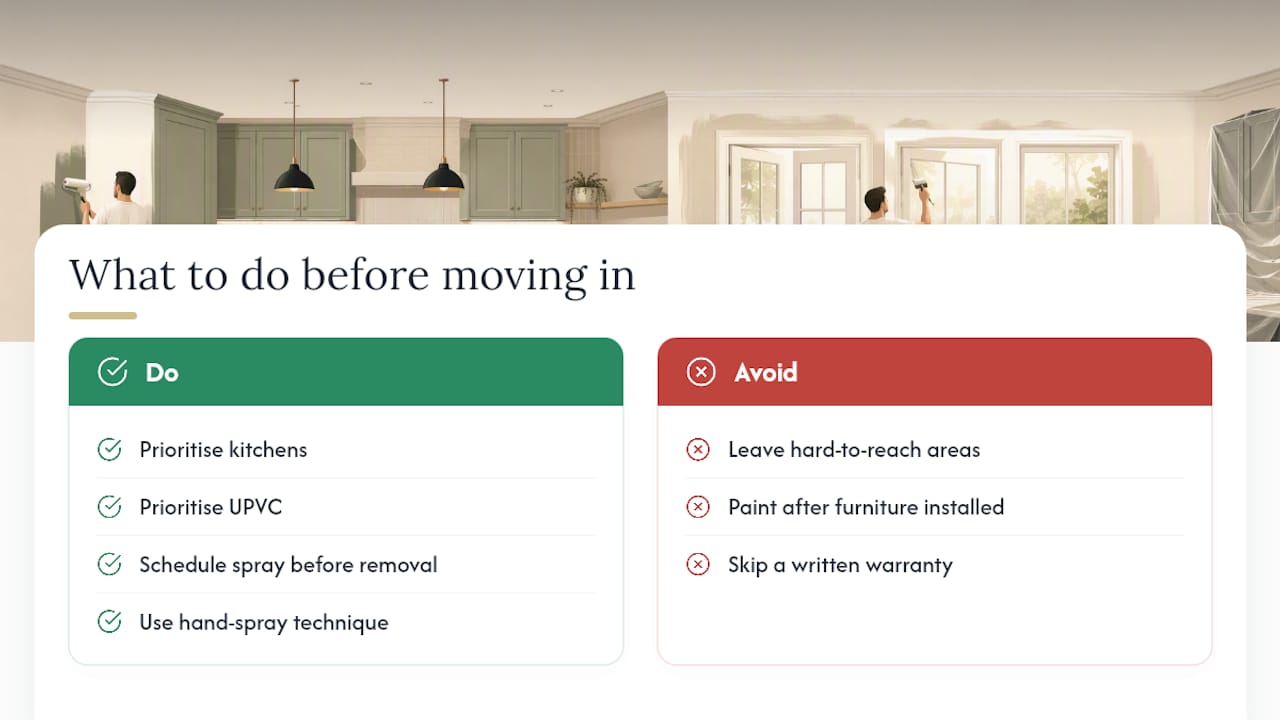
Most enquiries follow a familiar pattern: someone has just exchanged, the kitchen is dated or the UPVC has yellowed, and they want it sorted before the removal van arrives. In the vast majority of those cases, that's exactly the right call. Our experience includes numerous kitchen and UPVC projects, employing a hand-spray technique to achieve a factory-standard finish, supported by a warranty on every job.
The one rule of thumb worth remembering: prioritise anything that becomes genuinely hard to reach once furniture and appliances are in. Everything else can wait.
— Mitchell
Get your respray booked before the move
Choosing a direct alternative to full kitchen or UPVC replacement, timed around your move, can highlight the benefits of hand-spraying. Working directly with a single point of contact from quote to finish and supported by a warranty improves the overall experience.

Kitchen cabinets, doors, drawer fronts and island units can all be sprayed to a factory-standard finish through kitchen respraying, while faded or mismatched exteriors are covered through UPVC window spraying, UPVC door spraying and fascia and gutter spraying. If your kitchen colour choice depends on how the light falls in your new home, it's also worth reading up on choosing interior door colours before you commit to a shade.
To get a quote moving, photograph the areas you're considering and note your move-in date, so the timeline can be worked backwards from completion day. Get in touch through Refinishingstudio with those details and your rough budget in mind.
Sources
- Should I Paint Before Moving In? | Fortune Restoration Chicago
- How much to respray a car? | Parkers
- How to pack paintings, mirrors and wall art for moving | U-Haul
FAQ
Is it better to respray before or after moving in?
Before, in most cases, because empty rooms let contractors work faster and give freshly sprayed surfaces an undisturbed cure before furniture arrives. Wait only if major repairs or renovations are still planned.
How long should I allow for curing before moving furniture in?
Allow at least 48 to 72 hours of undisturbed time after spraying before placing furniture or boxes against finished surfaces, since coatings can remain vulnerable to marking even after they feel dry to the touch.
Which surfaces should be sprayed first when moving house?
Kitchen cabinets and UPVC windows and doors take priority, since both become far harder to access once appliances are fitted and furniture is unpacked.
Can renters respray UPVC or kitchen surfaces before moving in?
Only with landlord permission, and tenancy agreements should be checked first since many restrict permanent alterations to fixtures like kitchen cabinetry or UPVC frames.
Does Refinishing Studio offer a warranty on respray work?
Yes, Refinishing Studio provides a five-year warranty on its hand-sprayed kitchen and UPVC finishes, applied directly with no subcontractors involved.
What does kitchen respraying typically cost?
Pricing depends on the size and scope of the job; current costs are listed on the kitchen respraying cost guide.