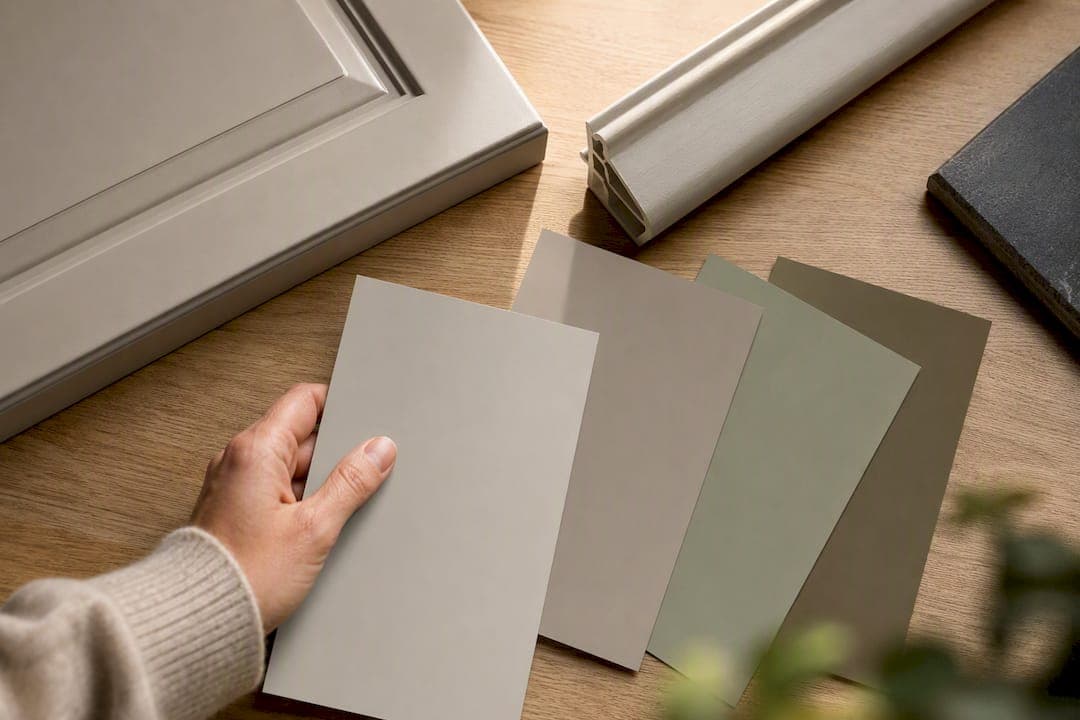
For most exteriors and kitchens, the safe, contemporary choice is a warm neutral, such as a greige or pebble tone, paired with satin or eggshell for kitchen cabinetry and matt or satin for UPVC depending on exposure. Whatever direction you lean, insist on exact RAL or BS codes, a physical test panel, and a transferable five-year warranty before you sign anything.
TL;DR:
- Coloured UPVC windows in 2026 are shifting towards warmer neutrals like pebble grey and muted greens, with anthracite's popularity declining.
- Matching colours to building materials, such as warm greige for brick or sage for garden-facing frames, improves aesthetic harmony.
- Satin or eggshell finishes suit high-traffic kitchens, while exterior frames exposed to sun benefit from satin over matte for better weathering.
- A physical test panel and approval process involving multiple light checks are essential before finalising colour choices.
- A transferable five-year warranty and careful selection of exact RAL or BS codes are key to a durable, predictable finish.
Table of Contents
- How to choose colours for a respray in 2026
- Which finish suits kitchens versus exterior UPVC?
- What's the step-by-step process for approving a colour?
- What do durability, cost and energy rules actually mean for colour choice?
- Your colour brief checklist and quick example palettes
- What we see clients actually choose, and how approvals really go
- Ready to shortlist your colour and get a quote?
- Sources
- FAQ
How to choose colours for a respray in 2026
Anthracite grey has dominated UPVC and kitchen respray requests for the best part of a decade, but that grip is loosening. Renolit's colour trend data shows anthracite volumes falling sharply in some segments while Pebble Grey Smooth has seen a strong uptick and warmer tones like Beck Brown have grown too. Trade commentary backs this up: Fenestration News reports manufacturers actively widening their colour ranges and pushing textured, matte-plus finishes that soften the look compared with flat anthracite.
What's replacing it isn't one single colour, it's a family of warmer, softer neutrals. Think pebble and mushroom greys, muted sage and olive greens, and bronzes that read as almost metallic in direct sun but calm indoors. These work because they sit between the coldness of grey and the commitment of a bold colour, which matters if you're choosing something that has to outlast your current taste in three or four years' time.
Matching the palette to the building matters more than the trend itself. Warm neutrals and mushroom tones suit red brick and render better than anthracite ever did, since they don't fight the warmth of the masonry. Muted greens work well against timber cladding and stone. Bronzes and deep browns complement modern render and slate roofs.
Starting points worth asking your sprayer about:
- RAL 1019 (Grey Beige) or similar warm greige tones for render and brick properties
- RAL 7032 (Pebble Grey) for a softer alternative to anthracite, detailed further in Refinishingstudio's pebble grey guide
- BS 08B29 or comparable mushroom shades for period properties with timber features
- RAL 6021 (Pale Green) or muted sage variants for coastal or garden-facing elevations
- RAL 8007 (Fawn Brown) as a bronze-leaning option for contemporary new-builds
Which finish suits kitchens versus exterior UPVC?
The sheen you pick changes how forgiving a colour is day to day, not just how it looks in a brochure. The Painted Kitchen Company's finish guidance sets out the trade-off clearly: matt hides surface texture and application marks well but marks easily at handles and corners, gloss wipes clean in seconds but shows every brush pass and fingerprint, and satin or eggshell sits in the middle, durable enough for daily wear without the glare.
For kitchens, satin or eggshell is usually the better all-round call. Cabinetry gets touched constantly around handles, drawer edges and worktop returns, and a full gloss finish will show every one of those touchpoints within months. Matt kitchens look striking in photos but need more careful cleaning, since abrasive sponges can burnish matt paint and leave shiny patches.
For exterior UPVC, exposure decides it. South-facing frames that catch direct sun for most of the day often suit satin better than full matt, since matt can look chalky as it weathers. Sheltered or north-facing elevations can carry a matt finish comfortably for years.
Sheen choice by area:
- Busy kitchen cabinetry: satin or eggshell
- Statement kitchen islands away from high traffic: matt
- Exterior UPVC in full sun exposure: satin
- Sheltered exterior frames and fascias: matt or satin
Pro Tip: Ask your sprayer to keep a small offcut or spare panel from your job. If a door gets chipped in five years, matching touch-up paint to a saved sample is far easier than trying to match it from memory or an old photo.
What's the step-by-step process for approving a colour?
Picking a colour on a screen and getting the same colour on your frames or cabinets are two different things. A proper approval process closes that gap.
- Assess the context first. Look at your brick or render tone, roof colour, neighbouring properties, and, for kitchens, the direction your main window faces and how much natural light the room gets through the day.
- Shortlist three colours with exact codes. Work from RAL or BS references, or supplier swatch numbers, rather than vague names like "warm grey", since paint suppliers interpret informal names differently.
- Order physical samples. A screen or printed swatch shifts colour depending on your monitor and the paper stock; a real sample chip does not.
- Request a test panel or small mock-up. Concept Coatings' guidance on colour testing recommends checking colour on-site against the actual substrate, because a shade that reads warm on a swatch card can look considerably cooler once it's up against red brick or under artificial kitchen lighting.
- Inspect the panel morning, midday and evening. Natural light shifts colour temperature through the day, and kitchen spotlights can flatten warm tones that looked rich in daylight.
- Confirm the match across every component. Cills, trims, door frames and cabinet end panels should all be checked together, not approved individually.
- Ask the sprayer directly about prep, primer, topcoat and warranty terms before booking the job, and get the answers in writing.
What do durability, cost and energy rules actually mean for colour choice?
A well-applied respray on sound UPVC or cabinetry should hold its finish for years, though the exact lifespan depends heavily on preparation and product quality. Refinishingstudio's own durability breakdown covers what affects longevity in more depth, and a five-year transferable warranty is a reasonable minimum to expect from a professional job.
Maintenance is straightforward but finish-dependent:
- Matt surfaces need a soft cloth and mild soap; avoid abrasive sponges, which can burnish and leave shiny patches.
- Satin and eggshell tolerate regular wiping well and are the easiest to keep looking consistent.
- Gloss needs the most careful cleaning since fingerprints and water marks show fastest.
On cost, Checkatrade's cost data puts coloured UPVC frames at roughly a 10 to 20% premium over standard white, with installed window costs typically falling between £450 and £1,200 depending on specification. A full respray is generally the cheaper route to the same look, and Refinishingstudio's cost guide breaks down what drives price within that. Metallic finishes, textured effects and fully bespoke colour matching outside standard RAL or BS references tend to sit at the top of any quote.
One technical point worth clearing up: colour has no meaningful effect on a window's U-value. Axiom Eco Homes' buyer guide confirms coloured UPVC windows with modern glazing typically achieve U-values around 1.2 to 1.4 W/m²K, and ECO4 grant eligibility depends on that glazing performance meeting a 1.4 W/m²K threshold, not on the colour you pick. Choose your colour freely; sort your grant eligibility through your glazing spec.
Your colour brief checklist and quick example palettes
Hand this checklist to your sprayer, or use it to build your own quote request:
- Exact colour code (RAL, BS, or supplier reference), not a descriptive name alone
- Confirmed sheen (matt, satin/eggshell, or gloss) for each component
- A physical test panel or on-site mock-up before full application
- Written confirmation of the five-year warranty and what it covers
- Agreed acceptance criteria: what counts as a pass when you inspect the finished job
- Timeline and any prep or primer details specific to your substrate
A handful of starting palettes to shortlist from, rather than default to anthracite:
| Application | Colour direction | Suggested finish |
|---|---|---|
| Exterior UPVC, brick property | RAL 1019 warm greige | Satin |
| Exterior UPVC, render/coastal | RAL 6021 muted sage | Matt |
| Exterior UPVC, contemporary build | RAL 8007 bronze/fawn | Satin |
| Kitchen cabinetry, busy family kitchen | BS 08B29 mushroom | Satin/eggshell |
| Kitchen island, statement piece | Custom forest green | Matt |
| Kitchen cabinetry, period property | RAL 7032 pebble grey | Eggshell |
Worth flagging: colour advice for car and vehicle resprays follows completely different rules around automotive basecoats and clearcoats, so don't lean on that guidance here. UPVC and kitchen respray colours and finishes are a different specification entirely.
What we see clients actually choose, and how approvals really go
Most clients arrive with anthracite on their shortlist and leave with a warm neutral, a pebble grey, or occasionally a bold custom colour like forest green once they've seen a test panel in their own light. That shift happens almost every time someone sees a sample against their actual brick or cabinetry rather than on a screen.
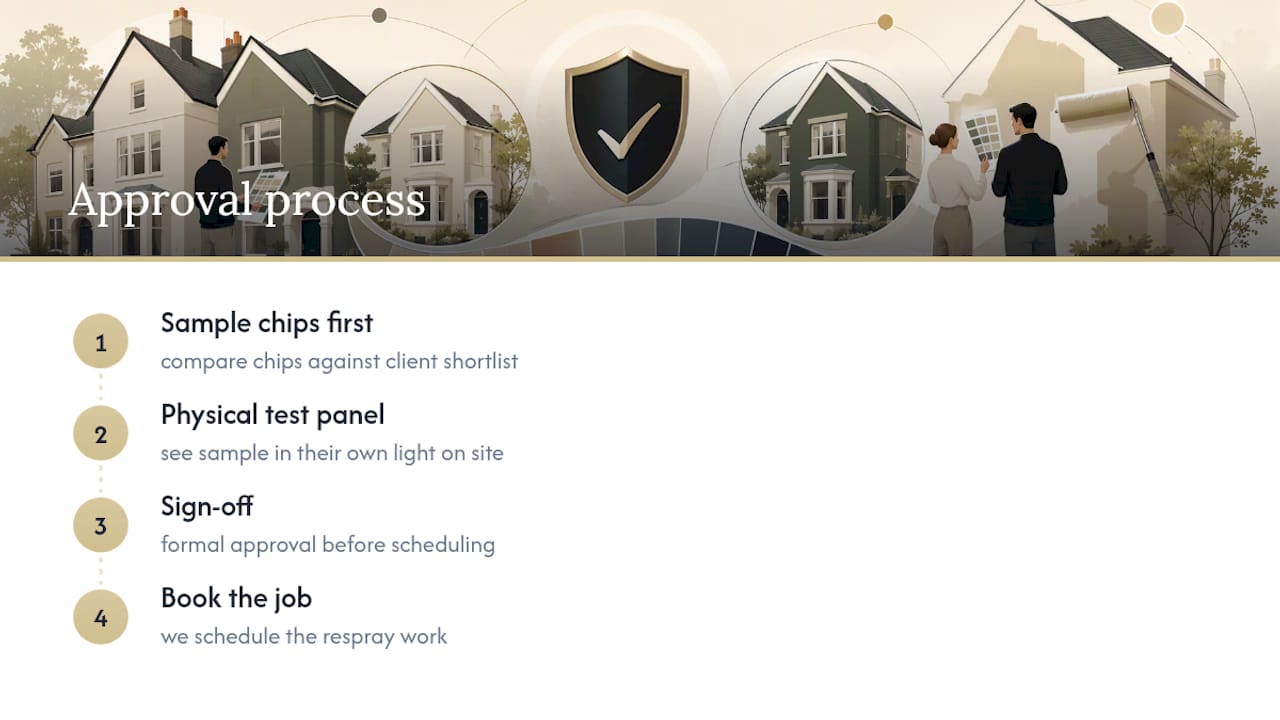
Our approval process is deliberately unhurried: sample chips first, a physical test panel next, then a sign-off before we book the job in. It's rarely a fast decision, and it shouldn't be. Browse completed projects, including a forest green kitchen island in Pontcanna and a jet black UPVC respray in Llanelli, on our project portfolio for a sense of how different these choices look once finished.
— Mitchell
Ready to shortlist your colour and get a quote?
We hand-spray UPVC windows, doors, conservatories, fascias and garage doors, plus full kitchen cabinetry, backed by a transferable five-year warranty and many completed projects. Every job is finished by hand, with no subcontractors involved.
If you're weighing up a warm neutral against a pebble grey, or trying to decide between satin and matt for your frames, our finishes page walks through each sheen in more detail, and for cabinetry ideas the Finest Furniture colour guide is a useful cross-reference for pairing wardrobes and kitchens in the same scheme. When you're ready to move from shortlist to sample panel, request a quote through our UPVC respraying service or our kitchen respraying service, and we'll arrange a site visit to talk colours in your own light.
Sources
- Renolit — Real beauty: Renolit's trend colours 25–26
- Checkatrade — Coloured uPVC windows cost guide
- Axiom Eco Homes — Coloured UPVC windows UK 2026 buyer guide
- The Painted Kitchen Company Ltd — Painted kitchen finishes explained: sheen levels
- Fenestration News — Calling time on anthracite?
FAQ
What warranty should I expect on a professional respray?
A five-year transferable warranty is a reasonable industry benchmark for a professionally hand-sprayed UPVC or kitchen finish, and it's what Refinishingstudio provides on every project.
Do I need a test panel before committing to a colour?
Yes. A physical test panel on your own substrate, checked in your own light, catches colour shifts that swatches and screens miss.
Does the colour of my UPVC affect my ECO4 grant eligibility?
No. ECO4 eligibility depends on your glazing's U-value meeting the 1.4 W/m²K threshold, not the colour of the frame.
What's the best finish for a busy family kitchen?
Satin or eggshell is generally the best balance of cleanability and forgiving appearance for cabinetry that gets handled daily.
Is anthracite still a good choice for 2026?
Anthracite remains a solid neutral, but trend data shows warmer alternatives like pebble grey and muted greens are gaining ground and may age better against brick and render.