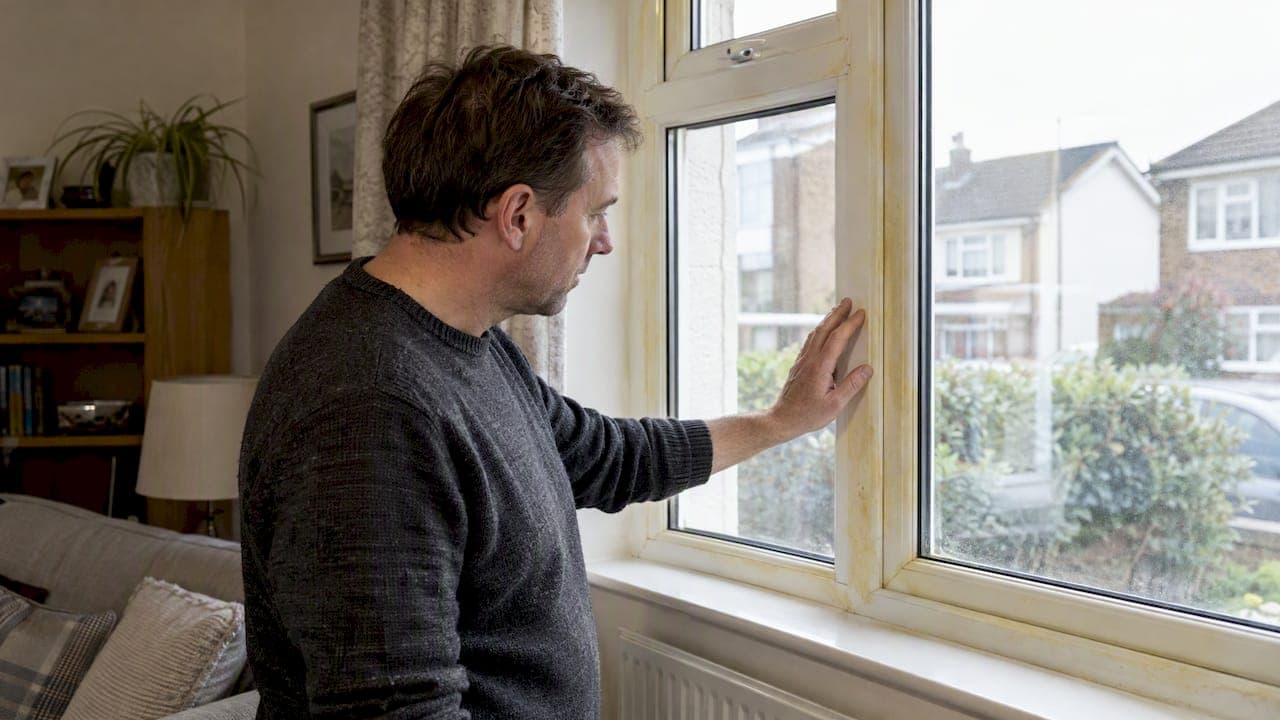
Most yellowed white uPVC can be improved without replacing a thing. The discolouration is usually a cosmetic surface layer of weathered plastic, so start with a test clean using soapy water, then try a dedicated restorer. If you want a uniform, long-lasting finish across several frames, a professional respray is the better route. Check that hinges, handles and seals still work first.
TL;DR:
- Check every sash, seal, and frame for smooth operation, gaps, or cracks before spending money; yellowing alone does not mean the window needs replacement.
- Clean frames every 3–4 months with mild soapy water, test products on a hidden patch, and work across the whole frame to prevent patchiness.
- Use a dedicated restorer only after washing when chalkiness or moderate yellowing remains; apply it by hand, keep it off colored profiles, and expect repeat treatments.
- Avoid bleach, strong solvents, abrasive pads, and pressure washers: they can damage seals, strip protective finishes, scratch frames, or force water behind seals.
- Choose professional respraying when several frames need a uniform color or repeated restoration becomes tiresome; a properly applied coating lasts several years, not permanently.
Table of Contents
- Why does white uPVC turn yellow in the first place?
- How do you clean yellowed uPVC safely at home?
- When do uPVC restorers and solvent cleaners help?
- Which products and habits damage uPVC?
- When does a professional respray make sense?
- My view: how to choose between cleaning, restorers and respraying
- Can specialist uPVC respraying end yellowing for good?
- FAQ
- Sources
Why does white uPVC turn yellow in the first place?
The main culprit is long-term UV exposure and protection. Sunlight attacks the surface of the plastic and breaks down its polymer chains, a process called photo-oxidation. Manufacturers add titanium dioxide (TiO2) and other stabilisers to slow this, but the protective layer typically depletes over roughly 15–25 years, so older frames are the first to turn.
Where you live matters too. Frames can yellow at very different rates around one house: the same home can show very different yellowing by elevation. These factors speed things up:
- South and west facing frames that catch the most sun
- Traffic fumes and general atmospheric dirt
- Cooking smoke, especially around kitchen windows
- Coastal salt in the air
Material scientists note that titanium dioxide, while protective, can in some formulations contribute to gloss loss and chalking, which helps explain why two frames of the same age can look so different.
Before spending money, check the frame is sound. Open and close every sash, look at the seals for splits or gaps, and scan for cracks. If it all works, you are dealing with a cosmetic problem, not a failing window.

How do you clean yellowed uPVC safely at home?
Always start with the gentlest method. Cleaning every 3–4 months is the recommended routine to stop grime and atmospheric deposits accelerating surface wear. Our own post on four cleaning steps to try before repainting covers similar ground.
- Ventilate the area, tape off nearby paintwork and protect the glazing and any wooden sills.
- Test your cleaner on a small, hidden patch of frame before using it more widely.
- Wash with warm water and a few drops of mild washing-up liquid, using a soft cloth. Work in sections so the soap never dries on the surface.
- For green algae staining, try diluted white vinegar on a small, hidden patch first, then rinse thoroughly with clean water.
- Dry with a clean microfibre cloth to avoid water marks.
- For mould on the seals, test stronger vinegar on a small, hidden area first, then use a soft brush. Skip the bleach.
Avoid using melamine sponges as an everyday cleaner. Avoid pressure washers when cleaning uPVC frames.
Pro Tip: Do the whole frame in one session. Cleaning only the worst patches leaves a patchwork that makes the yellowing look worse by contrast.
When do uPVC restorers and solvent cleaners help?
If a thorough wash changes little, the yellow is probably ingrained. Trade guidance is that established yellowing from deep UV degradation needs specialised restorers that slightly dissolve the oxidised outer layer, revealing fresher plastic beneath. Products range from solvent-based frame cleaners to solvent-free creams designed to lift ingrained dirt and buff the sheen back.
Restorers suit chalky or moderately yellowed frames. They cannot repair deep structural degradation. Field experience supports this: a proper restorer cream can remove the degraded layer to reveal sound material below, though the result is maintenance rather than a permanent fix.
To apply one properly:
- Clean the frame first so you are not grinding dirt into the surface.
- Apply by hand with a soft cloth, working in small sections.
- Buff off the residue before it dries.
- Keep it off foiled or coloured profiles unless the label states compatibility. Our guide on changing the colour of foiled uPVC frames explains why those need different handling.
- Expect to repeat the treatment over the years, especially on sun-facing elevations.
Pro Tip: Treat one small section first. Check it in daylight from several angles before committing to the whole frame.
Which products and habits damage uPVC?
Some popular quick fixes make things worse, so rule these out:
- Bleach: it does not reverse photo-oxidation, and sodium hypochlorite carries real health and safety risks. Never mix it with acids or ammonia, and keep it away from seals because it can damage them.
- Strong solvents: acetone, white spirit and nail varnish remover strip protective finishes and leave micro-scratches.
- Abrasive pads and wire wool: they roughen the surface, so it attracts dirt faster and degrades sooner.
- Pressure washers and general spray paints: forced water gets behind seals, and paints not formulated for uPVC tend to flake.
Strong solvents and abrasives strip protective finishes and create micro-scratches, which is why a gentle, pH-neutral wash is the safer habit.
When does a professional respray make sense?
Consider a respray when cleaning and restorers have run their course, when you want one consistent colour, or when many frames need the same treatment. It also suits homeowners who would rather not repeat restorer maintenance every few years.
A professional respray uses specialist coatings applied after careful cleaning and masking. That differs from a DIY spray can, and it gives a longer-lasting, more even finish. Refoiling is the other option: a decorative film applied to the frame, which depends heavily on how well the edges are prepared. Both need good masking around gaskets and glass. Our guide on whether you can spray uPVC explains what a spray job involves from start to finish.
When comparing contractors, ask about:
- The type of finish and coating system used
- How edges, seals and glass are treated
- The warranty and what it covers
- Photos or examples of similar completed work
Expect on-site masking and protection of your seals and glazing. Be realistic about longevity: a well-applied professional finish lasts several years, but it is still a coating and will need future care.
Pro Tip: Ask to see a finished frame in daylight, not just photos. Close up, you can judge edge detail and evenness.
My view: how to choose between cleaning, restorers and respraying
Match the fix to the condition. Light grime responds to safe cleaning, so start there. Chalky or moderately yellowed frames justify a restorer. Choose a respray when you want a uniform, lasting colour change or when several frames need the same result. Keep window function and glazing condition at the front of your mind: colour alone is a weak reason to replace perfectly good frames.
— Mitchell
Can specialist uPVC respraying end yellowing for good?
If you are tired of repeating restorer treatments, our hand-spray service gives your frames a professionally applied finish in a wide choice of colours and finishes. You get a written quote, careful preparation, on-site masking of seals and glass, then a finish we stand behind. Window respraying starts from £80 and runs to £2,200 depending on the job. See our UPVC window spraying service and request a no-obligation quote today.

FAQ
Can you use bleach on uPVC window frames?
It is best avoided. Bleach does not reverse the yellowing and can harden rubber seals if it runs into them. Sodium hypochlorite also carries health risks, so use a mild soapy wash or a dedicated restorer instead.
Why are my uPVC windows turning yellow?
Long-term UV exposure slowly breaks down the plastic's surface, a process called photo-oxidation. Cooking fumes, traffic dirt and strong sun on south or west elevations speed it up. In most cases the damage is cosmetic and affects only the outer layer.
Can yellowed uPVC be made white again?
Often, yes. A thorough clean followed by a restorer can remove the oxidised outer layer on moderately yellowed frames. Where results will not last or you want a uniform finish, a professional respray is the longer-lasting option.
Is it worth respraying uPVC instead of replacing it?
If hinges, handles, seals and glazing still work, respraying is usually a lower-cost alternative to replacement. It tackles the colour without the disruption of new frames. Replacement only makes sense when the unit itself is failing.