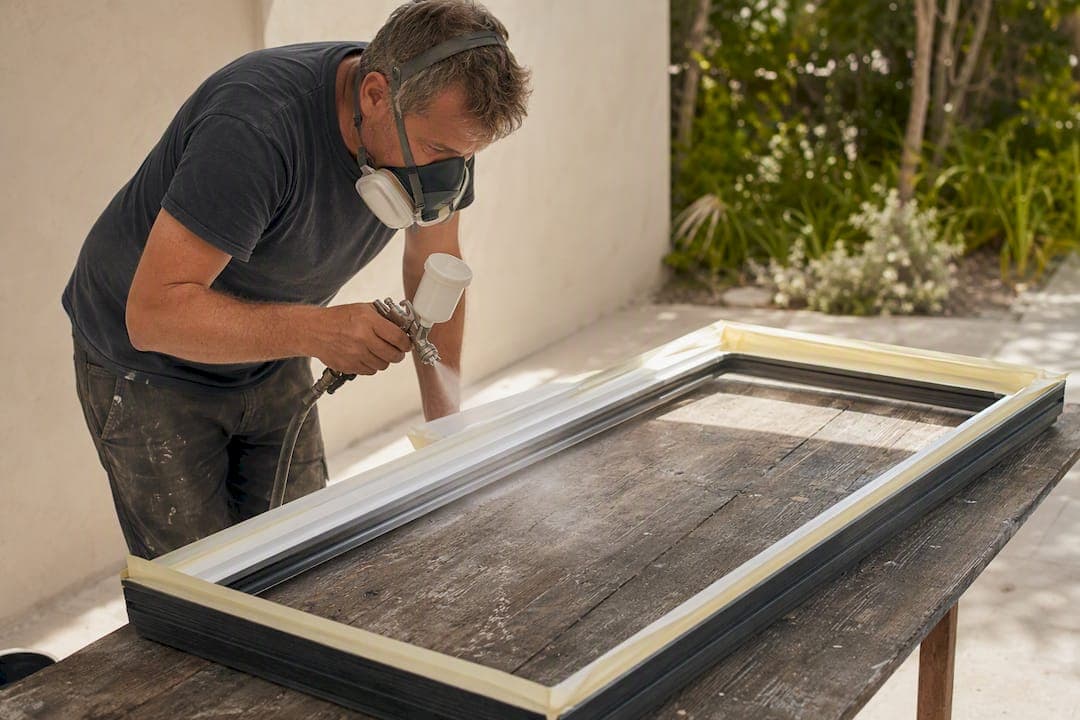
Yes, but not by adding new foil. The three realistic routes are full profile replacement, professional respray, or a specialist refoil job where a fabricator remakes the frame, and for most homeowners a professional respray gives the best balance of cost, colour choice and durability without ripping out sound frames.
TL;DR:
- Factory foil cannot be changed or retrofitted without full profile replacement, which is costly and disruptive.
- Professional respraying offers a durable, cost-effective alternative, typically lasting five to ten years with proper surface preparation.
- DIY painting is inexpensive but often results in peeling or mismatched finishes within one or two seasons.
- UV-resistant foils last 15 to 25 years, but darker colours absorb more heat, accelerating joint stress and edge lifting.
- Homeowners should seek written warranties, see completed work examples, and get a sample patch before choosing a professional respray.
Table of Contents
- Can you change the colour on foiled UPVC, and what actually happens to the surface?
- What are your realistic options for changing the colour?
- How do replacement, respraying and DIY painting compare?
- What does it cost, and how long does the work take?
- Do you need permission to change an exterior colour?
- Should you attempt this yourself or bring in a professional?
- How do you maintain foiled frames and catch small problems early?
- What should you actually do next?
- A note on choosing colour and finish
- How Refinishing Studio can change your frame colour without a full replacement
- Where to check the technical and legal details
- Sources
Can you change the colour on foiled UPVC, and what actually happens to the surface?
Coloured foil on a window frame is not paint. It is a laminated film, bonded to the uPVC profile under heat and pressure during manufacture, and once that bond is set it becomes part of the surface rather than a coating sitting on top of it. That process is why you cannot simply strip one foil off and stick another over the top; the equipment and heat conditions needed exist in a factory, not on a ladder outside your lounge window.
Dual-colour frames, say anthracite outside and white inside, work the same way. Both colours have to be specified during manufacture, because the foil is applied to each face of the profile before it is ever fitted. You cannot retrofit a second colour onto an existing frame and expect a factory-quality result.
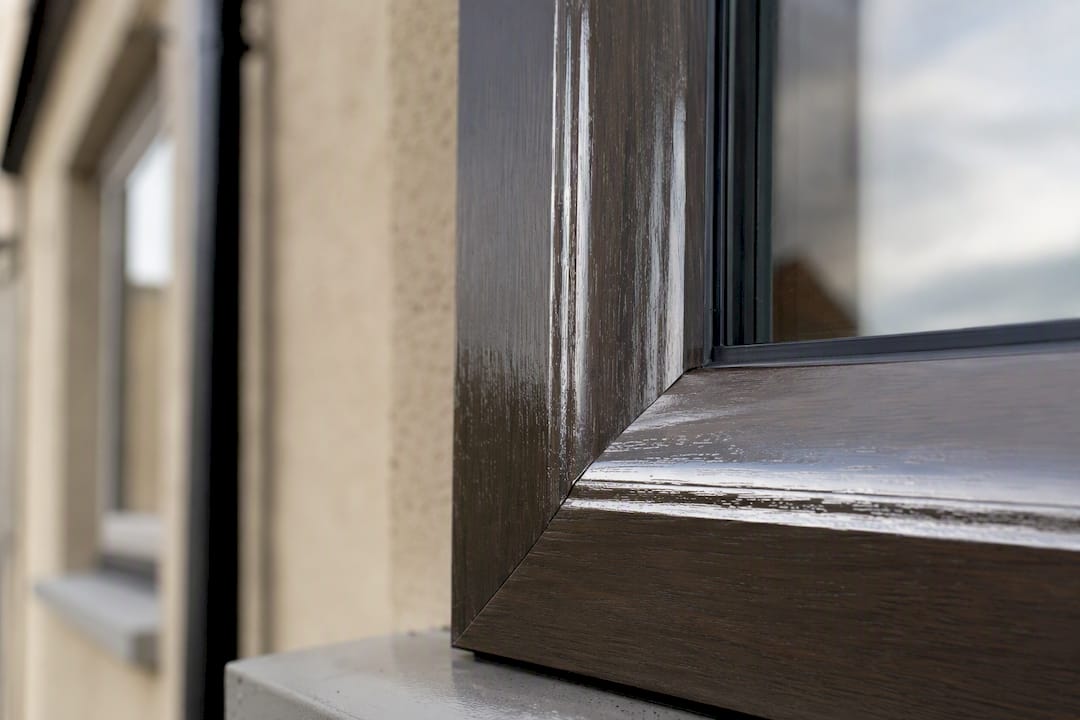
Foil quality also affects how long the colour lasts before you're having this conversation at all. Better foils include a protective acrylic top layer built to resist UV fade, though darker colours absorb more solar heat regardless of quality, which puts extra long-term stress on the joints and can accelerate lifting at the edges.
What are your realistic options for changing the colour?
Once you accept that foil itself is a factory process, three genuine options remain.
- Full profile replacement. New frames in your chosen foil, factory-finished and permanent, but disruptive and the most expensive route by far.
- Specialist refoiling. A small number of fabricators can strip and reapply foil, though availability is patchy and colour matching between old and new sections can be tricky.
- Professional respray. A trained sprayer applies a factory-grade paint system directly to the existing frame in a workshop or on-site, with RAL or BS colour matching and, from reputable operators, a multi-year warranty.
- DIY painting. Cheapest upfront, but ordinary paint has poor adhesion to uPVC without the right primer, tends to chip within a season or two, and rarely matches the sheen of a factory or professional finish.
For most homeowners weighing cost against a lasting result, a well-executed respray gets close to a factory finish without the upheaval of ripping out sound frames.
How do replacement, respraying and DIY painting compare?
Durability separates these options more than anything else. Factory foil laminate typically lasts 15 to 25 years before it needs attention, a properly applied professional respray usually needs recoating every 5 to 10 years, and DIY paint jobs often fail within a season or two if the surface wasn't prepared correctly.
- Foil (factory): longest lifespan, but zero repairability without replacing or overcoating the whole frame.
- Professional respray: strong middle ground on durability, wide colour choice, and the surface can be recoated again later.
- DIY paint: shortest lifespan, highest risk of peeling, and the hardest to match to an existing sheen or grain.
Orientation matters too. South-facing frames take more UV and heat cycling, which is exactly where cheap paint jobs fail first and where a quality respray with the correct primer earns its keep.
Pro Tip: Ask any installer whether the failure you're looking at is cosmetic (surface chalking, minor fading) or adhesive (bubbling, lifting at joints). Cosmetic problems respond well to respraying; adhesive failure usually means the bonded layer has to be stripped back before any new finish will stick.
What does it cost, and how long does the work take?
Costs vary with the number of frames, access difficulty and your chosen colour, since darker RAL shades sometimes need extra profile reinforcement to manage heat stress. Expect the process to run in three broad stages.
- Survey and quotation. A visit to assess frame condition, count openings and confirm colour, usually within a week or two of enquiry.
- Preparation. Cleaning, masking and priming, which for respraying is done either in a workshop or protected on-site setup.
- Application and cure. Spraying and curing typically completes a standard house within one to three days, though full replacement projects run longer once glazing removal and scaffolding are factored in.
Access charges, extra reinforcement for dark colours, and any glazing removal needed for damaged seals will sit on top of the base quote, so ask for these to be itemised rather than bundled.
Do you need permission to change an exterior colour?
If your property sits in a conservation area or is listed, changing an external frame colour can require local planning permission or listed building consent, and enforcement teams do check. Flats and leasehold properties often need permission regardless of location, since exteriors are frequently controlled by a management company or freeholder.
The simplest first step is a short enquiry to your local planning authority, with a photo of the current frame and your proposed colour attached. Most authorities will tell you within days whether formal consent is needed, which saves you commissioning work that has to be reversed later.
Should you attempt this yourself or bring in a professional?
Wiping down grubby foil, touching up a hairline scuff, or cleaning algae off a sill are jobs most homeowners can handle safely. Anything involving stripped adhesive, bubbling foil, or a full colour change is a different category of work, because getting the primer, paint system and cure conditions wrong means redoing the job within months.
This is where the gap between amateur and professional results becomes obvious. A trained sprayer uses a hand-spray technique built around correct surface preparation and paint systems designed specifically for uPVC, which is a different discipline to painting a wall or a door.
- Ask for a written warranty, ideally five years or longer.
- Ask to see a portfolio of completed jobs in similar colours to yours.
- Request a sample panel or test patch before committing the whole property.
- Check whether the installer subcontracts the spraying or does it in-house.
Refinishing Studio has completed over 1,000 respray projects across South Wales and backs every job with a five-year warranty, which gives you a concrete benchmark to measure any quote against.
How do you maintain foiled frames and catch small problems early?
Regular cleaning with a soft cloth and a mild soap solution, rather than abrasive pads or solvent-based cleaners, keeps foil looking its best and slows the fading process. A specialist like Fresh Exteriors can help with the algae and grime that build up around window sills before any respray work begins.
- Wipe frames every few months; avoid anything abrasive.
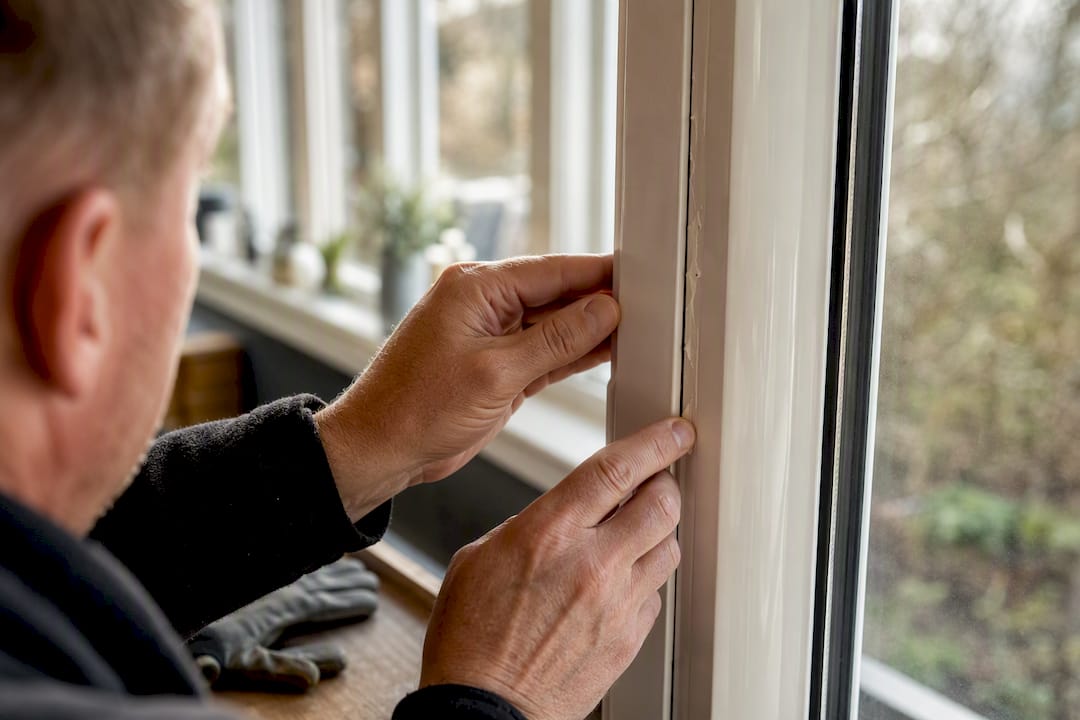
- Small surface bubbles can sometimes be gently smoothed if caught early.
- Never rely on generic adhesives or filler to fix lifting foil; they don't hold.
- If you see lifting at joints or corners, that's adhesive failure, not a cosmetic issue.
Once the bond between foil and frame has genuinely failed, a permanent fix normally means professional stripping and refinishing rather than a patch job, because ordinary adhesives don't restore long-term grip.
What should you actually do next?
If your frames show ageing, chalking or minor fade, a professional respray is the pragmatic fix. If you're seeing lifted foil at the joints or structural damage, replacement is usually the only lasting answer. Either way, take clear photos, ask any installer for their warranty terms in writing, and request a sample panel before signing off on a colour.
A note on choosing colour and finish
Anthracite grey and black remain the most durable popular choices because they hide minor imperfections and pair well with most brick tones, though dual-colour setups demand more thought about how the frame will age from both sides. Whatever you pick, insist on a written warranty and a physical sample panel before committing. Colour trends fade; a poorly matched or badly bonded finish is the thing you'll actually live with.
— Mitchell
How Refinishing Studio can change your frame colour without a full replacement
If your uPVC frames are ageing or you fancy an anthracite or custom RAL finish without tearing out sound windows, a professional respray from Refinishing Studio gets you there for a fraction of replacement cost and without weeks of disruption. Every job comes with a genuine five-year warranty, hand-sprayed finishes in RAL or BS colours, and a track record of over 1,000 completed projects across South Wales.
A typical survey involves an inspection of your existing frames, a discussion of colour and finish options such as matt, satin or gloss, and a firm quote with realistic timescales, usually completed within one to three days on-site once scheduled. There's no subcontracting, so the person who surveys your property is the person spraying it.
If you want to see the finish quality first, browse the UPVC spraying service page for examples, colour options and warranty details, then get in touch to arrange a survey and quote for your own frames.
Where to check the technical and legal details
Before committing to any colour change, confirm your position with your local planning authority on listed buildings and conservation areas, review manufacturer notes on foil composition and heat resistance, and consult FENSA guidance on window regulations if you live in a flat or leasehold property.
Sources
- Listed buildings and windows (4D Planning)
- Foil vs spray: comparing cost, consistency and durability (Foilit)
- A world of colour (Liniar)
- Coloured uPVC vs painted windows (Axiom ecohomes)