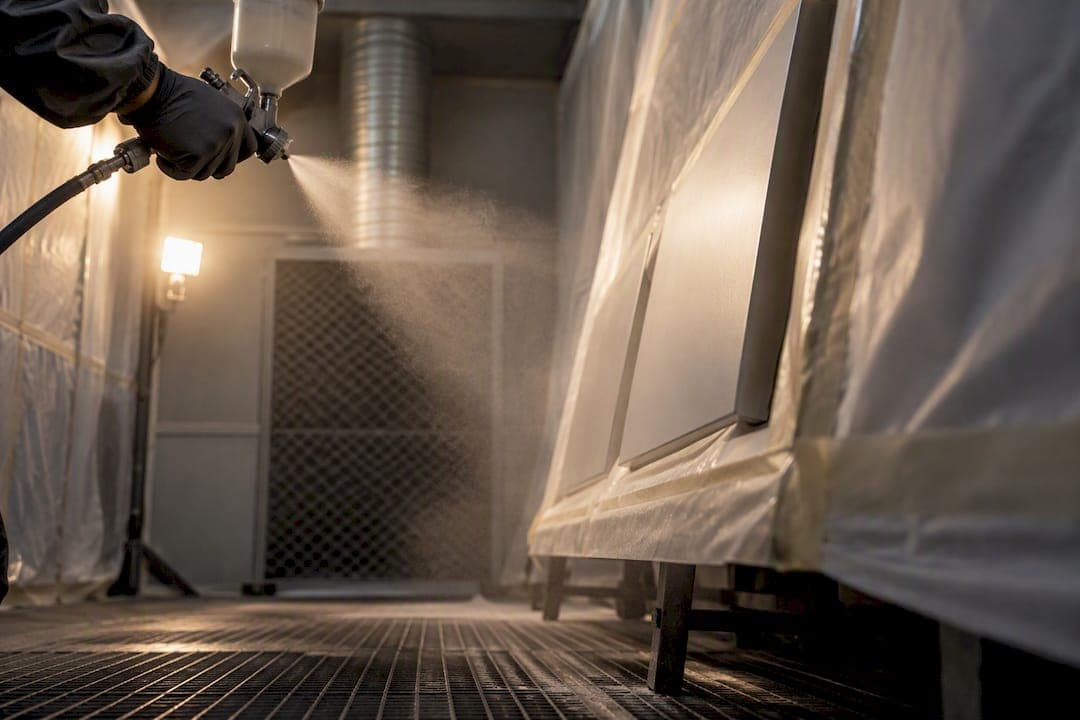
Stop spraying, contain what you can, and get air moving or your mask on before you touch another surface. Drop your gun pressure and close the distance to the panel rather than backing away. Fine paint mist is often invisible, so what you can't see can still cause respiratory sensitisation or leave flammable residue on nearby surfaces. Read on for the prevention, ventilation and remediation steps that stop this happening again.
TL;DR:
- Using HVLP spray systems significantly reduces overspray compared to conventional high-pressure equipment, improving both safety and efficiency.
- Adjusting gun pressure, tip size, and maintaining proper distance and movement minimizes excess material drift and preserves a controlled spray pattern.
- Indoor and semi-enclosed spray areas require proper containment, local extraction, and verification of ventilation and clearance times to prevent lingering mist.
- Respiratory protection for isocyanate-based paints must be air-fed RPE to effectively prevent inhalation of fine, invisible particles that can cause asthma or other health issues.
- Prompt remediation with gentle cleaning methods or professional resurfacing is recommended if overspray lands on delicate surfaces to avoid damage and ensure safety.
Table of Contents
- What overspray actually is and why it matters beyond aesthetics
- Common, fixable causes of overspray
- Step-by-step prevention: equipment, technique, containment and PPE
- Safety risks: respiratory hazards and fire risk — what protection you must use
- How to check your ventilation and measure clearance time
- If overspray happens: safe remediation and when to hire professionals
- Trade priorities: masking, prep and safety from experience
- Sources
- FAQ
What overspray actually is and why it matters beyond aesthetics
Overspray is the fraction of atomised paint that never lands on your target surface. It drifts, and it behaves far more like smoke than like a liquid you can track with your eyes. A gust from an open door, or even the pressure wave from the gun itself, carries fine droplets several metres beyond the panel you're working on, settling on cars, windows, patio furniture, anything downwind.
The bigger issue isn't the mess on next door's car. It's what you're breathing. Paint mist, especially from two-pack polyurethane and isocyanate-based products, produces particles too fine to see even in good light, and inhaling them repeatedly can trigger occupational asthma through sensitisation, according to HSE guidance on isocyanate safety. Once you're sensitised, even tiny future exposures can set off a reaction. There's a fire angle too: dried overspray residue on surfaces and clothing can ignite unexpectedly, a risk covered in HSE's guidance on spraying flammable liquids.
Common, fixable causes of overspray
Most overspray traces back to three things: your equipment, your technique, and the air around you.
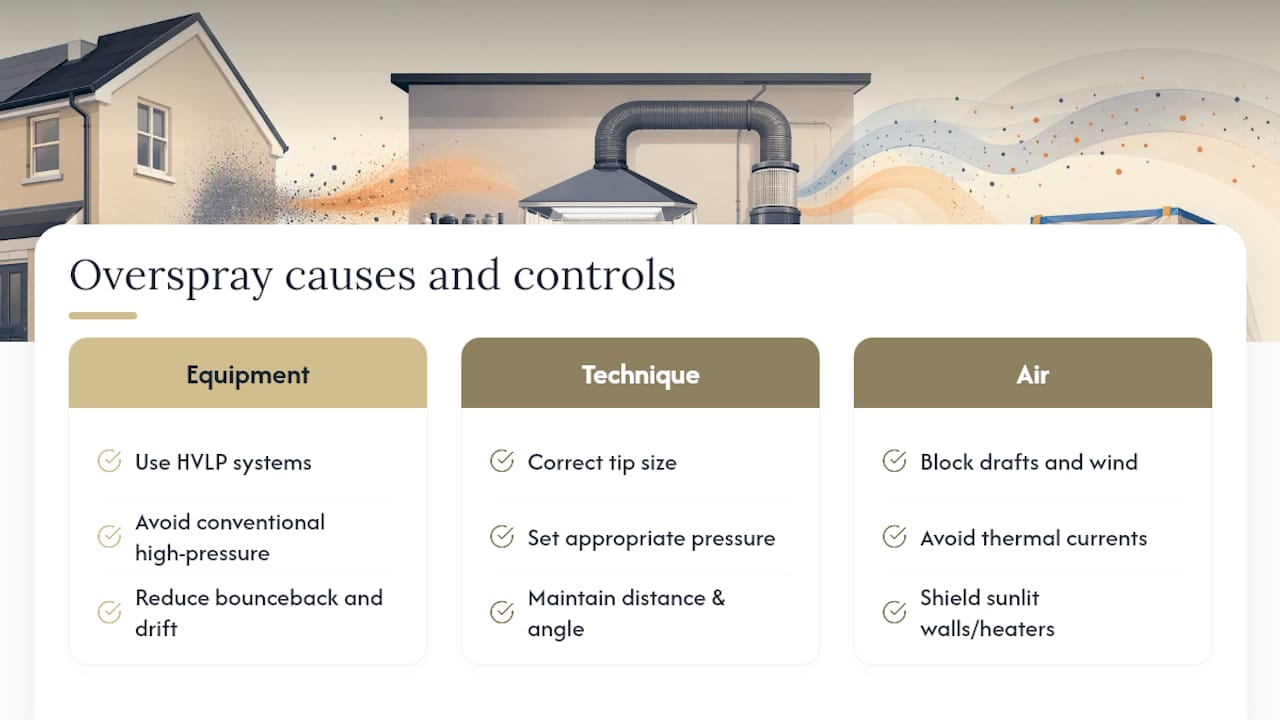
Atomisation method matters more than people assume. Conventional high-pressure spraying can lose a majority of the paint you put through the gun as bounceback or drift, while HVLP (high volume, low pressure) systems typically reduce that loss substantially to a lower range, according to HSE's spraying flammable liquids guidance. That's not a small efficiency gain. It's the difference between a controlled job and a cloud drifting across your driveway.
Tip size, pressure, gun distance and angle are the second big lever, and they're entirely in your hands. A tip that's too large or pressure set too high overloads the fan pattern, throwing excess material past the edges of whatever you're coating. Holding the gun too far back, or tilting it off a perpendicular angle, does the same thing.
Then there's the air itself. Drafts, wind, and thermal currents from heaters or sunlit walls carry mist sideways long after it leaves the gun, which is why even a technically sound spray job can go wrong in the wrong enclosure.
Step-by-step prevention: equipment, technique, containment and PPE
Getting this right is less about one clever trick and more about stacking several ordinary precautions on top of each other.
- Match the system to the job. HVLP or airmix setups reduce waste substantially compared with conventional high-pressure spraying.
- Drop the pressure, close the gap. Lower gun pressure and a shorter, correct gun-to-surface distance concentrate material where you want it.
- Fix your fan pattern before you start. Test on cardboard first, not on the actual panel.
- Keep the gun moving steadily, maintaining even overlap between passes rather than pausing and restarting.
- Mask and contain properly. Use proper tape lines, plastic sheeting or temporary curtain booths, and pay particular attention to vents and trims that catch overspray easily, as covered in guidance on protecting trickle vents during resprays.
- Use local extraction or portable filtration wherever you're working indoors or in a semi-enclosed space, not just in a full spray booth.
- Wear non-absorbent overalls and remove them before entering other rooms, so residue doesn't travel with you.
Pro Tip: Run a test pattern on scrap board every time you change tip, pressure, or paint viscosity. Five minutes of testing saves an hour of masking rework and a lot of overspray you'll be scrubbing off later.
For interior work, containment often needs a different approach than exterior jobs. Advice on spraying dark cabinets white without runs or bleed covers masking techniques that translate directly to controlling overspray on any interior cabinetry project.
Safety risks: respiratory hazards and fire risk — what protection you must use
Isocyanate-based paints carry the most serious health risk in spray work. Early warning signs include a tight chest, wheezing, or a cough that worsens during or shortly after spraying, often easing over a weekend away from exposure, per HSE's isocyanate safety guidance. That pattern, better on days off, worse back at work, is itself a red flag worth acting on.
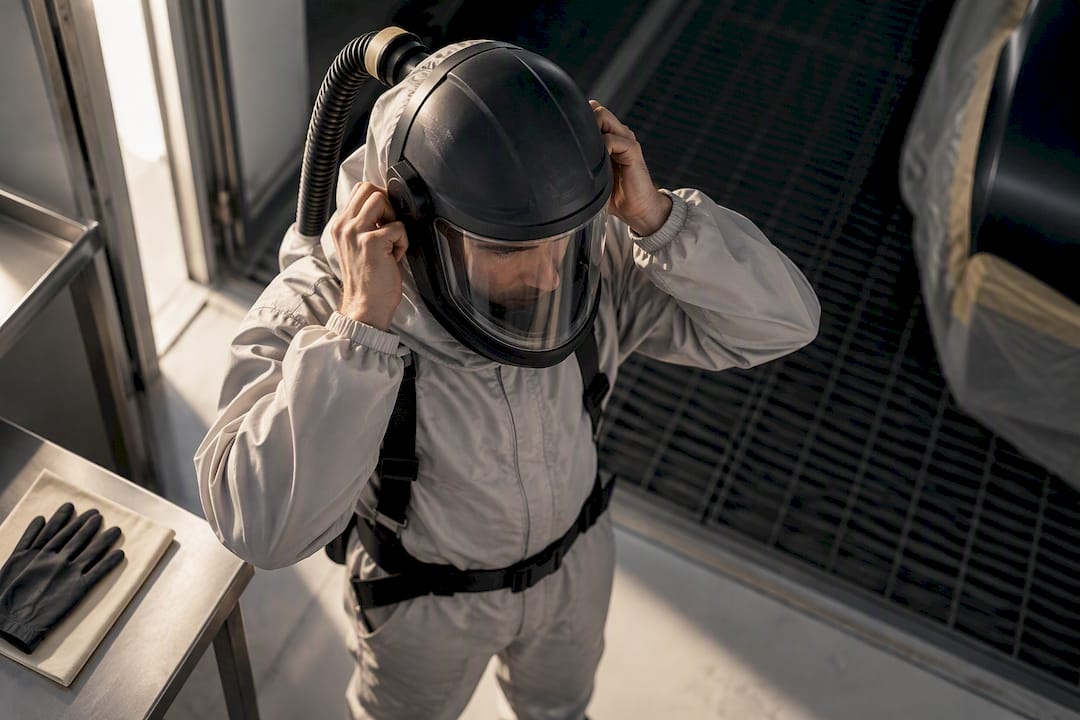
Air-fed respiratory protective equipment (RPE) is recommended over disposable masks for isocyanate-containing products, because ordinary filtering masks don't reliably stop the finest mist. The single most dangerous habit sprayers fall into is lifting the visor or pulling off RPE too early, assuming the air has cleared when it hasn't, according to HSE guidance on managing spray booths.
On the fire side, dry overspray deposits on walls, floors, and clothing can still ignite, so regular cleaning and non-absorbent workwear matter more than people expect, per HSE's flammable liquids guidance. If you notice breathing symptoms that persist or recur, stop spraying that product and get medical advice before continuing.
How to check your ventilation and measure clearance time
Negative pressure means air is being drawn into your spray space rather than pushed out, which stops mist escaping into the rest of a building. You can get a rough sense of this by checking whether a door or curtain edge draws inward rather than billowing out; a proper check uses a manometer, but the draft test tells you plenty for small setups.
For clearance time, the practical version of the professional smoke test is achievable with a party fogger: fog the space, seal it as you would during spraying, then time how long the haze takes to fully clear under your extraction, a method described in HSE's spray booth guidance. Run this test whenever you change extraction fans, resize the enclosure, or move to a new space, and if the smoke pools rather than clearing, call a competent tester before spraying anything isocyanate-based in there.
If overspray happens: safe remediation and when to hire professionals
Stop spraying immediately, ventilate the area if it's safe to do so, and remove anything that could ignite dried residue nearby.
Removal depends entirely on the surface. Glass usually responds well to a plastic scraper and mild solvent; UPVC needs a gentler touch, since abrasive pads or strong solvents can dull or scratch the factory finish permanently. Painted or lacquered surfaces are the trickiest, because aggressive cleaning risks stripping or marking the existing finish rather than just lifting the overspray. Guidance on cleaning sprayed kitchen cabinets safely covers the gentler methods that avoid this trap.
If overspray has landed across a large area, or if a delicate finish is already compromised, a professional respray is often cheaper and safer than trying to rescue the surface yourself.
Trade priorities: masking, prep and safety from experience
Professionals spend disproportionate time on masking, often close to half the total job time, because containment failures cause far more rework than a slow spray pass ever does, a pattern reflected in trade accounts of conservatory frame spraying jobs. The most common DIY mistake isn't bad spraying technique. It's rushing the masking, then discovering overspray on a window six feet away that nobody thought to cover.
When containment simply isn't practical, a cramped kitchen, an exterior job next to a neighbour's car, hiring it out stops being a luxury and starts being the sensible call.
— Mitchell
Sources
Read the source guidance directly: HSG178 on spraying flammable liquids, HSG276 on managing spray booths and rooms, and INDG388 on isocyanate paint spraying safety.
If a job's containment needs outstrip what your setup can manage safely, Refinishingstudio's hand-spray teams handle UPVC window spraying and kitchen respraying across South Wales, working to factory-standard finishes with a five-year transferable warranty and no subcontractors on the job.
This article is general information, not a substitute for advice from a qualified doctor. Consult a qualified healthcare professional about your own circumstances before acting on anything here.
- Safety in isocyanate paint spraying (INDG388)
FAQ
How long does overspray stay in the air?
There's no single fixed time. It depends on your enclosure, extraction rate, and paint type, which is exactly why HSE recommends measuring your own clearance time with a smoke test rather than guessing. In a well-ventilated space it can clear in minutes; in a poorly ventilated room, mist can linger far longer than most people assume.
How do I avoid overspray with a paint sprayer?
Lower your pressure, choose the right tip for the job, and keep a consistent gun-to-surface distance with steady overlapping passes. Switching to an HVLP system also cuts material loss substantially compared with conventional high-pressure spraying, according to HSE's flammable liquids guidance.
What are the symptoms of spray paint poisoning?
Breathing in isocyanate-based paint mist can cause chest tightness, wheezing, or a persistent cough that often eases at weekends away from exposure, per HSE's isocyanate guidance. If these symptoms appear or return, stop spraying that product and seek medical advice.
What should I do if I get overspray on a car, window or UPVC frame?
Act quickly before the residue cures fully, using a plastic scraper and mild solvent on glass and a gentler approach on UPVC to avoid dulling the finish. For painted or lacquered surfaces, check safe cabinet cleaning methods before reaching for anything abrasive, since aggressive cleaning can do more damage than the overspray itself.