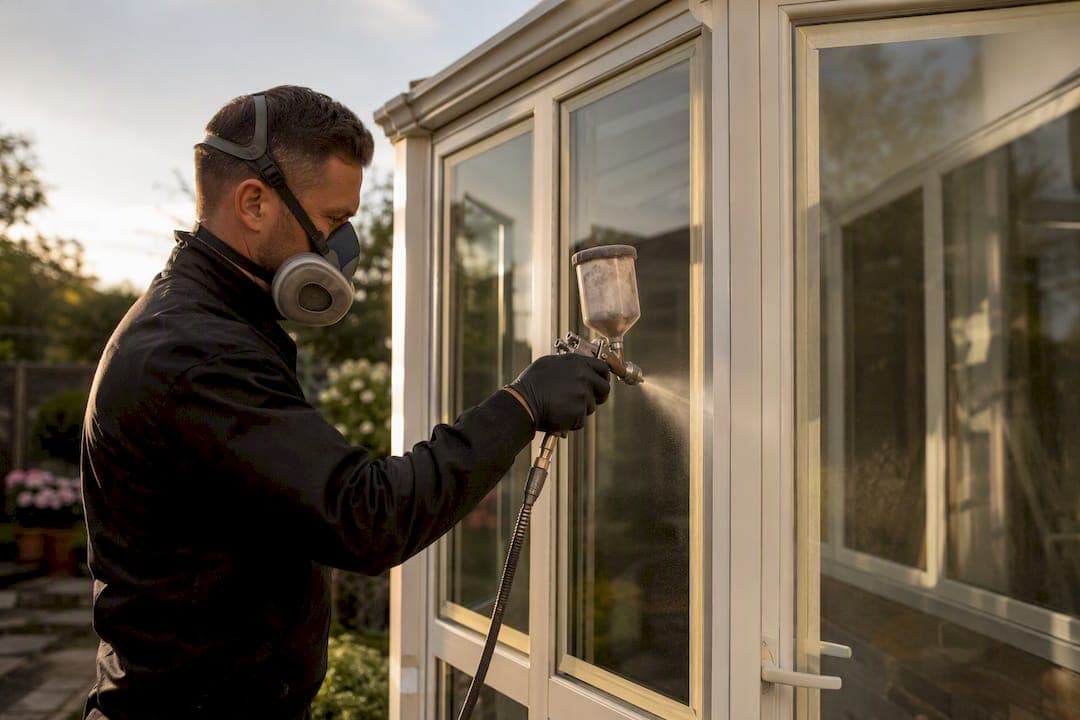
If your conservatory frames are faded, chalky, or stuck in a dated shade of brown, professional conservatory frame spraying is usually the most cost-effective fix. It refreshes uPVC or aluminium frames without the disruption or expense of full replacement. Choose replacement instead if you're seeing rot, warping, failed seals, or you actually want better thermal performance, since spraying is a cosmetic upgrade only.
Before booking anyone, sort the basics:
- Get frames physically inspected, not just quoted from photos.
- Ask whether the coating system includes a specialist uPVC primer.
- Check the warranty is written and transferable if you sell the house.
- Rule out replacement first if there's any sign of structural damage.
The next move for most homeowners is simple: arrange a survey with a specialist and get a proper written quote before deciding anything else.
Key Takeaways
Professional conservatory frame spraying delivers a durable, factory-standard finish at a fraction of replacement cost, provided preparation and warranty terms are properly checked.
| Point | Details |
|---|---|
| Spraying beats replacement for cosmetic issues | Choose spraying for fading or colour changes; choose replacement for rot or structural failure. |
| Preparation determines lifespan | Degreasing, abrasion, and correct primer prevent the early peeling that ruins DIY jobs. |
| Warranty terms reveal contractor confidence | Insist on a written, transferable warranty covering peeling, fading, and cracking specifically. |
| DIY carries real risk on uPVC | Brush, roller, or aerosol attempts on uPVC frequently fail faster than professional spray finishes. |
| Refinishingstudio offers proven local expertise | Refinishingstudio provides hand-sprayed finishes, a five-year transferable warranty, and over 1,000 completed South Wales projects with no subcontractors. |
Table of Contents
- What conservatory frame spraying changes and what it doesn't
- How does spraying conservatory frames actually work?
- How much does it cost, and how long does the finish last?
- How do you choose a reliable conservatory frame specialist?
- Environmental and safety considerations when spraying uPVC frames
- DIY versus professional spraying: safety precautions that matter
- Is your conservatory a good candidate for spraying?
- Professional spraying services versus DIY kits
- Common problems during and after conservatory spraying
- Paint finishes and colour options for conservatory frames
- What most advice on conservatory spraying gets wrong
- Ready to book a conservatory respray in South Wales?
- Sources
What conservatory frame spraying changes and what it doesn't
Spraying transforms how your conservatory looks, fast. A specialist crew can strip away decades of yellowing or that unloved 1990s brown in a single visit, and because spray application with the right uPVC primer adheres and flexes better than brush-applied paint, the finish resists the cracking that ruins DIY jobs within a year or two.
What it won't do is fix anything underneath the surface. Spraying doesn't improve U-values, seal draughts, replace failed double glazing, or strengthen a sagging roof structure. It's paint, applied properly, not an engineering upgrade.
- Gains: a factory-look finish, any RAL or BS colour, minimal mess, usually finished within a day or two.
- No change to: thermal performance, structural integrity, glazing seals, or frame lifespan beyond the coating itself.
- Ongoing care: occasional gentle cleaning; avoid abrasive pads that could scuff the topcoat.
Pro Tip: Check your original window or conservatory guarantee before booking anyone. Painting or spraying uPVC can affect a manufacturer's warranty, so ask your sprayer how they handle that risk in writing.
How does spraying conservatory frames actually work?
A proper job follows a set sequence, and skipping steps is where most poor results come from.
- Survey and quote. A specialist visits, checks frame condition, measures up, and gives a bespoke price based on the actual coating system they'll use, not a generic per-metre rate.
- Preparation. Frames get degreased, any silicone residue removed, and surfaces lightly abraded to give the primer something to grip. Thorough cleaning and abrasion are the steps that prevent early peeling, so this stage takes longer than most people expect.
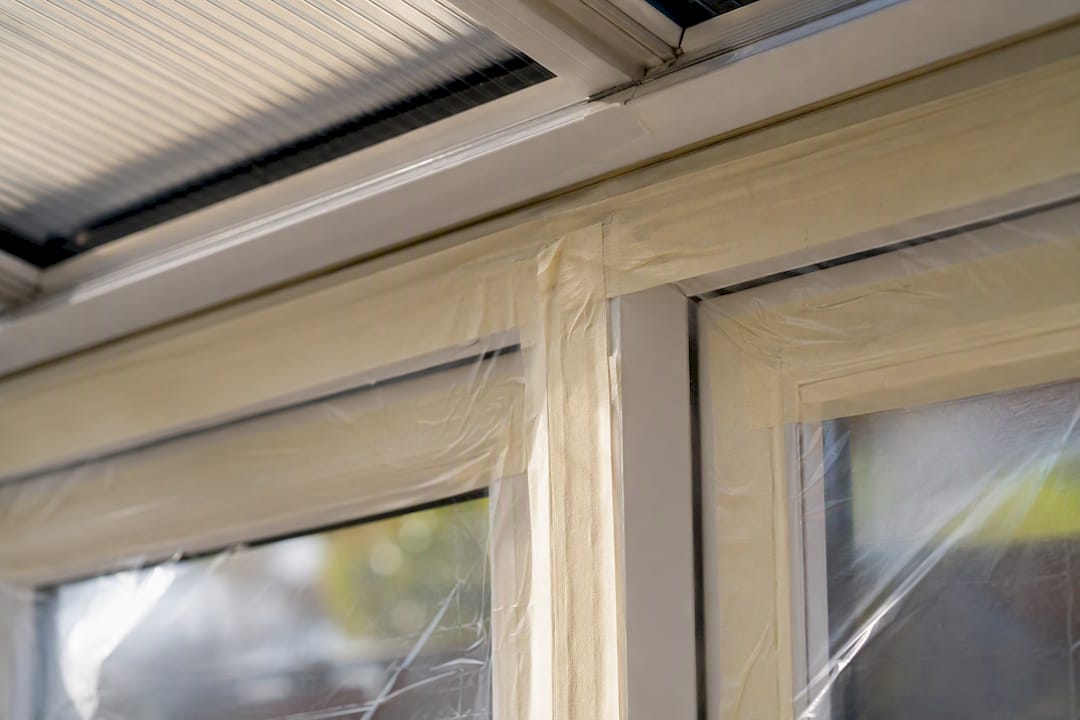
- Masking. Glass, roof panels, brickwork, and surrounding surfaces get fully protected before a drop of paint goes anywhere near a spray gun.
- Priming. A uPVC-specific primer goes on first, since standard exterior paint simply won't bond to plastic frames long term.
- Spray application. An air-assisted sprayer applies the topcoat in multiple thin, even coats, building colour and depth without runs or brush marks.
- Curing and inspection. The visible finish is typically usable within about 24 hours, though full cure time depends on temperature and humidity, and a final check confirms coverage and edges before the crew leaves.
Colour changes from old browns and creams to modern anthracite or custom RAL shades are routinely achievable with the right primer and coat build-up, though heavily textured or foiled surfaces sometimes need an extra prep pass. That's worth flagging at survey stage rather than discovering it mid-job.
How much does it cost, and how long does the finish last?
Spraying almost always undercuts full conservatory replacement by a wide margin, since you're paying for coating and labour, not new frames, glazing units, and installation. Prices vary by conservatory size, frame condition, and colour choice, so a proper survey quote beats any generic per-panel figure you'll find online.
Lifespan depends heavily on preparation quality and the coating system used, but a well-prepared, professionally sprayed frame typically holds its finish for several years before it needs attention again. Coastal or heavily exposed properties tend to see faster wear, similar to the way exterior components in exposed coastal settings need a more deliberate maintenance plan than sheltered ones.
To get the most out of the finish:
- Clean frames with mild soapy water a few times a year, never abrasive cleaners.
- Avoid pressure-washing directly at the coated surface.
- Address any chips or scuffs early rather than letting moisture get underneath the coating.
- Keep your warranty paperwork somewhere you'll actually find it.
How do you choose a reliable conservatory frame specialist?
The gap between a five-year finish and a peeling mess within eighteen months almost always comes down to who you hire, not the paint itself.
Start with the warranty. A written, transferable guarantee is one of the strongest signals of a contractor who trusts their own work, since it's the specialist's own money on the line if the coating fails early. Ask exactly what it covers: peeling, fading, cracking, or just workmanship.
Then ask for proof, not promises:
- Conservatory-specific photos or case studies, not just window and door work.
- Confirmation of hand-spray technique and the actual spray equipment used, since air-assisted systems give a smoother, more durable result than aerosol or roller touch-ups.
- Whether subcontractors are involved. A team that does its own work end to end tends to be more accountable when something needs revisiting.
- Public liability insurance, confirmed in writing, not just mentioned in passing.
- The exact paint system named in the quote, including primer brand and topcoat type, so you can compare like for like.
Pro Tip: If a quote is dramatically cheaper than everyone else's, ask specifically how many coats they're applying and what preparation is included. Corners cut at the abrasion and priming stage are invisible on day one and obvious within a year.
Be wary of anyone unwilling to survey the property in person, or who talks about "painting" your uPVC with a brush rather than spraying it. That distinction alone tells you a lot about how seriously they take the job.
Questions to ask and red flags to watch for
Before signing anything, run through this short list at enquiry stage:
- What primer and topcoat system will you use, and is it uPVC-specific?
- How many coats, and what's the realistic cure time in current weather?
- What exactly does the warranty cover, and is it transferable?
- Can I see photos of a conservatory job, specifically, not just windows?
- Do you spray, or are we talking brush and roller?
Red flags to walk away from: refusal to visit and survey first, no conservatory examples in their portfolio, vague answers about "touch-up paint," or a fixed price given without seeing the property. A reasonable timeline is usually a day or two of on-site work, though weather can push this back. Any specialist worth hiring will tell you that upfront rather than promising a guaranteed date regardless of conditions.
Environmental and safety considerations when spraying uPVC frames
Spraying uPVC outdoors involves solvent-based or water-based coatings, overspray control, and proper ventilation, all of which matter more than most homeowners assume. Reputable contractors use full masking systems to contain overspray, protecting glass, brickwork, plants, and neighbouring property from drift, particularly on breezy days when timing matters as much as technique.
Water-based coatings have become more common industry-wide because they reduce volatile organic compound emissions compared with older solvent systems, though solvent-based primers are still sometimes specified for their adhesion properties on stubborn old finishes. Either way, a professional crew will handle mixing, application, and disposal of waste material responsibly, which is one of the quieter advantages of hiring specialists over attempting the job yourself.
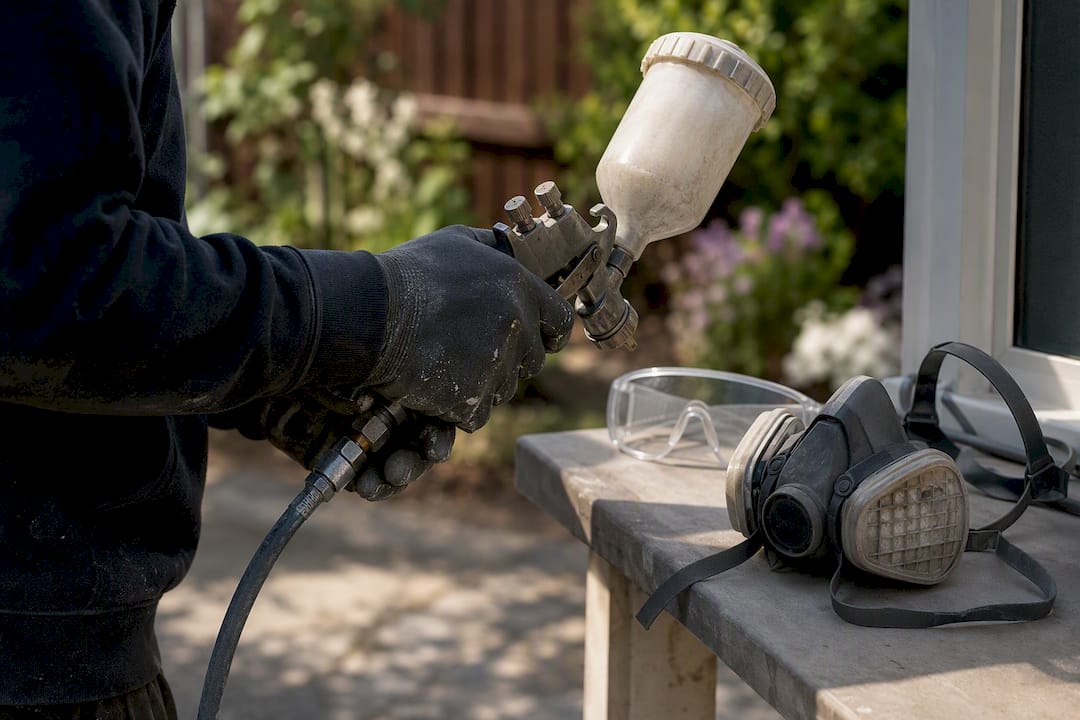
Personal protective equipment matters too: respirators rated for spray coatings, eye protection, and gloves are standard for anyone actually holding the spray gun. If you're watching from indoors during the job, keeping windows closed and avoiding the immediate work area for a few hours after spraying is sensible, particularly for households with young children, pets, or anyone with respiratory sensitivities.
Weather plays a bigger safety and quality role than people expect. Spraying in high wind risks overspray landing where it shouldn't, while spraying in damp or very cold conditions can affect how the coating cures and bonds. A specialist who reschedules around weather isn't being difficult, they're protecting the finish you're paying for.
DIY versus professional spraying: safety precautions that matter
If you're weighing up doing this yourself against hiring someone, safety is where the calculation usually falls apart fast.
For DIY attempts, at minimum you need a properly fitted respirator rated for spray coatings, safety glasses, disposable coveralls, and adequate outdoor ventilation. You'll also need to control overspray without professional-grade masking film and tape, which is harder than it sounds when you're working alone on a conservatory roof line. Electrical safety matters too if you're using a compressor-driven sprayer near glass and metal frames.
For professional jobs, the safety burden shifts to the contractor, but you still have a role: clear the immediate area of furniture, vehicles, and anything precious, keep children and pets away from the work zone, and confirm ventilation arrangements if any part of the job happens near open windows or doors into the house.
The step-by-step difference is really about risk tolerance. DIY means you're managing chemical exposure, working at height on a conservatory roof edge, and controlling overspray with domestic-grade equipment, all without the experience to spot when something's going wrong. Professional spraying means a trained team with air-assisted equipment, proper extraction where needed, and insurance covering both the work and any accidental damage. For a job that involves working around glass, at height, and with coatings designed for spray-only application, that gap in safety infrastructure is significant, not incidental.
Is your conservatory a good candidate for spraying?
Not every frame is worth spraying, and a straight assessment before you spend anything saves disappointment later.
Good candidates typically show cosmetic wear only: fading, chalking, yellowing, scuffs, or simply a colour you've grown to dislike. Frames that are structurally sound, with intact seals and no significant warping, respray extremely well. Age alone isn't disqualifying. Even conservatories fifteen or twenty years old can be sprayed successfully if the uPVC itself hasn't degraded structurally.
Poor candidates show signs that go beyond the surface: visible warping or bowing in the frame, cracked or failed seals letting in water, condensation between glazing panes, or soft spots that suggest internal degradation. Spraying over these problems doesn't fix them, it just hides them temporarily until the underlying issue resurfaces, often at a worse point than if you'd addressed it directly.
A quick self-check before booking a survey: run your hand along the frame feeling for soft or flexible sections, check corners and joints for gaps, and look closely at any discolouration that might indicate water ingress rather than simple UV fading. If everything feels solid and the problems are purely visual, spraying is very likely the right call. If you're finding structural red flags, a specialist survey will confirm whether replacement is the more sensible route, and a good contractor will tell you that honestly rather than taking the job anyway.
Professional spraying services versus DIY kits
DIY conservatory spray kits exist, and for very small, low-visibility jobs they can seem tempting on cost alone. The reality is more complicated once you look past the sticker price.
Professional services bring air-assisted spray equipment that DIY kits simply can't replicate, since that equipment combined with proper masking produces a smoother, more durable finish than anything achievable with an aerosol can or a compact home sprayer. They also bring trade-grade primers matched to the exact topcoat, experience judging weather and cure conditions, and a warranty backing the work.
DIY kits, by contrast, put the entire risk on you. Attempts using standard paints, rollers, or basic aerosol kits frequently show visible marks, poor adhesion, and a finish that fails well before a professional job would. There's also no comeback if it goes wrong. No warranty, no professional standing behind the result, just a repaint job to redo, usually at greater cost than if you'd hired a specialist the first time.
DIY can work reasonably well on timber, but it's a genuinely risky approach for uPVC and aluminium, where the plastic substrate is far less forgiving of poor adhesion or the wrong primer choice. If your conservatory frames are uPVC or aluminium and you're weighing a DIY kit against professional spraying, the maths rarely favours the kit once you account for the real possibility of redoing it within a year.
Common problems during and after conservatory spraying
Even good jobs occasionally hit snags, and knowing what to look for helps you catch issues early.
During application, the most common problem is inadequate coverage from rushed masking, leading to overspray on glass or brickwork that needs cleaning afterwards. Uneven coat thickness, sometimes from working too fast in poor light or awkward angles around a conservatory roofline, can leave patchy sheen once the coating cures.
After spraying, the issues that show up tend to trace back to preparation shortcuts. Peeling or flaking within months almost always means the primer wasn't matched correctly or the surface wasn't properly abraded and degreased beforehand. Bubbling can indicate moisture trapped under the coating, either from spraying in damp conditions or inadequate drying time between coats. Colour inconsistency across panels, particularly noticeable on larger conservatory roof sections, usually points to coats applied at different times or in different conditions without proper blending.
If something does go wrong, the fix depends on cause. Minor scuffs can often be touched up locally. Widespread peeling or bubbling usually means a section needs stripping back and reapplying properly, which is exactly why a written warranty matters. A specialist who stands behind their work will address genuine coating failure at no extra cost, while a one-off tradesperson with no guarantee leaves you covering the repair yourself. This is the practical argument for choosing an established specialist over the cheapest quote on the table.
Paint finishes and colour options for conservatory frames
Modern uPVC and aluminium coating systems offer far more choice than the old white-or-brown binary most conservatories were built with.
On finish type, you're typically choosing between matt, satin, eggshell, and gloss. Matt gives a contemporary, low-sheen look that's forgiving of minor surface imperfections. Satin and eggshell sit in the middle, offering a subtle sheen with good practical durability for exterior use. Gloss gives the most reflective, traditional finish and tends to show surface prep quality most clearly, so it demands the highest standard of preparation underneath.
On colour, RAL and BS colour charts give access to precise, repeatable shades, from anthracite grey and jet black through to custom greens, blues, and heritage tones that suit period properties. Anthracite has become a particularly common choice for conservatories built in the 1990s and 2000s that started out white or cream, giving a noticeably more modern frame without touching the glazing itself. The same principles that guide colour selection for interior doors, considering how a shade interacts with light and surrounding materials, apply outdoors too: darker exterior shades absorb more heat, which is worth mentioning to your sprayer if your conservatory already runs warm in summer.
What most advice on conservatory spraying gets wrong
Most guides treat conservatory frame spraying as a simple binary: paint it yourself and save money, or pay someone and hope for the best. Neither framing is honest. The research on preparation failure rates makes clear that the actual variable determining success isn't whether you spray or don't, it's whether whoever does the work treats preparation as seriously as the paint itself.
What's consistently underrated is the warranty question. Homeowners fixate on colour and finish, then treat the guarantee as paperwork to skim. It's the opposite. A transferable warranty is the one thing that tells you whether a contractor genuinely believes in their own process, because they're the one financially exposed if it fails early.
My honest read: if your frames are structurally sound, spraying is very likely the right call, and DIY uPVC attempts are a false economy more often than people admit to themselves after the fact. Prioritise the survey and the warranty conversation before you ever discuss colour. Everything else follows from getting those two things right.
— Mitchell
Ready to book a conservatory respray in South Wales?
Refinishingstudio is the straightforward alternative to full conservatory replacement for homeowners across South Wales. Every job is hand-sprayed rather than rushed through with a roller, covering uPVC, aluminium, and composite frames, and every finish comes with a five-year transferable warranty in writing, not a verbal promise.
The proof is in the volume: over 1,000 completed projects, all carried out directly by Refinishingstudio's own team with no subcontractors passing the job along. That means the people who survey your conservatory are the same people spraying it, which keeps quality consistent from quote to completion. A survey covers frame condition, colour options across RAL and BS charts, and the exact coating system to be used, with most conservatory jobs completed within a day or two depending on size and weather.
If your frames are ready for a refresh, start with a UPVC spraying quote or browse the conservatory spraying service page to see what's involved before arranging your survey.
Sources
- Painting a conservatory: How to get a factory like finish | Homebuilding
- Can you paint a uPVC conservatory? Honest advice | Enhance Conservatories
- Spray paint solutions for your conservatory – Concept Coatings Ltd
- Can you paint uPVC windows? | Manchester Window Factory