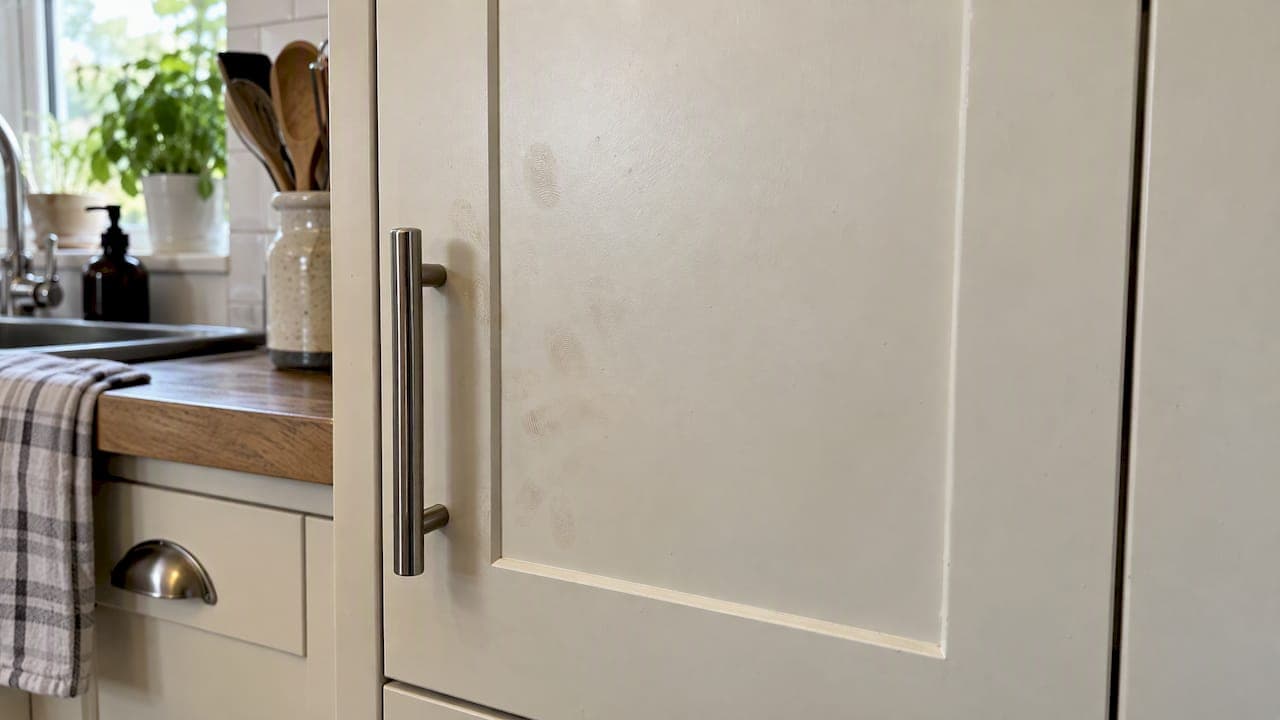
Satin cabinets show fingerprints less than gloss and a little more than a true matt. Marks are still possible, though. How visible they are depends on three things: the colour (dark shades show the most), how smooth the surface is, and how you clean it. Get those right and a satin kitchen is one of the easiest to live with.
This guide covers why prints appear, how to remove greasy marks without harming the paint, and how to choose a finish and colour if you are planning a respray.
TL;DR
- Satin sits in the middle: it hides smudges better than gloss, but dark satin colours will still show oily prints.
- Clean with a damp microfibre cloth, warm water and a little mild detergent, then dry straight away.
- Skip polish, wax and supermarket multi-surface sprays. They can build up or slowly dull the coating.
- Colour matters as much as sheen: mid-tones, greige and soft neutrals are the most forgiving.
- On a respray, the finish is chosen with you before spraying, so you can pick the level of sheen that suits your household.
Table of Contents
- Why satin cabinets show fingerprints at all
- How to remove greasy fingerprints from satin cabinets
- A routine that keeps prints from building up
- Which colours hide fingerprints best
- Satin, matt, eggshell or gloss: how they compare
- Does the finish quality affect fingerprints?
- Our view: pick the colour first, then the sheen
- Thinking of a respray? What we offer
- FAQ
- Sources
Why satin cabinets show fingerprints at all
A fingerprint is a thin film of skin oil. On a flat, smooth surface, that film changes how light bounces back to your eye. Gloss reflects light in a sharp, mirror-like way, so any disturbance in the surface shows up clearly. Matt scatters light, which hides marks, but matt paint has its own problem: the oils can sink into the microscopic texture and leave shiny patches that are hard to shift.
Satin is the compromise. Satin finishes sit at a mid-sheen, typically around 30 to 35%, and are widely chosen for cabinetry because they balance durability and appearance. Compared with high gloss, which exaggerates surface flaws, satin gives a more even look across changing light through the day.
Two factors then decide whether you notice prints:
- Colour. Practitioners agree that fingerprint visibility is a function of both sheen and pigment: dark satin shows oily smudges more than lighter shades. A black or deep navy door in satin will show a hand mark in a way that a warm stone grey will not.
- Where hands go. Prints gather on the door edge nearest the handle, around the cooker and on drawer fronts. A kitchen with no handles (a handleless design) invites fingers onto the flat face of the door, so marks are more likely there.
There is also a difference between a fingerprint and a wipe mark. Cleaning with a gritty cloth, or with too much pressure, can burnish a satin finish and leave glossy streaks that look like prints but are actually changes to the paint. Gentle cleaning avoids this.
How to remove greasy fingerprints from satin cabinets
The method is plain, and that is the point. Satin is more delicate than gloss: gloss can tolerate more robust cleaning, while satin needs a lighter touch.
What you need
- Two or three clean microfibre cloths
- Warm water
- A few drops of mild washing-up liquid
- A dry, soft, lint-free cloth for drying
Step by step
- Test first. Choose a hidden spot, such as the inside edge of a door. One suggested check is to put a single drop of water on the surface: if it beads, you have a sealed finish that will tolerate damp cleaning. If it soaks in, stop and do not use soapy water.
- Dust first. A dry microfibre cloth removes grit that would otherwise scratch as you wipe.
- Wipe with a damp cloth. Dampen a microfibre cloth in warm water with mild detergent, wring it out well, and wipe in the direction of the grain if there is one.
- Dry immediately. Use a second cloth straight after. This matters most at edges and joints, where trapped moisture can cause swelling.
- Stop there. Do not buff or polish. If a print remains, repeat the damp wipe rather than pressing harder.
The drying step is not fussy. Many kitchen doors have an MDF core, and one care guide notes that cabinets are not water resistant and may swell if they get wet, so spills and damp cloths should be wiped off promptly. Swelling is also something standard warranties generally do not cover, so it pays to be careful.
We have a separate walkthrough on how to clean sprayed kitchen cabinets safely if you want the full routine.
What not to use
- Furniture polish and wax. It feels like a quick fix, and some forum advice recommends aerosol beeswax to mask prints on black satin. Professionals warn that these products can build up, attract dust and interfere with later touch-ups or refinishing. If you ever want to respray, residue is a nuisance for adhesion.
- Supermarket multi-surface and kitchen sprays. Many contain citrus acids or solvents. Manufacturer guidance, such as Howdens' care and maintenance guide, points to a warm water and mild detergent solution for routine cleaning.
- Abrasive sponges and scourers. Fine on a hob, wrong for satin paint.
- Soaking the cloth. Damp, not wet.
A routine that keeps prints from building up
Most stubborn marks come from leaving oil to bake on. A light, regular routine beats an occasional heavy clean. The advice from Homebuilding's satin versus gloss guide is consistency: dry dust every one to two weeks, then a damp wash every one to three months.
In a busy family kitchen, add a quick wipe of the high-touch spots as part of tidying:
| Area | How often | Why |
|---|---|---|
| Doors and drawers near handles | Weekly damp wipe in a busy household | Skin oil collects where hands grip |
| Doors beside the hob | Weekly | Airborne cooking grease settles on nearby surfaces |
| End panels and island | Every couple of weeks | Hands rest and lean there |
| Whole kitchen | Every 1 to 3 months | A full damp wash and dry |
It also helps to reduce grease in the air in the first place. Run the extractor when you cook, and keep heat-generating appliances such as a kettle or toaster away from the cabinet faces, since steam and heat are hard on coatings.
Which colours hide fingerprints best
If you are choosing a colour rather than living with one, this is where you have the most control. Cleaning guides on colour agree on a pattern: mid-tone neutrals such as mushroom taupe, paired with satin or eggshell, are the most forgiving, while pure white and deep dark shades with a high shine show marks sooner.
In practice:
- Best at hiding marks: warm greys, greige, stone, mushroom, soft sage and muted blue-greys. Their mid-tone hides both oily prints and the pale smears left by cleaning.
- Fine, with some upkeep: white and off-white in satin. Prints are less visible than on black, but dirt and grease show on the face and edges over time.
- Hardest work: black, charcoal and deep navy. If you love them, choose satin or a flatter sheen rather than gloss, and add handles so fingers have somewhere else to go.
One point from the same guide is worth repeating: look at a sample on a real door in your own kitchen light before committing. North-facing rooms, under-cabinet lighting and spotlights can all change how a sheen reads. For colour ideas near us, see our guide to kitchen cabinet colours in Cardiff.
Satin, matt, eggshell or gloss: how they compare
The sheen names mean different things from one paint brand to another, so treat percentages as a guide only. This table gives the general picture for a kitchen that sees daily use.
| Finish | Fingerprint visibility | Cleaning | Good for |
|---|---|---|---|
| Matt | Low at first, but oily patches can burnish and be hard to remove | Needs gentle handling | Modern, flat look; low-traffic doors |
| Eggshell | Low to moderate | Fairly forgiving | Soft look with a little protection |
| Satin | Moderate; depends strongly on colour | Wipes clean when done gently | Most family kitchens |
| Gloss | Highest, especially on dark smooth colours | Tolerates firmer cleaning but shows every smear | Bold, reflective schemes |
There is a wider point about finishes that form a protective film versus those that soak in. For a broader look at how different finish types behave in daily use, this overview of oil and polyurethane finishes is a useful comparison, though it concerns floors and furniture rather than sprayed kitchens.
We set out the full comparison for kitchens in matt, satin or gloss: which finish is right for your kitchen, and our finishes page shows the options we spray: matt, eggshell, satin and gloss. If you are leaning towards a shiny door, read our piece on a gloss kitchen respray first.
Does the finish quality affect fingerprints?
Yes, and it is the part most guides skip. Two satin doors in the same colour can behave very differently.
- Smoothness. A surface with orange peel, brush marks or an open wood grain scatters light unevenly, and oil collects in the texture. A flat, evenly sprayed coat wipes cleaner. This is why grain filling matters on oak; we explain it in our guide to getting a factory flat finish on oak cabinets.
- Hardness. Professional cabinet coatings are made for heavy use. For example, Tikkurila's Helmi 30 satin is a water-based acrylic designed for furniture and kitchens, and its maker cites scrub resistance beyond 5,000 cycles under the SFS 3755 standard. A harder film resists the polishing and scuffing that turns into permanent shiny marks.
- Preparation. If the paint is applied over grease or poor adhesion, it will mark and peel easily whatever the sheen. Our article on why prep matters more than paint goes into this.
If you are thinking of spraying dark cabinets lighter, our guide on avoiding runs and stain bleed covers what to expect.
Our view: pick the colour first, then the sheen
We only spray two things, UPVC and kitchens, and the same people quote, prep and spray every job. That means we hear the same worry again and again from kitchen customers: "I want satin, but will it be covered in marks?"
Our honest answer is this. Satin is the finish we would point most families towards, because it is forgiving and still looks refined. But we would never choose it in isolation. A mid-tone colour in satin will outlast the novelty of a black door in gloss every time. If a customer has their heart set on a dark kitchen, we say so plainly: choose satin or a flatter sheen, add handles, or accept a little more wiping. If they want handleless, we talk about colour depth and daily use before anyone picks up a spray gun.

We also encourage people to test a sample door in their own lighting, because a swatch in a showroom tells you very little. The finish is hand-sprayed to a factory standard, so the wipe-clean quality you get is a result of prep, coating and application working together, not just the label on the tin.
One more thing we say to every customer: look after it with warm water, a soft cloth and a dry-off. No polish, no wax, no cocktail of sprays. That is the simplest way to keep any sprayed finish looking right for the long run.
— Mitchell
Thinking of a respray? What we offer
If your cabinet frames are sound but the doors look tired, marked or dated, respraying is an alternative to replacing the kitchen. We hand-spray cabinets, doors, drawer fronts, end panels and islands, and we can carry out handleless conversions, across South Wales. You choose the colour (RAL, BS or custom) and the sheen, and we give you a written five-year transferable warranty. You pay on completion after a walkthrough.
You can see how it works on our kitchen respraying page, look at kitchen cupboard spraying specifically, or read whether kitchen cupboard spraying is worth it. Quotes are given per project, so get in touch via our kitchens page and tell us the colour and sheen you are considering.
FAQ
How do I get fingerprints off satin or matt cabinets?
Wipe with a damp microfibre cloth wrung out in warm water with a few drops of mild washing-up liquid, then dry immediately with a clean soft cloth. Work gently in the direction of the grain. Do not scrub, and test a hidden spot first.
Is satin a good finish for kitchen cabinets?
For most households, yes. It balances durability with a refined look, and it is more forgiving than gloss on marks and flaws. Colour matters as much as sheen: a mid-tone satin hides prints far better than black.
How can I stop fingerprints appearing on my kitchen cabinets?
Choose a mid-tone colour, keep a regular dusting and wiping routine, and use the extractor to cut airborne grease. Handles give hands a target other than the door face. Avoid polish and wax, which can build up and attract dust.
Can I use vinegar or a kitchen spray on satin cabinets?
We would not. Some multi-surface sprays contain citrus acids or solvents that can slowly dull a professional coating. Warm water with mild detergent, followed by thorough drying, is the safest routine, and it matches what cabinet manufacturers such as Howdens recommend.
Will my satin kitchen show marks after a respray?
It depends on colour, how flat the finish is and how hard you wipe it. A well-prepared, evenly sprayed satin in a mid-tone is easy to keep clean. Talk to us about colour and lighting before you decide.
Sources
- Helmi 30 acrylic satin paint, Tikkurila
- Preventing Fingerprints on a Black Satin Finish, WoodWeb
- Satin vs gloss, Homebuilding
- Best Way to Clean Woodwork, Woodworking Advisor
- How to clean kitchen doors, Kitchen Door Workshop
- New build home owners care guidance, Symphony Group
- Product care and maintenance guide, Howdens
- Best Cabinet Colors to Hide Fingerprints and Dust