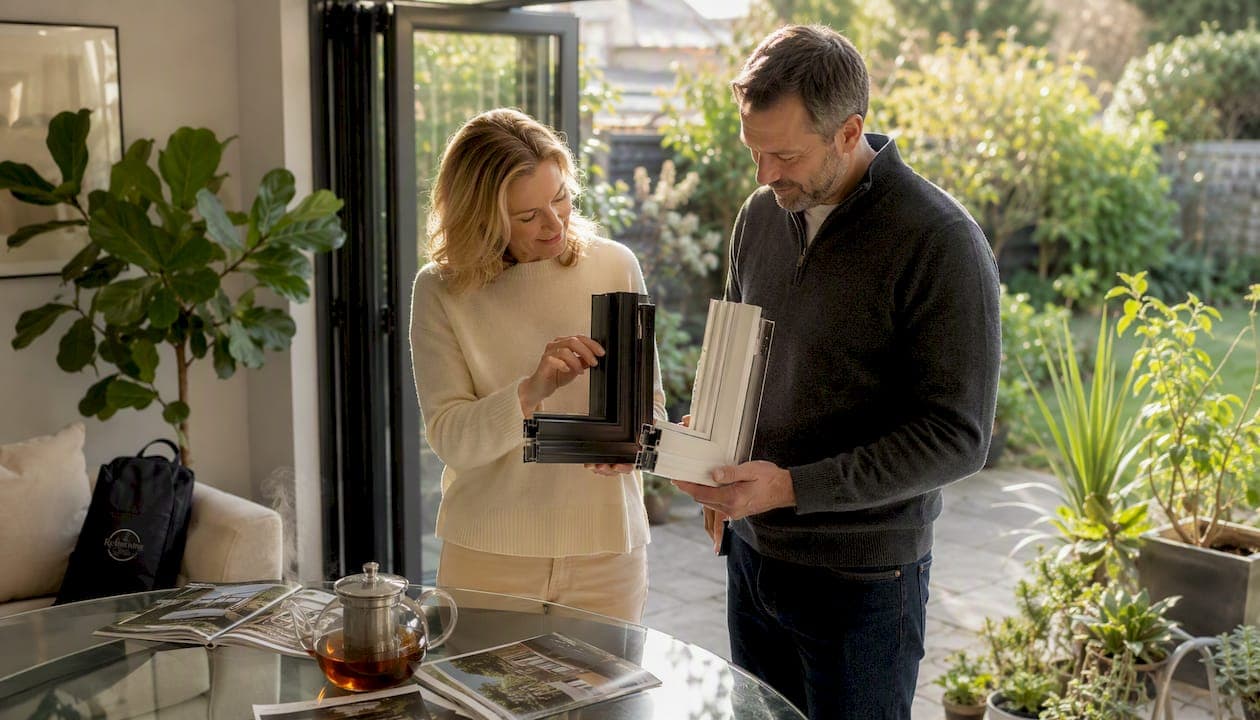
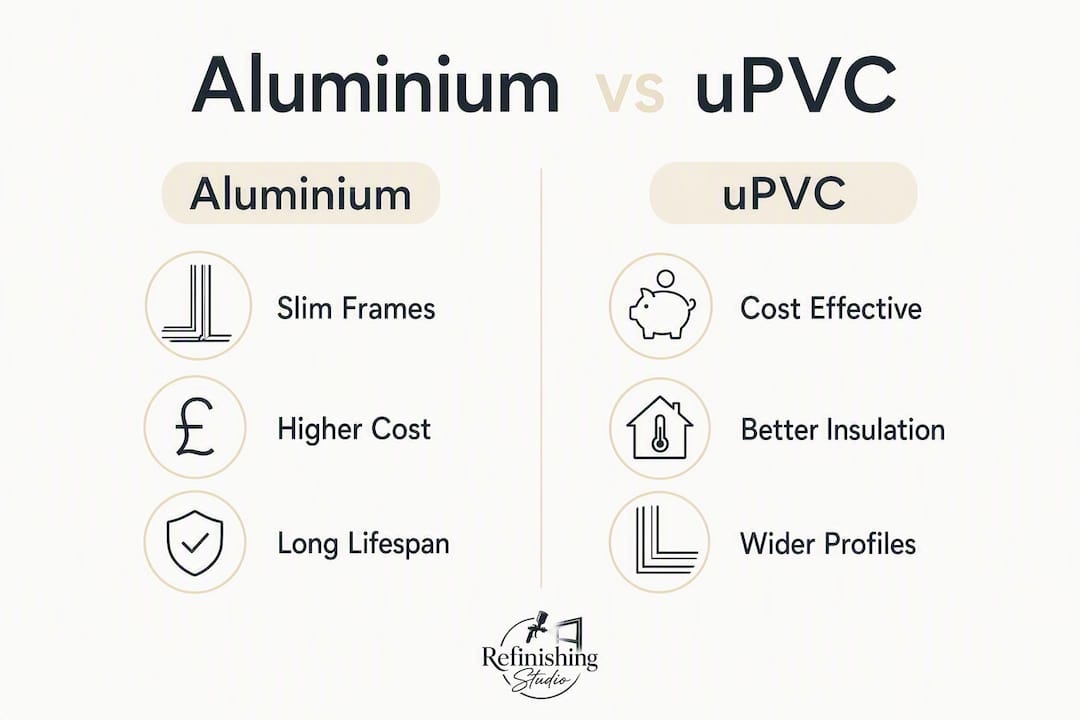
Choose uPVC if your priority is cost and solid thermal performance on standard openings. Choose aluminium if you want slim sightlines, large glass spans, or a frame that will still be performing in 40 years. Neither material is objectively superior — the right answer depends on your brief, your budget, and your property type.
The core trade-offs come down to three things:
- Cost vs longevity: uPVC costs less upfront (typically a few hundred to mid-thousand pounds fitted per casement versus higher prices for aluminium), but aluminium commonly lasts several decades against uPVC's shorter multi-decade lifespan, which changes the whole-life maths considerably.
- Thermal performance: uPVC is naturally insulating; aluminium needs a polyamide thermal break to compete. Both can meet current Part L requirements when correctly specified.
- Design and sightlines: aluminium can deliver frame sightlines down to around 45 mm and unsupported spans up to approximately 5 m in specialist systems. uPVC frames are bulkier by nature.
Practical rule of thumb: choose aluminium for large glazed areas, contemporary extensions, or where slim frames matter. Choose uPVC for traditional windows, smaller openings, and where upfront budget is the deciding factor.
Table of Contents
- How do aluminium and uPVC windows compare head to head?
- What do aluminium and uPVC windows actually cost in the UK?
- Which material suits your type of UK home?
- What should you ask your window supplier before signing anything?
- How do you keep aluminium and uPVC frames in good condition?
- Are aluminium or uPVC windows better for the environment?
- When does professional respraying make more sense than replacement?
- Key takeaways
- The case for keeping what you have
- Refinishingstudio: a lower-cost alternative to full window replacement in South Wales
- Useful sources and further reading
How do aluminium and uPVC windows compare head to head?
The table below covers the dimensions that actually move the needle for UK homeowners. Short explanations follow each row.
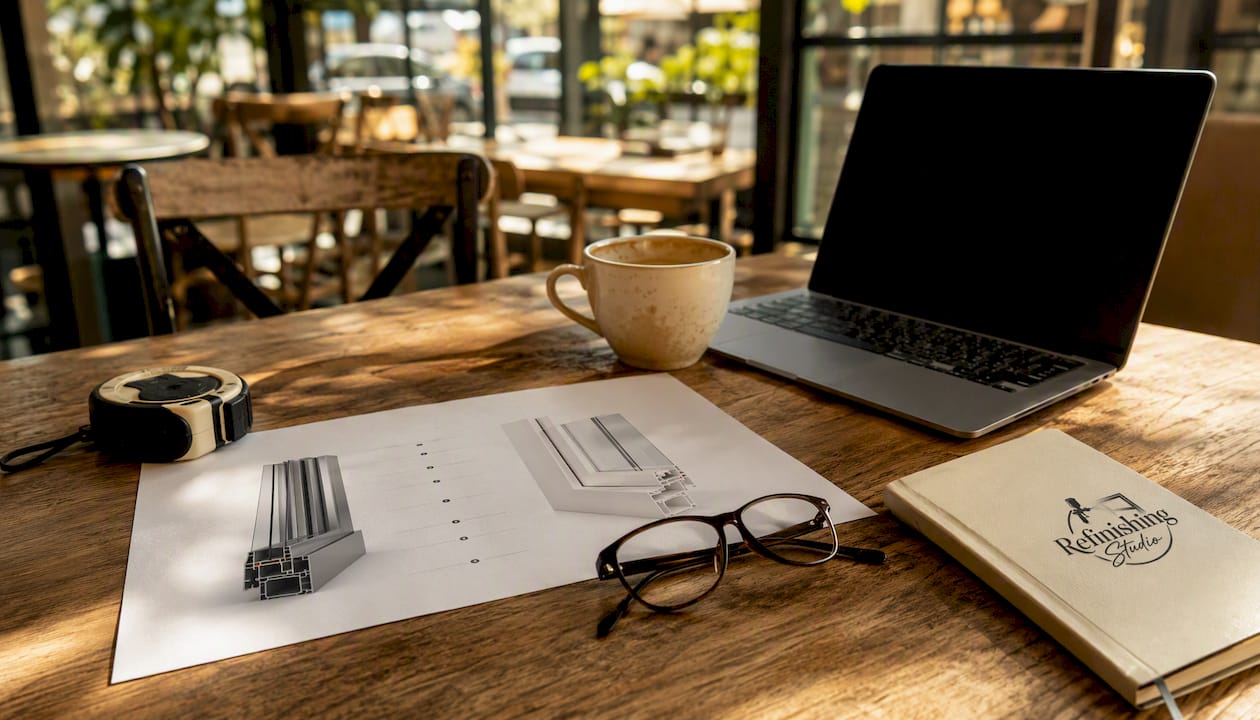
| Dimension | uPVC | Aluminium |
|---|---|---|
| Typical installed cost (single casement) | £550–£1,800 fitted | £900–£3,000+ fitted |
| Expected lifespan | moderate multi-decade lifespan | longer multi-decade lifespan |
| Typical whole-window U-value (mid-range) | low value typical for uPVC | slightly higher but competitive for aluminium |
| Maintenance needs | Low (wipe clean, occasional lubrication) | Very low (powder coat is durable) |
| Minimum sightline | generally wider for uPVC | generally narrower in slim aluminium systems |
| Acoustic performance | Good (glazing-dependent) | Good (glazing-dependent) |
| Security hardware options | Multi-point locking standard | Higher-grade hardware commonly available |
| Recyclability | Recyclable but complex | Highly recyclable, high scrap value |
| Best use case | Traditional homes, standard openings, budget-led | Contemporary extensions, large spans, coastal |
Cost. The price premium for aluminium over uPVC runs roughly 50–100% on a like-for-like opening. That gap narrows on larger or more complex frames where aluminium's structural strength reduces the need for additional reinforcement.
Thermal performance. uPVC has a natural advantage here because the material itself is a poor conductor of heat. A mid-range uPVC double-glazed window typically achieves a whole-window U-value around 1.2 W/m²K. Aluminium conducts heat readily, so without a thermal break the frame becomes a cold bridge. Thermally broken aluminium systems close that gap significantly, and top-end systems from both materials can reach near-Passivhaus performance. The key phrase to look for on any aluminium quote is polyamide thermal break or equivalent.
Sightlines. This is where aluminium wins outright. The material's strength means frames can be far thinner than uPVC, which requires more bulk to achieve the same structural rigidity. For a large rear extension or a picture window where you want glass rather than frame, aluminium is the practical choice.
Security. Both materials support multi-point locking as standard. Aluminium's structural rigidity does allow it to be specified with higher-grade hardware and larger laminated glass panes, which can improve resistance to forced entry. The glass specification and the lock grade matter more than the frame material alone.
Acoustic performance. Frame material has a modest effect on sound reduction compared with glazing specification. Laminated glass, wider air gaps, and acoustic interlayers make the real difference regardless of whether the frame is uPVC or aluminium.
What do aluminium and uPVC windows actually cost in the UK?
UK window pricing varies by frame size, glazing spec, and installer, but the ranges below reflect typical fitted costs across the market.
| Window type | uPVC (fitted) | Aluminium (fitted) |
|---|---|---|
| Small casement | £550–£1,800 | £900–£3,000+ |
These ranges draw on installer cost data and reflect the UK market broadly. Prices in London and the South East tend to sit at the upper end; Wales and the North often come in lower.
Warranties on uPVC frames typically run 10 years on the profile and 5–10 years on sealed units. Aluminium warranties vary more widely, from 10 years on the powder coat to 25 years on the frame itself from premium manufacturers. Always ask what the warranty covers: profile failure, hardware, and sealed units are often separate.
Whole-life cost is where aluminium's longer service life changes the picture. A uPVC window replaced at 25 years and again at 50 years costs roughly twice the purchase price over the same period that a single aluminium installation covers. Factor in installation labour both times and the aluminium premium looks considerably more reasonable.
Pro Tip: If you are planning a significant extension or renovation and intend to stay in the property long term, model the cost over 40 years rather than comparing upfront prices alone. The aluminium premium often pays back within 15–20 years when you account for avoided replacement costs.
Which material suits your type of UK home?
Period and conservation area properties
For the front elevation of a Victorian terrace, an Edwardian semi, or any property in a conservation area, uPVC is often the pragmatic choice. Planning authorities in most UK councils are cautious about aluminium on heritage frontages, and white or cream uPVC casements are widely accepted as a like-for-like replacement. That said, slim-profile aluminium in heritage colours (anthracite, heritage cream, black) is gaining acceptance in some areas. Check with your local planning authority before committing.
Modern rear extensions and open-plan living spaces
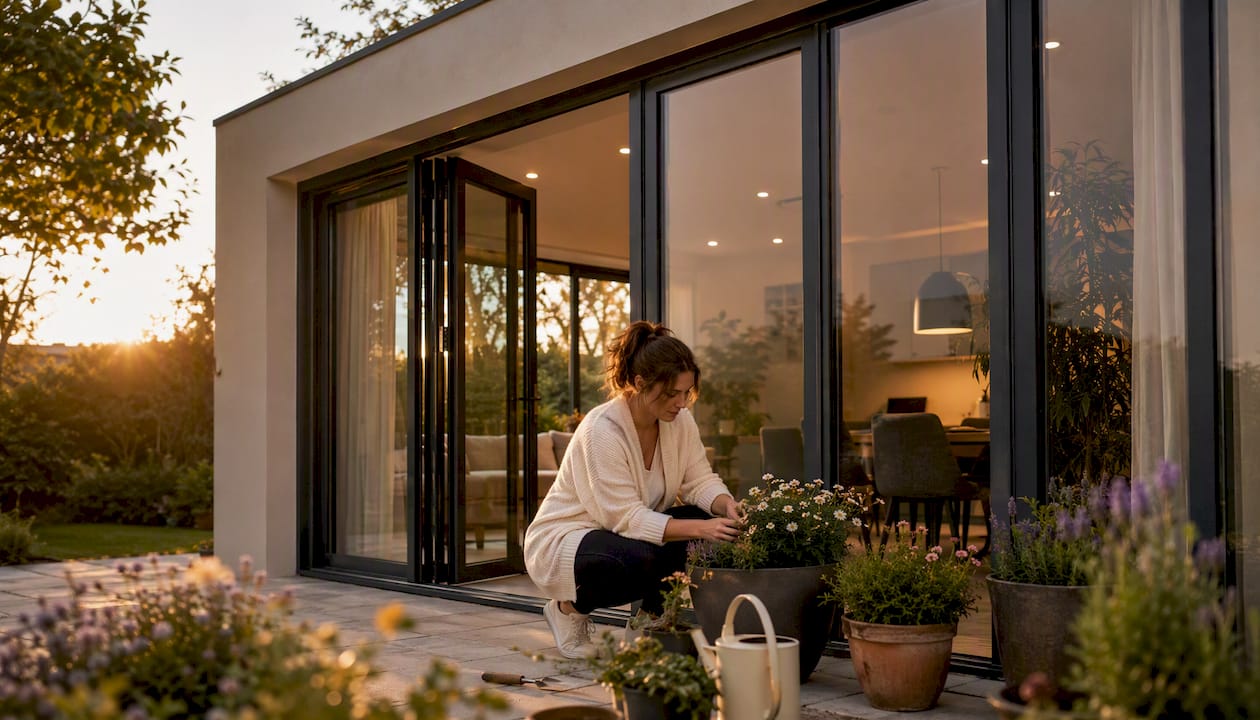
This is aluminium's strongest territory. A rear extension with floor-to-ceiling glazing, bifold doors, or a large fixed picture window benefits from aluminium's structural properties: slimmer frames mean more glass, and the material handles large unsupported spans that uPVC simply cannot manage without additional steel reinforcement. Mixing materials across elevations is common practice — uPVC at the front, aluminium at the rear — and it is a sensible way to balance planning requirements with design ambitions.
Smaller terraced houses and flats
For a two-bedroom terrace with standard-size casements, uPVC delivers the best value. The thermal performance is strong, the cost is lower, and the maintenance is minimal. Unless the design brief specifically calls for slim frames, the extra spend on aluminium is hard to justify on openings of this scale.
Coastal and exposed locations
Both materials perform well in wet and windy conditions, but finish specification matters. For aluminium in coastal areas, specify a marine-grade powder coat and confirm the UV stability rating. For uPVC with foil finishes, check the manufacturer's UV and salt-spray ratings — standard foils can degrade faster in high-salt environments. Uncoated white uPVC tends to hold up better on the coast than coloured foil finishes.
High-rise flats and apartments
Aluminium is the standard choice for multi-storey residential buildings, largely because its structural properties allow for taller, narrower frames and because it is easier to achieve consistent powder-coat finishes across large façade areas. For individual flat owners replacing windows within a managed building, the frame specification is often dictated by the freeholder or management company.
What should you ask your window supplier before signing anything?
Getting a like-for-like quote is harder than it sounds. Two quotes at similar prices can represent very different specifications. Work through this checklist before you commit.
Confirm these points on every quote:
- Frame system and manufacturer — ask for the profile brand and system name, not just "aluminium" or "uPVC."
- Thermal break confirmation (aluminium only) — the quote should state the thermal break type (polyamide is the standard) and its width.
- Steel reinforcement (uPVC) — required where heavy triple glazing or large sashes are specified; ask whether it is included and where.
- Whole-window U-value — not just the glass centre-pane figure. The whole-window Uw should be stated on the quote.
- Glass specification — double or triple, low-E coating, warm-edge spacer bar, and whether the glass is laminated on any pane.
- Sightline dimensions — the actual frame width visible from inside and outside.
- Hardware and security grade — PAS 24 or Secured by Design certification is worth asking for on ground-floor openings.
- Installation method and tolerances — ask how movement allowances are handled, particularly for uPVC where thermal expansion is greater than aluminium and larger installation gaps are needed.
Questions to ask the installer directly:
- Who carries out the installation? If the company subcontracts, ask who the subcontractor is and whether they are FENSA or Certass registered.
- What does the guarantee cover, and who honours it if the company closes?
- How long has the company been trading, and can they provide references for similar projects?
- What is the process if a sealed unit fails within the warranty period?
Red flags to watch for:
- A U-value quoted as "double glazed" with no actual figure.
- "Standard glazing" with no specification of glass type or spacer.
- No on-site survey before quoting (measurements taken from photos or descriptions alone).
- A quote that lists no installation tolerances or movement allowances.
- Pressure to sign on the day of the survey.
How do you keep aluminium and uPVC frames in good condition?
Both materials are genuinely low-maintenance compared with timber, but "low maintenance" is not the same as "no maintenance."
Routine cleaning:
- Clean frames two to four times a year with warm soapy water and a soft cloth. Avoid abrasive cleaners, solvent-based products, and anything containing bleach on coloured uPVC foils or powder-coated aluminium — these strip finishes faster than weathering does.
- For uPVC, a specialist uPVC cleaner removes yellowing and surface oxidation without damaging the profile.
- For powder-coated aluminium, a pH-neutral car shampoo works well and leaves no residue.
Periodic maintenance tasks:
- Lubricate hinges, friction stays, and locking mechanisms once a year with a silicone-based spray. Never use WD-40 on window hardware — it attracts dirt and degrades rubber seals over time.
- Check and replace perimeter gaskets every 5–7 years, or sooner if you notice draughts or condensation between panes.
- Reseal around the external frame perimeter with a compatible silicone sealant if the original seal shows cracking or gaps.
Pro Tip: uPVC expands and contracts more than aluminium with temperature changes. If a uPVC window starts sticking or the lock becomes difficult to engage in summer, the frame may have been installed with insufficient movement allowance. A competent installer can adjust the hinges; if the problem is structural, it points to an installation error rather than a material fault.
When to consider respraying rather than repairing: if the frame structure and sealed units are sound but the colour is faded, yellowed, or simply the wrong shade for a renovation, a professional respray restores the finish without the cost or disruption of full replacement. More on this below.
Are aluminium or uPVC windows better for the environment?
The honest answer is that both materials carry an environmental cost, and the most sustainable option is usually the one already in your wall.
Aluminium:
- Highly recyclable: aluminium can be recycled repeatedly without loss of quality, and scrap aluminium retains significant value.
- Primary aluminium production is energy-intensive, so the embodied carbon in a new aluminium frame is considerably higher than in a new uPVC frame.
- Powder-coat finishes typically last 25–40 years before recoating is needed, which reduces maintenance-related waste.
uPVC:
- Recyclable in principle, but the process is more complex than aluminium and the recycled material is often downcycled rather than used for new window profiles.
- uPVC production uses chlorine-based chemistry and plasticisers, which carry their own environmental concerns over the full lifecycle.
- A uPVC frame replaced at 25 years generates more landfill waste than an aluminium frame that runs to 45 years.
The practical sustainability case for refurbishment:
Replacing a structurally sound window purely for cosmetic reasons generates significant embodied carbon — the manufacture, transport, and installation of a new frame, plus the disposal of the old one. Professional respraying uses a fraction of the material and energy of full replacement.
When a frame is structurally sound and the sealed units are intact, respraying or refinishing is the lower-carbon route. The uPVC respraying service at Refinishingstudio covers exactly this scenario: a colour change or finish refresh that avoids replacement waste entirely.
When does professional respraying make more sense than replacement?
Full window replacement is the right call when frames are structurally compromised, sealed units have failed, or the profile is beyond repair. But a large proportion of window enquiries come from homeowners who simply want a different colour, a fresher finish, or a more contemporary look — and for those, respraying is a genuinely compelling alternative.
Scenarios where respraying makes sense:
- White uPVC that has yellowed or looks dated but is structurally sound.
- Frames in a colour that no longer suits a renovation (brown or gold uPVC being the most common).
- Aluminium frames with minor surface oxidation or a powder coat that has faded.
- Heritage or conservation properties where the profile shape is correct but the colour needs updating.
- Landlords or property managers refreshing a portfolio without the disruption of full replacement.
Typical cost comparison:
| Scope | Full replacement (approx.) | Professional respray (approx.) |
|---|---|---|
| Standard 3-bed house (8–10 windows) | — | Significantly less — contact for a quote |
| Single casement window | — | Fraction of replacement cost |
| Conservatory frame refresh | — | Contact Refinishingstudio for a tailored quote |
Refinishingstudio offers a five-year transferable warranty on all respray work, applied by hand-spray to factory-standard finish quality. The service covers uPVC and aluminium frames, doors, conservatories, and fascias across South Wales, with the full RAL and BS colour palette available in matt, eggshell, satin, and gloss finishes.
When respraying is not suitable:
- Frames with structural cracks, warping, or profile failure.
- Rotten timber sub-frames or sills that need replacement regardless.
- Sealed units that have failed (misted glass) — these need replacing whether or not the frame is resprayed.
- Profiles so heavily degraded that adhesion cannot be guaranteed.
Key takeaways
Aluminium suits large glazed areas, slim sightlines, and long-term investment; uPVC delivers the best upfront value for standard openings and traditional properties — and for structurally sound frames that simply need a fresh look, professional respraying is the lower-cost, lower-waste alternative.
| Point | Details |
|---|---|
| Cost vs lifespan trade-off | uPVC costs less upfront (£550–£1,800 fitted) but aluminium's 40–50 year lifespan can offset its higher price (£900–£3,000+ fitted) over time. |
| Thermal performance | Both materials can meet Part L; uPVC has a natural advantage, but thermally broken aluminium closes the gap at the high end. |
| Design and sightlines | Aluminium delivers sightlines down to ~45 mm and spans up to ~5 m, making it the only practical choice for large contemporary glazing. |
| Material selection by scenario | Use uPVC for traditional homes and standard openings; use aluminium for extensions, large spans, and coastal or exposed sites. |
| Refinishingstudio respray alternative | For structurally sound frames needing a colour or finish update, Refinishingstudio's hand-spray service in South Wales costs far less than full replacement, with a five-year transferable warranty. |
The case for keeping what you have
There is a tendency in the window industry to frame every conversation as a replacement decision. New frames are sold on energy savings, security upgrades, and aesthetic transformation — and sometimes all three are genuinely needed. But the framing obscures a straightforward reality: a large proportion of the windows being replaced in UK homes are structurally fine. The profile is sound, the sealed units are intact, and the only real problem is that the colour is wrong or the finish looks tired.
The environmental and financial cost of that replacement is not trivial. Manufacturing a new window frame, transporting it, removing the old one, and disposing of it generates a carbon debt that takes years of improved thermal performance to pay back — and that calculation assumes the old frame was actually underperforming, which it often was not.
The more interesting question is not "aluminium or uPVC?" but "do I need new frames at all?" For a significant number of homeowners, the answer is no. A professional respray, done properly with the right preparation and a durable topcoat, gives you the colour and finish of a new window without the replacement cost or the waste. That is not a compromise — it is the smarter option when the frame itself is doing its job.
Where replacement is genuinely necessary, the aluminium versus uPVC decision comes down to brief and budget. Get the specification right, ask the right questions of your installer, and model the cost over the full service life rather than just the day of installation.
Refinishingstudio: a lower-cost alternative to full window replacement in South Wales
New windows are not always the answer. If your frames are structurally sound but the colour is dated, faded, or simply wrong for your home, Refinishingstudio offers a professional hand-spray respraying service across South Wales that delivers a factory-standard finish at a fraction of the replacement cost.
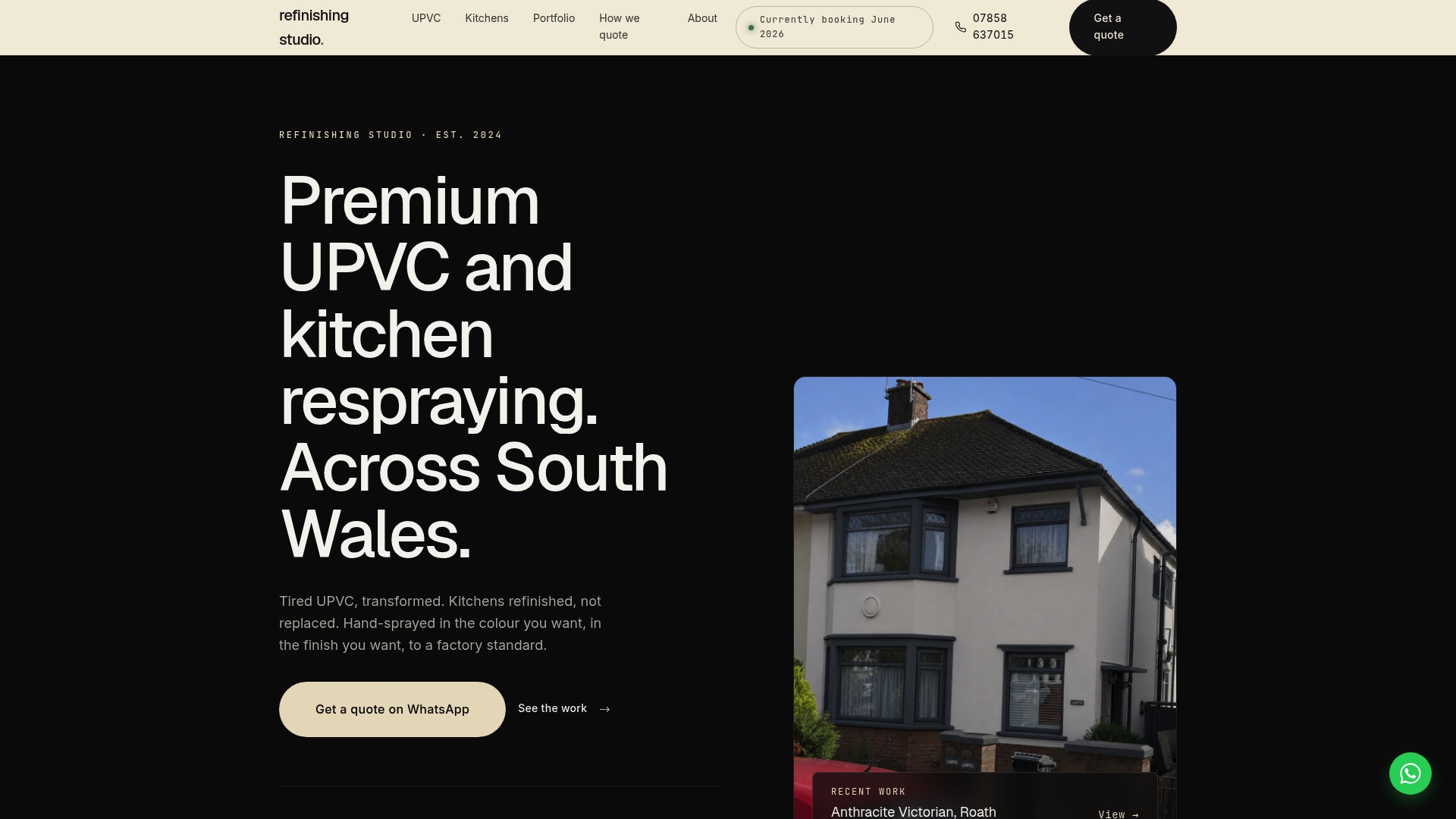
The service covers uPVC and aluminium windows, doors, conservatories, fascias, and garage doors, with the full RAL and BS colour palette available in matt, eggshell, satin, and gloss finishes. Every job is carried out by Refinishingstudio's own team — no subcontractors — and backed by a five-year transferable warranty. For a standard three-bedroom property, most projects are completed within one to two days with minimal disruption.
If you are weighing up the cost of new windows against a colour refresh, get a quote for uPVC respraying in South Wales and see what the difference looks like in practice.
Useful sources and further reading
The sources below are worth bookmarking if you are building a specification or comparing quotes.
- Wimbledon Windows — aluminium vs uPVC lifespan guide — clear breakdown of lifespan expectations and long-term investment considerations for both materials.
- Refinishingstudio — uPVC window spraying South Wales: service detail page covering process, finish options, and scope for uPVC frame respraying.
- Refinishingstudio — aluminium window spraying South Wales: equivalent page for aluminium frame respraying, including colour options and warranty terms.
- Refinishingstudio — how long does a uPVC respray last?: evidence-based guidance on respray lifespan and what affects durability over time.