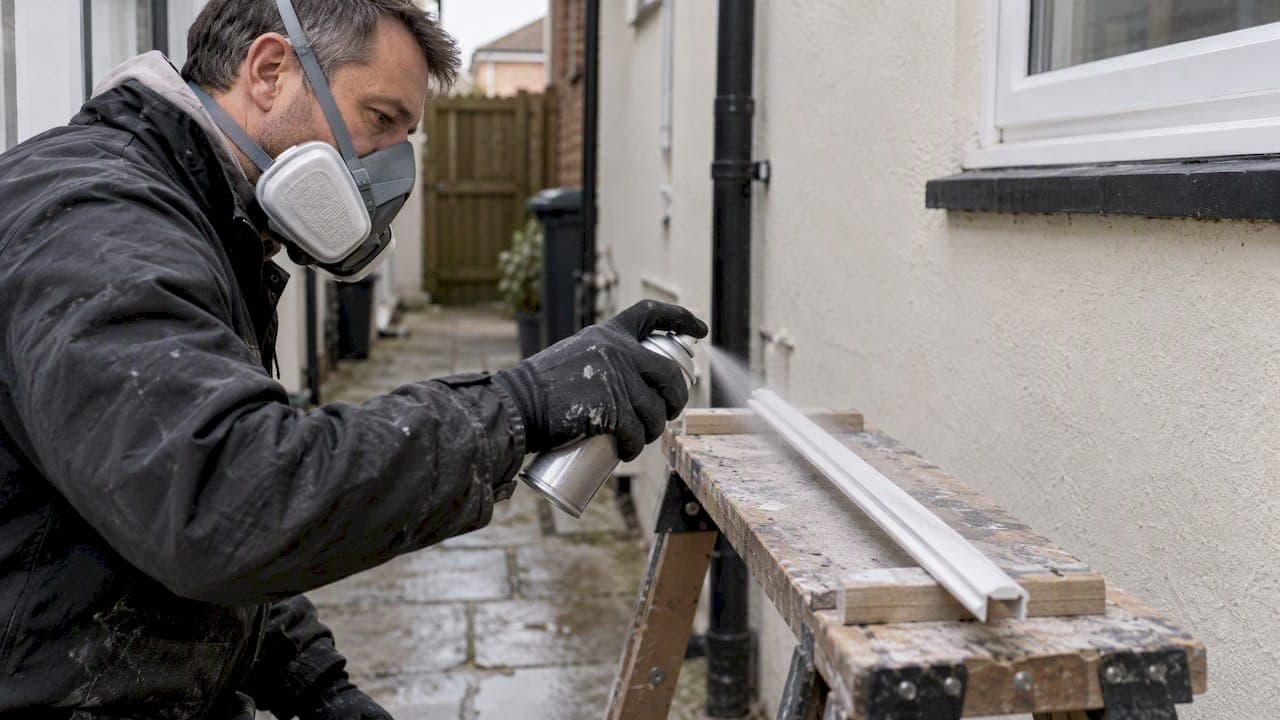
Yes: small uPVC beading can be refreshed safely with the right materials, preparation and a patch test first, but two-pack (2K) spraying should never happen outside a proper extraction booth. For tiny touch-ups, a specialist 1K aerosol is the sensible DIY route. For exterior frames, whole doors or jobs that disturb seals, a professional hand-spray respray is the safer and longer-lasting choice.
TL;DR:
- Choose a specialist uPVC aerosol for tiny repairs, test adhesion on an inconspicuous spot, and wait around seven days for full cure before refitting.
- Remove all silicone residue, clean and lightly abrade the bead, then mask seals carefully; paint bridging onto a gasket can cause sticking, tearing, or peeling.
- Apply thin, overlapping coats from roughly 20 to 30 centimeters away, allowing the product’s specified flash off and full cure times before handling.
- Two pack coatings require a spray booth and constant flow airline breathing apparatus rated to at least protection factor 20; garages and driveways are unsuitable.
- Use a professional for whole doors, exterior frames, or seal removal; compare similar project photos and get written warranty terms before work begins.
Table of Contents
- Why beading is different: profile, seals and failure modes
- Choosing coatings: 1K aerosols, specialist uPVC sprays and the role of 2K systems
- Surface prep: cleaning, abrasion and masking or removing seals
- Step-by-step spraying technique for small beading jobs
- HSE-backed safety essentials: isocyanates, spray booths and PPE
- Deciding factors for choosing a professional uPVC respray service
- What experience with uPVC respraying teaches you
- Refinishing Studio: professional hand-spray respraying as an option
- FAQ
- Sources
Why beading is different: profile, seals and failure modes
Glazing beading sits tight against rubber seals and glass, which makes it far less forgiving than a flat panel. Paint that isn't flexible, or that bridges onto the seal itself, can glue the bead to the gasket, causing sticking, cracking or peeling within months.
Silicone and sealant residue are the biggest hidden culprit. Any overlapping silicone left on the surface blocks adhesion almost completely, so coatings lift even when everything else was done correctly.
- Beading profiles are thin and narrow, so thick or uneven coats show every flaw.
- Paint touching the seal can bond the two together, tearing the gasket when the window opens.
- Reinstalling beads too roughly before the coating has cured can chip or scuff a fresh finish instantly.
Choosing coatings: 1K aerosols, specialist uPVC sprays and the role of 2K systems
For small repairs, 1K aerosols and specialist uPVC sprays are the practical choice. They're formulated to bond directly to plastic without a separate primer in most cases, and they stay flexible as the profile expands and contracts with temperature. UK suppliers stock uPVC aerosol coatings in common RAL shades such as stone grey and anthracite, confirming these products are genuinely sold for window and door trim, not just improvised.
2K systems offer a harder, more durable finish but contain isocyanates, which change the safety requirements entirely. They're a professional tool, not a weekend project.
A representative aerosol uPVC coating reaches touch-dry in 10 to 15 minutes at 20°C and reaches full cure in around 7 days. That gap between touch-dry and full cure is exactly where most DIY failures happen, because people handle or refit the bead too soon.
- Choose a product marketed specifically for uPVC, not a generic multi-surface aerosol.
- Test adhesion on an offcut or an inconspicuous section first, using masking tape to check it hasn't lifted after a day.
- Use a dedicated plastic primer or adhesion promoter only if the product's instructions call for one.
Surface prep: cleaning, abrasion and masking or removing seals
Preparation decides whether a respray lasts or lifts within weeks. The steps below follow the order most manufacturer datasheets recommend.
- Clean the bead thoroughly with a suitable degreaser to remove grease, nicotine film and general grime.
- Remove every trace of old or overlapping silicone and sealant: paint will not grip over it.
- Lightly abrade the surface with a grey scotch-brite pad to key the plastic, avoiding heavy sanding that reshapes the profile.
- Mask glass, hardware, drainage channels and surrounding frame sections carefully.
- Where it's safe to do so, remove the bead or seal and spray it separately, refitting only after full cure.
- Apply a small test patch, then wait the manufacturer's recommended cure period before inspecting for lifting.
Our guide to stopping uPVC paint peeling covers eight specific checks worth running through before you pick up a spray can.
Pro Tip: Mark each glazing bead before removal so you know exactly which piece goes back where, and warm stiff or longer sections slightly to make them easier to seat without cracking.

Step-by-step spraying technique for small beading jobs
A small beading repair rewards patience more than equipment. Here's a workable sequence for a DIY-sized job.
- Set up in a ventilated space, away from draughts that carry dust onto wet paint, and protect nearby surfaces with masking film.
- Hold the aerosol or spray gun at a consistent distance from the surface, usually around 20 to 30 centimetres for an aerosol.
- Apply thin cross-coats, overlapping each pass by roughly 30 to 50% depending on the nozzle, rather than trying to achieve full coverage in one go.
- Allow the recommended flash-off time between coats so solvents can escape before the next layer goes on.
- Let the final coat reach full cure before refitting beads or seals, following the product's stated tack-free and full-cure times rather than guessing by touch.
A low-pressure HVLP gun gives more control than an aerosol on fiddly profiles, but either option works if you keep passes thin and consistent.
Pro Tip: Runs and sagging almost always come from one coat applied too thickly rather than too many thin ones, so when in doubt, spray another light pass instead of loading one heavy coat.
HSE-backed safety essentials: isocyanates, spray booths and PPE
Two-pack isocyanate paints produce an invisible mist that can cause occupational asthma, and spraying them requires engineering controls plus constant-flow airline breathing apparatus rated to an Assigned Protection Factor of at least 20. That level of protection simply isn't achievable in a garage or driveway.
HSE guidance (HSG276) states that spray booths should run at slight negative pressure, be properly filtered, and have their clearance time measured with a smoke test, with booths typically clearing in under five minutes and spray rooms taking 20 minutes or more.
- Small 1K aerosol work still needs good ventilation and a space others can stay clear of while you spray.
- Wear a suitable respirator and skin protection even for short aerosol jobs, not just for 2K systems.
- Never attempt 2K spraying without the extraction and airline breathing apparatus the HSE sets out.
Deciding factors for choosing a professional uPVC respray service
Some jobs sit firmly outside sensible DIY territory. Full exterior frames, whole-door recolours, anything needing 2K-level durability, or work that means removing and replacing seals all point towards hiring a professional.
- Ask any contractor for evidence of controlled spraying conditions, such as a dedicated booth or room.
- Request warranty details in writing before work starts, not just a verbal promise.
- Look at before-and-after examples of similar beading or frame work, not just general photos.
A professional setup manages containment, extraction and curing in ways a driveway spray session can't replicate, which is the main reason the finish lasts longer.
What experience with uPVC respraying teaches you

Most DIY failures trace back to two things: rushed masking and painting straight over silicone or seals. A careful adhesion test and proper masking solve the majority of problems before they start.
Small, patient aerosol work can genuinely look excellent on a single bead or trim section. Anything larger, exterior or facing real weather exposure tends to reward professional hand-spray work instead, and a quote costs nothing if you're unsure where the line sits.
— Mitchell
Refinishing Studio: professional hand-spray respraying as an option
When a job moves beyond a single beading touch-up, we offer hand-spray uPVC respraying finished to factory standards, backed by a warranty. We work across windows, doors, fascias and whole exteriors, covering larger scale jobs where DIY aerosols stop being practical.

Our approach suits anyone who wants the colour and finish changed without replacing the frame, particularly where more durable finishes or seal removal are involved; work suited to controlled spraying conditions rather than a driveway. We also respray kitchen cabinets and cupboard doors for homeowners refreshing a kitchen rather than replacing it.
- Request a quote through our uPVC window spraying page for frame and beading work.
- Check indicative costs for fascias, guttering and full exterior resprays on our South Wales pricing page.
- Browse completed work, including a forest green kitchen respray in Cardiff, before deciding on a colour.
If a respray is part of a wider refresh, finishing touches like new blinds or curtains from The Perfect Stitch can tie the room together once the frames are done.
FAQ
Does spraying uPVC work?
Yes, spraying is a genuinely effective way to change the colour or refresh worn uPVC, provided the surface is properly cleaned, abraded and primed where needed. Small aerosol touch-ups suit tiny areas, while full frames and doors get a more durable, even finish from professional hand-spray application.
How long does uPVC spraying last?
A well-prepared respray using the correct coating and proper curing time can last for years before it needs attention again, with exterior work generally needing more durable systems than interior trim. Our comparison of interior versus exterior spraying sets out what to expect from each.
How much does it cost to have uPVC windows sprayed?
Professional uPVC window spraying typically costs between £80 and £2,200 depending on the size and number of windows involved. Door spraying is priced separately, usually from £250 to £650 per door.
Can I spray paint uPVC window frames?
You can spray small sections of uPVC frame or beading yourself using a specialist 1K aerosol, after cleaning, light abrasion and an adhesion test patch. Whole frames, exterior exposure or anything needing 2K-level durability are better handled by a professional with proper extraction and containment.
Sources
- MR2 - COSHH Essentials in motor vehicle repair - Spraying two-pack (2K) products
- uPVC new coating spray 400ml (product page and TDS)