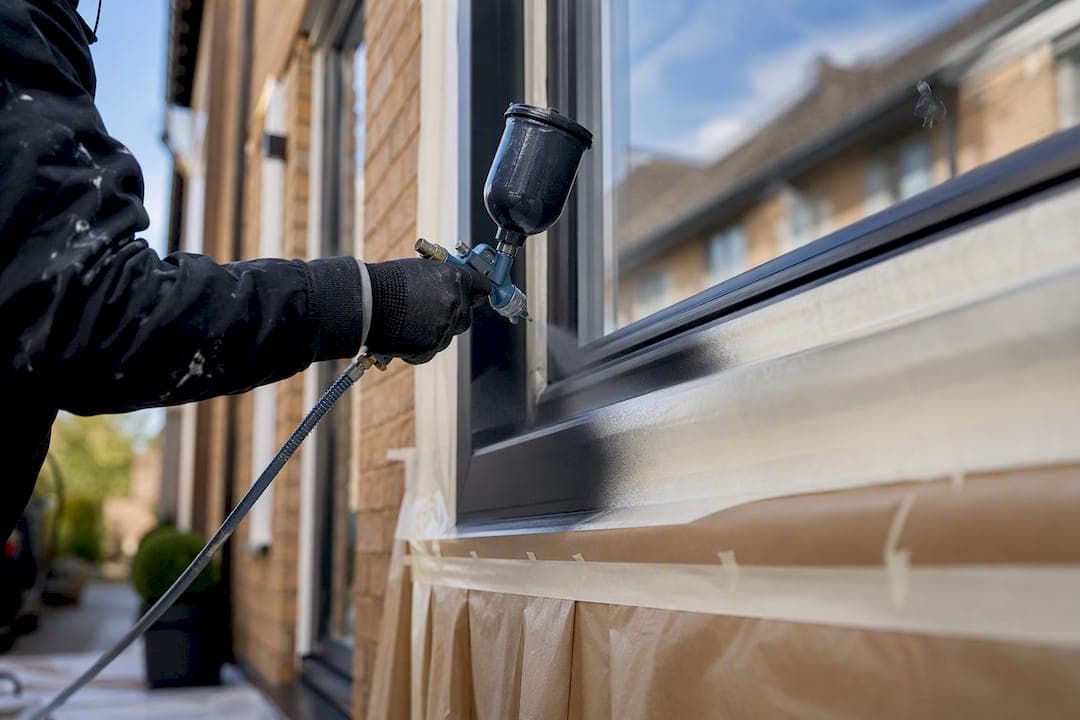
For most landlords, uPVC spraying is the more cost-effective refresh, typically saving 70-80% against replacement while frames are still structurally sound. That caveat matters: spraying refreshes tired colour and finish, it does not fix failed glazing seals, warped frames or broken mechanics. If those faults exist, replacement comes first.
TL;DR:
- uPVC spraying can cost 70 to 80% less than replacing faulty frames, but it only offers a cosmetic upgrade, not a fix for structural issues.
- Proper preparation involving thorough cleaning, scuff-sanding, and primer application is essential to ensure the spray job lasts over 10 years.
- Costs vary from about £80 to £2,200 depending on the number of windows, with additional charges for hard-to-access locations, color changes, and hardware removal.
- A site survey and written quote are crucial to accurately assess condition, access, and specific project requirements, avoiding vague estimates.
- Choosing a reputable contractor involves checking for proper insurance, warranties, previous work, and clear explanations of the process, especially for multi-unit or rental properties.
Table of Contents
- What is uPVC spraying for landlords, and why does it matter for rentals?
- How much does uPVC spraying cost, and what changes the price?
- What does professional uPVC spraying actually involve?
- Is uPVC spraying the right fix, or do you need a replacement?
- How long does sprayed uPVC last, and how do you maintain it?
- How do you choose a reliable uPVC sprayer?
- Author perspective: what years of respraying jobs teach you about landlords
- Refinishingstudio: professional uPVC spraying built around landlords
- Sources
- FAQ
What is uPVC spraying for landlords, and why does it matter for rentals?
Landlords manage void periods, tenant expectations and tight refurbishment budgets all at once, and uPVC spraying happens to solve for all three. Where a full window or door replacement means measuring, ordering, waiting for manufacture and then a disruptive fitting day, spraying is a same-visit transformation that turns yellowed, chalky frames back into something that looks factory-fresh.
The financial case is straightforward. A landlord staring down a five-figure replacement quote across a whole block of flats can often achieve a comparable visual lift for a fraction of that outlay, freeing up budget for other maintenance priorities. That difference compounds across a portfolio: spraying ten properties instead of replacing two stretches a refurbishment budget considerably further.
Speed matters just as much as price for anyone managing turnover between tenancies. A respray typically wraps up in a day or two, compared with the days or weeks a joinery-based replacement can take once ordering and fitting are factored in. That shorter window means less time with a property sitting empty and earning nothing.
There's also the tenant-attraction angle. Kerb appeal drives enquiries, and tired grey or cream frames next to a smart new colour like anthracite or graphite make a listing photo look considerably more appealing. A few other advantages worth weighing:
- Lower material waste than ripping out and replacing whole frame units, which appeals to landlords conscious of environmental impact and disposal costs.
- Minimal disruption for tenants who stay in situ, since spraying rarely requires removing frames entirely.
- Colour flexibility that lets a landlord standardise a "brand" look across several properties without matching manufacturer ranges.
- A faster route to addressing wear-and-tear complaints that might otherwise trigger a maintenance dispute at check-out.
How much does uPVC spraying cost, and what changes the price?
UK guides put typical uPVc spraying costs somewhere between £150 and £500 for individual items like a single window or door, with whole-property packages scaling up from there depending on how many openings need covering. Refinishingstudio's own pricing for UPVC window spraying runs from £80 to £2,200, while door spraying sits between £250 and £650, and fascia and gutter work typically falls between £350 and £850. The spread reflects the scale of the job as much as anything else, one window is a different quote to a full terrace of six.
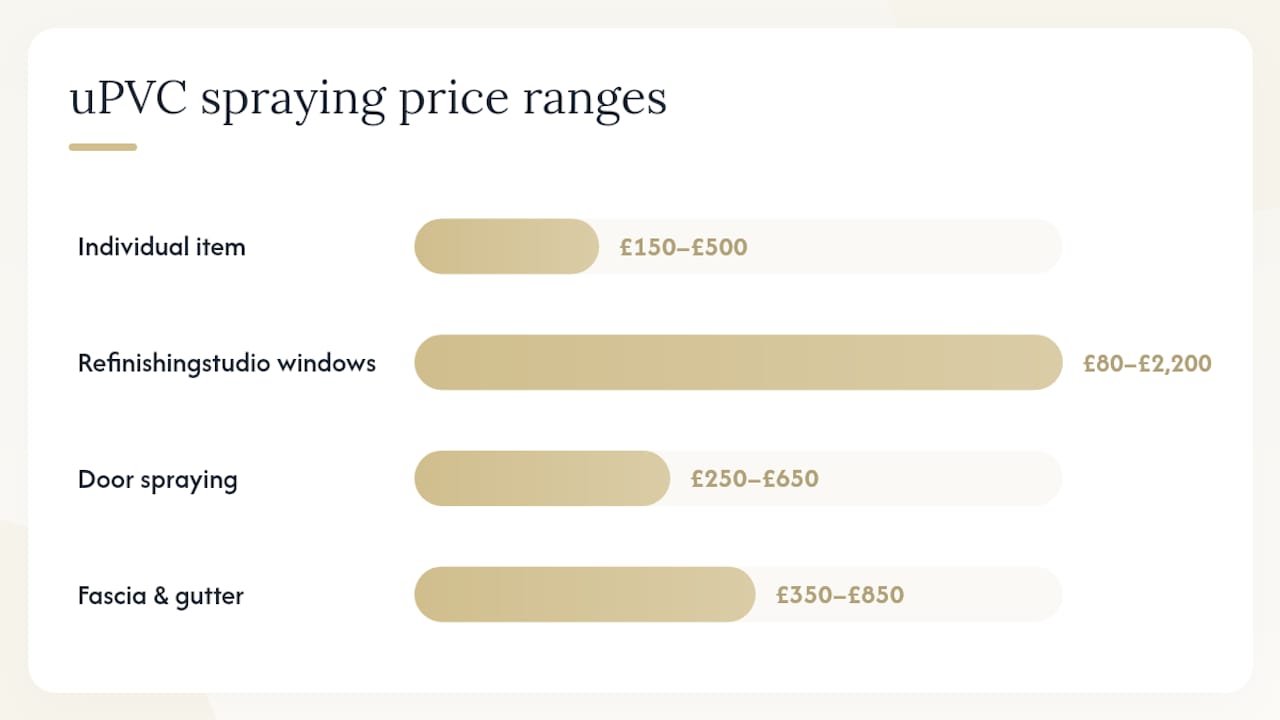
Statistic snapshot: Trade data suggests spraying can cost 70 to 80% less than full replacement, which is the single biggest number to keep in mind when comparing quotes side by side.
Several factors push a quote up or down beyond simple item count:
- Preparation work — heavily weathered or previously painted frames need more scuff-sanding and degreasing, which adds labour time.
- Access — upper-floor windows, awkward conservatories or properties with restricted parking cost more to reach safely.
- Colour changes — going from white to a dark RAL colour sometimes needs an extra coat for full coverage and opacity.
- Hardware removal — handles, hinges and locks that need masking or removing before spraying add time to the job.
- Travel — properties further from a contractor's base carry a callout premium, which is worth checking before comparing two quotes on price alone.
- Number of coats specified — a cut-price quote using a single topcoat will not last as long as a properly primed, two-coat system.
Any reputable contractor should offer a site survey before quoting a fixed price. Be wary of phone-only estimates for a whole property. Frame condition, access and colour choice all need eyes-on assessment, and a written quote that spells out prep, primer and topcoat specification protects both sides if there's a dispute later.
What does professional uPVC spraying actually involve?
A proper spraying job follows a fairly consistent sequence, and knowing the steps helps you sense-check any quote you're handed.
- Survey and condition check. A competent sprayer inspects frames for failed seals, cracked beading or structural movement before agreeing to take the job on, because spraying over a fault only hides it temporarily.
- Degreasing and cleaning. Frames get wiped down with isopropyl alcohol (IPA) or a similar solvent to strip years of grime, silicone residue and atmospheric pollution that would otherwise stop paint adhering properly.
- Scuff-sanding. A light abrasion of the uPVC surface gives the primer something to key into, since factory-finished uPVC is naturally slick.
- Masking and protection. Glass, brickwork, guttering and anything nearby that shouldn't be sprayed gets carefully covered.
- Adhesion primer application. This is the step that separates a durable job from a peeling one; correct preparation and a specialist primer are what allow the topcoat to bond to a notoriously non-porous plastic surface.
- UPVC topcoat, typically two coats. Applied by hand-spray or HVLP equipment for an even, factory-style finish, with drying time between coats.
A single window or door can be finished within a few hours once on-site, while a whole property exterior, windows, doors, fascias and guttering together, usually takes one to two days depending on scale and weather.
Pro Tip: Ask your contractor how many coats are included in the price. A quote that mentions "primer plus topcoat" but doesn't specify coat count is worth double-checking, since a single thin coat over primer rarely gives the same longevity as two.
Is uPVC spraying the right fix, or do you need a replacement?
Spraying solves cosmetic problems. It does not solve mechanical or structural ones, and knowing the difference before booking a contractor saves wasted money.
Spraying is the right call when frames show:
- Yellowing or discolouration from UV exposure, which is extremely common on white uPVC over 8 to 10 years old.
- Chalking, that dusty, faded surface texture that rubs off on your hand.
- General fading or colour mismatch after a partial frame replacement over the years.
- Surface scratches or minor cosmetic wear that hasn't compromised the frame itself.
Replacement, not spraying, is needed when you spot:
- Condensation or misting between panes, which signals a failed sealed unit that spraying cannot fix.
- Warped, bowed or cracked frames, often from heat exposure or age.
- Broken locks, hinges or handles that affect security or usability.
- Water ingress or rot around the frame edges, particularly on older installations.
None of this rules out combining the two approaches. It's common practice to replace a failed hinge or handle mechanically first, then spray the whole frame for a uniform finish, rather than living with one shiny new component next to five faded ones.
How long does sprayed uPVC last, and how do you maintain it?
Professionally applied exterior systems commonly last 10 or more years when the preparation is done properly and the frame is in good condition beforehand. That figure assumes correct primer use and adequate coat thickness, cut corners on prep shorten that lifespan considerably, which is exactly why the survey and degreasing steps matter more than the spray gun itself.
Statistic snapshot: A 10+ year lifespan for a job costing a fraction of replacement changes the maths on a landlord's refurbishment cycle considerably, particularly across a multi-property portfolio where replacement costs would otherwise stack up fast.
Maintenance is genuinely simple, which is one reason the finish suits rental properties where tenants won't be following a specialist care regime:
- Clean with warm water and a mild detergent, nothing abrasive.
- Avoid solvent-based cleaning products, which can dull or strip the topcoat over time.
- Rinse off bird droppings, tree sap or general grime reasonably promptly rather than letting it bake into the surface.
- Check silicone seals annually and have any perished sealant replaced to keep water out.
Common failure modes tend to trace back to poor prep rather than the paint itself, adhesion problems, premature peeling or patchy fading in one area usually mean a rushed or skipped primer stage. This is exactly what a proper warranty should cover. Reputable contractors typically offer multi-year guarantees against this kind of failure, and checking what's actually covered, and whether it transfers if you sell the property, is worth five minutes of your time before signing anything.
How do you choose a reliable uPVC sprayer?
Picking the wrong contractor is the single biggest risk in this whole process, not the paint itself. A checklist helps filter out the ones cutting corners.
- Insist on a written, itemised quote following a site survey. Phone-only quotes for anything beyond a single door are a warning sign.
- Ask exactly what products they use. You want to hear "adhesion primer plus a dedicated uPVC topcoat," not a vague "specialist paint."
- Check their insurance. Public liability cover matters if something goes wrong on-site, particularly with tenants or neighbours nearby.
- Ask about warranty length and what it covers. Five years is a reasonable benchmark; ask specifically whether peeling, fading and adhesion failure are all included.
- Request examples of previous work, ideally on rental or multi-unit properties similar to yours.
- Ask who's actually doing the spraying. Some outfits subcontract to whoever's available that week, which makes quality control harder to guarantee.
Underquoting is the classic red flag. If one quote comes in dramatically below the rest, ask what's been left out, usually it's coat count, prep time or warranty length. A contractor who can't clearly explain their prep process, or who brushes off questions about primer and coats, likely doesn't have a rigorous one.
Overspray and neighbour impact are also worth raising at survey stage. Sensible operators manage overspray and use appropriate PPE as standard, and for most colour changes on a standard rental property, planning permission isn't required, though conservation areas and listed buildings can carry different rules worth checking with your local authority first.
Pro Tip: Ask two or three contractors the exact same set of questions, in the same order, and compare answers side by side. Vague or evasive responses to a direct question about warranty terms tend to predict how the job itself will go.
Author perspective: what years of respraying jobs teach you about landlords
The landlords who get the most value from spraying are the ones who book it in the gap between tenancies rather than waiting for a complaint. Scheduling around a void period means no tenant disruption at all, and the property photographs better for the next let almost immediately. Where Refinishingstudio's hand-spray approach differs is the absence of subcontractors, the same people who survey the job spray it, which tends to show in the consistency of the finish across a whole terrace or block. Over 1,000 completed projects and a five-year warranty aren't just numbers on a page, they're what let a landlord commit to a colour change with confidence rather than crossing fingers.
— Mitchell
Refinishingstudio: professional uPVC spraying built around landlords
Refinishingstudio is the alternative to a full replacement contract for landlords across South Wales who need a fast, guaranteed refresh between tenancies rather than a lengthy joinery job. Projects generally come with a multi-year warranty and are completed by the same team responsible for surveying and quoting, with no subcontractors involved.
Services cover UPVC window spraying, door spraying, fascia and gutter work, whole exterior resprays, and kitchen respraying for landlords looking to refresh a rental's interior alongside its exterior. The provider has a substantial track record of completed projects across the region. If you're weighing up a portfolio-wide refresh, staggering the work across several tenancy changeovers keeps disruption to a minimum, a phased approach that works well alongside a structured repaint schedule for multi-unit properties.
Getting started means requesting a site survey and written quote through the UPVC spraying cost guide, where you'll get a fixed price before any work begins.
Sources
FAQ
What are the legal requirements for a spray booth?
Most residential uPVC spraying is done on-site rather than in a booth, and standard colour changes rarely need planning permission. Conservation areas and listed buildings can carry different rules, so it's worth checking with your local authority and reading planning guidance for uPVC repainting before committing to a dark colour change.
Is uPVC spraying worth it?
For structurally sound frames, spraying usually delivers the same visual lift as replacement at 70 to 80% less cost, with a job typically finished in one to two days. It's not worth it if frames have failed seals, warping or broken mechanisms, since those need repair or replacement first.
How long does uPVC spraying last?
Professionally applied systems commonly last 10 years or more when preparation, primer and topcoat are done properly. Poor prep, skipped primer or a single thin coat will shorten that considerably, which is why checking a contractor's process matters more than the price alone.