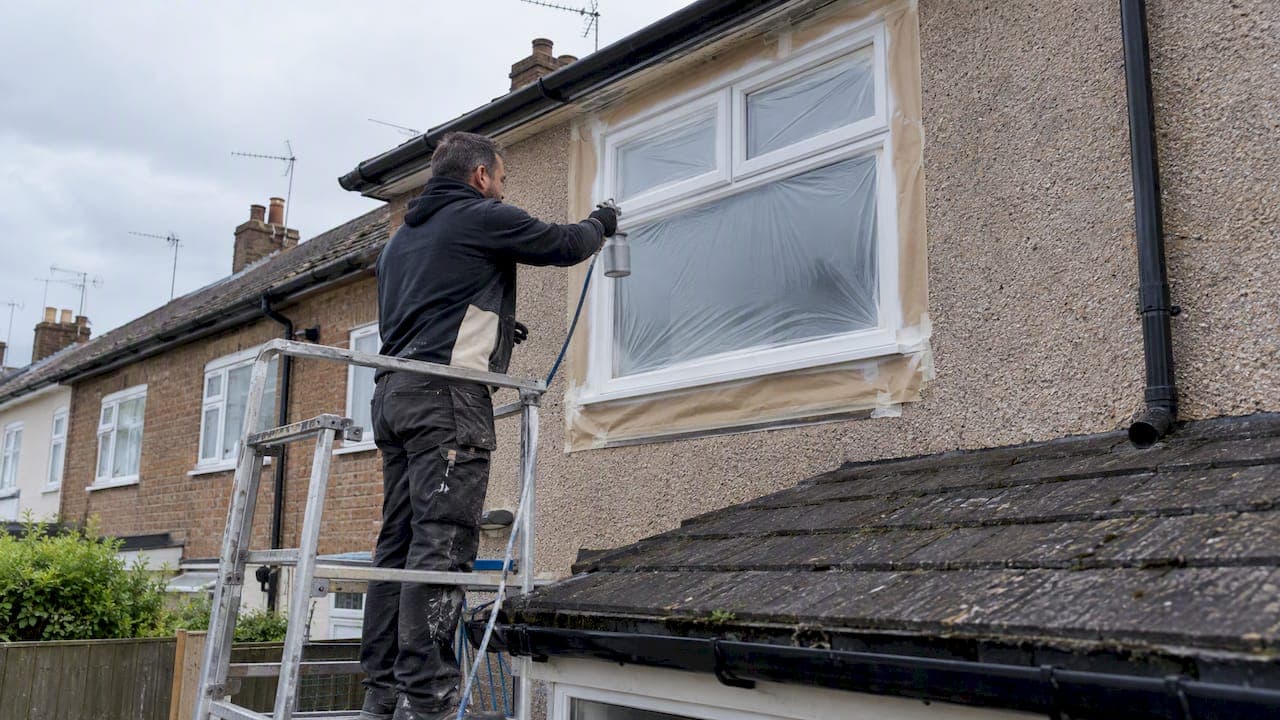
Professional hand-spray respraying is a durable, cost-effective way to refresh upstairs UPVC window frames without replacing them, provided the frames are structurally sound. It suits homeowners, landlords and property managers who want a colour change or a factory-standard finish without the disruption of a full window replacement. The rest of this guide covers the process, realistic costs, how to pick a contractor, and the aftercare that protects your investment.
TL;DR:
- Proper surface preparation, including degreasing and abrasion, is essential for a lifespan of around five years for UPVC resprays.
- Structural soundness of the window frame must be verified before spraying, as warped or rotten frames cannot be reliably restored with coating.
- Access difficulty and the number of coats involved can significantly increase the cost, with prices typically ranging from £80 to £2,200 per window.
- Using scaffolding or ladders safely is critical for upstairs windows, and the work method is finalized during the initial survey.
- Choosing a contractor with a proven track record, a written warranty, and specific experience with upstairs work ensures quality and reduces risks.
Table of Contents
- What a professional respray job involves
- Benefits and limitations compared with replacement
- Onsite workflow for upstairs window spraying: what happens on the day
- Costs, timeline and the factors that affect a quote for upstairs windows
- How to choose a contractor for upstairs window spraying
- Preparing your home and aftercare for upstairs window respraying
- A practitioner's view on what makes a respray last
- Refinishing Studio: how we work and how to request a survey
- Sources
- FAQ
What a professional respray job involves
A respray starts with a survey to confirm the frames are structurally serviceable: no rot, no broken seals, no warping beyond what a coating can mask. If a frame fails that check, respraying is the wrong call and replacement becomes the sensible option.
Once a frame passes, the work follows a set sequence. Promain's architectural refinishing specification sets out the technical basis for this: degreasing, abrasion with a product such as Red Scotchbrite to key the surface, then a purpose-formulated topcoat applied in cross-coats to build the correct film thickness.
- Deep clean and degrease to remove silicone residue, grease and UV-degraded plastic.
- Abrade or key the surface so the new coating can bond mechanically.
- Mask glass, seals and surrounding brickwork before any spraying begins.
- Apply the coating system in cross-coats rather than one heavy pass.
- Allow controlled drying and curing before the window is used normally.
A UPVC coating technical data sheet distinguishes touch-dry from fully cured: a coating can feel dry within hours but needs several days to reach its full mechanical resistance. Professionals also check temperature, humidity and dew point before spraying, because damp or cold conditions cause adhesion failures that only show up months later.
Benefits and limitations compared with replacement
Respraying avoids the cost and waste of ripping out sound frames, and it carries a lower embodied carbon footprint than manufacturing and fitting new UPVC units. It also opens up a colour range that replacement windows rarely match without a premium.
- Lower cost and less disruption than full window replacement.
- Wide choice of RAL and BS colours plus finish options such as matt, satin or gloss.
- A factory-standard appearance when preparation and coating application are done properly.
- Durability that depends entirely on the prep quality, not just the paint used.
Homebuilding's guide notes that a well-prepared painted or resprayed UPVC finish can be expected to last several years when the job is done correctly. Proper degreasing and abrasion are key; skipping those steps leads to an early failure of the finish.
Respraying has limits. Severely warped frames, failed double-glazing seals or rotten substrates behind the UPVC need replacing, not coating over. On listed buildings or in conservation areas, Historic England's guidance favours repair over wholesale replacement and some works require consent, so check before committing to any exterior change.
Onsite workflow for upstairs window spraying: what happens on the day
Upstairs windows add a layer of complexity that ground-floor jobs do not have: access. A professional crew will usually follow this sequence.
- Survey and measure the windows, confirming frame condition and access requirements.
- Deep clean and degrease every surface that will be sprayed.
- Abrade the UPVC to key the surface for the coating.
- Mask glass, seals, brickwork and anything nearby that should stay paint-free.
- Run a test spray to check colour match and coverage before committing to the full job.
- Apply the coating in cross-coats, allowing appropriate flash-off time between passes.
- Inspect the finish once touch-dry and flag any areas needing a further pass.
For access, expect ladders for straightforward single-storey reach, a tower scaffold for repeated upstairs work across several windows, or full scaffolding on larger properties. Working at height brings its own safety requirements: secured ladders, tower stabilisers, and in some cases a second person on site throughout.
Masking is more demanding upstairs because overspray drifting onto roof tiles, guttering or a neighbour's property is harder to control from height. Professionals will often mask wider margins and work in calmer weather windows to limit drift. A partner specialist in roofing access can illustrate how seriously tradespeople treat protecting roof lines and guttering when work happens above ground level, the same principle applies to safe window access.

Most jobs use two or three cross-coats rather than one thick layer, since thin, even coats adhere better and cure more reliably. The window will be touch-dry within hours but occupants should avoid operating it, leaning on it or cleaning it for several days while the coating fully cures.
Pro Tip: Ask your contractor to photograph the frame before, during and after the spray, it is the simplest way to prove the prep was done properly if a warranty claim ever comes up.
Costs, timeline and the factors that affect a quote for upstairs windows
Several factors drive the price of an upstairs respray beyond the number of windows involved.
- Frame condition: heavily weathered or previously painted UPVC needs more prep time.
- Access difficulty: scaffolding or tower hire for upstairs windows adds cost that ground-floor jobs avoid.
- Masking complexity: more glazing bars, adjacent brickwork or nearby roofing increases prep time.
- Finish choice: custom RAL or BS colours and higher-gloss finishes can affect material cost.
A single UPVC window spraying job is typically quoted between £80 and £2,200 depending on these factors, with access at height usually pushing a quote toward the higher end of that range compared to an identical ground-floor job.
Expect a timeline of a short survey visit, followed by a working day or more on site depending on the number of windows, and a cure period afterwards during which the windows should be handled gently. To get an accurate quote, supply clear photos of each window, rough measurements, and notes on access, such as whether scaffolding is already up or ladders will suffice.
How to choose a contractor for upstairs window spraying
The right contractor will ask more questions than they answer on a first call, because an accurate quote depends on seeing the frames and the access.
- Ask whether the warranty is written and transferable, and for how long it runs.
- Ask which prep steps and coating brands they use, and whether they can name them specifically.
- Ask who actually does the spraying: the same people who quoted the job, or subcontractors.
- Check for a documented gallery of completed upstairs jobs, not just ground-floor examples.
- Request a site visit before accepting any quote, since access difficulty cannot be judged from photos alone.
Trust signals worth looking for include a written five-year warranty, a track record of over 1,000 completed projects, and client reviews that mention upstairs or hard-to-reach work specifically. Red flags include a quote given without a survey, vague answers about prep or coatings, no written warranty, and pricing that sits well below everyone else's for no stated reason.
Preparing your home and aftercare for upstairs window respraying
A little preparation before the team arrives makes the job faster and protects the finish once it is done.
- Clear external access: move bins, garden furniture or ladders away from the work area.
- Bring delicate plants or outdoor items indoors in case of overspray drift.
- Secure pets away from the work area and keep windows closed during spraying.
- Follow your contractor's guidance on curtains or blinds if they need closing during the job.
Once the spray is finished, avoid operating the windows roughly, cleaning them with solvent-based products, or using a pressure washer nearby for at least a week while the coating cures fully. Keep invoices and any before-and-after photos the contractor provides, as they are usually required for a warranty claim. Routine maintenance after that is simple: a soft cloth and mild soapy water keeps the finish looking factory-fresh for years, as covered in our guide to UPVC spray durability.
A practitioner's view on what makes a respray last

A durable respray comes down to a short checklist: proper degreasing, mechanical keying of the surface, an approved coating system applied in controlled conditions, and a final inspection before anyone calls the job done. Skip any one of those and the finish fails early, regardless of how good the paint is.
Respray is the right call for sound frames that look tired or the wrong colour. Replacement is the right call when the frame itself, not just its surface, has failed.
— Mitchell
Refinishing Studio: how we work and how to request a survey
Refinishing Studio sprays UPVC windows by hand, using factory-standard coatings backed by a written five-year warranty, with no subcontractors on any job across South Wales. The same people who survey your windows are the ones who prep and spray them.

- You get a site visit and a written quote before any work is booked.
- Your job is scheduled with a clear start and completion date.
- You walk through the finished windows before paying, since payment is taken on completion.
If your upstairs UPVC frames are sound but tired or the wrong colour, visit our UPVC window spraying page to request a survey.
Sources
FAQ
How long does a respray on upstairs windows last?
A well-prepared UPVC respray can reasonably be expected to last around five years, according to Homebuilding's guide, though proper degreasing and abrasion are what make that lifespan achievable.
Can every upstairs UPVC window be resprayed?
Only frames that are structurally sound, without rot, broken seals or significant warping, are suitable for respraying. A survey before quoting is the only reliable way to confirm this.
What does Refinishing Studio charge for upstairs window spraying?
UPVC window spraying is typically quoted between £80 and £2,200 per project, with access difficulty for upstairs windows often affecting where a job falls in that range.
Is scaffolding always needed for upstairs window spraying?
Not always: single windows at modest height can often be reached safely with a secured ladder, while repeated upstairs work or larger properties usually call for a tower scaffold. The access method is confirmed during the site survey, not guessed from photos.
Do listed buildings allow UPVC window respraying?
Works on listed buildings often require consent, and Historic England's guidance favours repair over replacement where possible. Check with your local planning authority before booking any exterior work on a listed property.