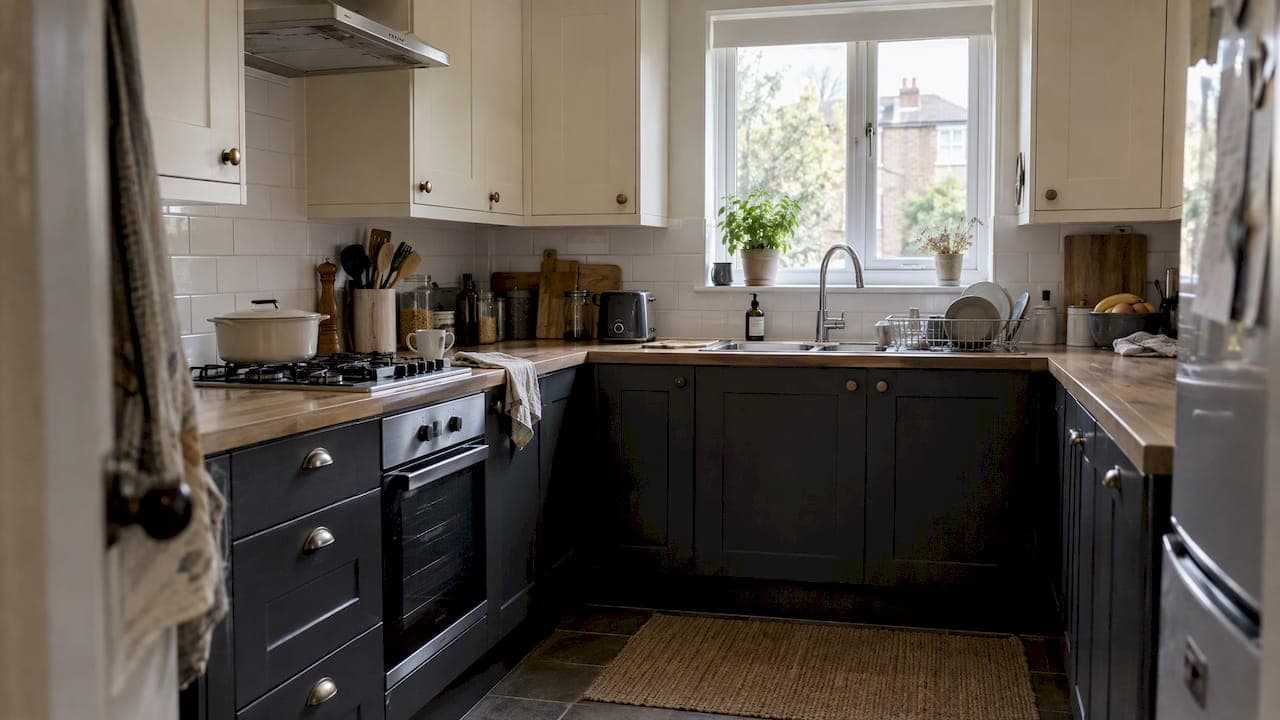
The fastest way to transform a small kitchen is to respray doors and drawer fronts in a light, reflective colour, treat an island or run of lower units as a bold accent, and finish with new handles. A small kitchen respray typically costs £800 to £1,800, and professional-grade, low-VOC coatings give a durable, factory-style finish without the smell or mess of standard paint.
TL;DR:
- Respray doors and drawer fronts first, then include exposed frames, end panels, and toe kicks, whose faded finish stands out beside refreshed doors.
- For 10 to 15 doors and drawer fronts, removal, repair, spraying, curing, and reassembly generally take a few days to about a week.
- Laminate or vinyl wrap needs etching or bonding primer after cleaning and repairs; cabinet grade primers and topcoats outlast standard wall paint.
- Test a proposed island color on a cured sample panel; lighting and humidity can shift shades, so keep surrounding cabinets light when choosing dark tones.
- Satin and eggshell finishes reflect enough light to brighten the room without glare, while handling daily knocks and wipe downs near sinks and hobs.
Table of Contents
- Colour ideas and pairings that make a small kitchen feel larger
- Where to respray first for the biggest visual impact
- Typical cost ranges and timeline for a small-kitchen respray
- The professional respray process and materials that make it last
- Quick planning checklist before you request a quote
- What a specialist respray service brings to a small kitchen
- What matters most when choosing a respray approach
- Refresh your cabinets without the cost or upheaval of replacing them
- FAQ
- Sources
Colour ideas and pairings that make a small kitchen feel larger
Light-reflective neutrals bounce daylight around a compact room, which is why soft whites and warm off-whites remain the safest choice for wall units and taller cabinetry in a small kitchen. They open the space visually without feeling clinical, especially when paired with a satin or eggshell sheen that catches light without glaring.
Beyond plain white, a handful of colours work particularly well in tight layouts:
- Soft sage adds warmth and a natural feel without closing the room in.
- Muted blue reads as calm and spacious rather than heavy.
- Pale grey suits kitchens with cooler light and modern hardware.
- Warm off-white softens a north-facing room that lacks natural light.
Two-tone schemes are worth considering once the base palette is settled: pale uppers paired with a deeper lower run, or a single bold island against lighter surrounding cabinetry, add visual interest without shrinking the room. A darker island can work well as a focal point because it creates depth and grounds the space, but it only succeeds when the units around it stay light. Overdo the dark tones and a small kitchen starts to feel boxed in rather than characterful.
On finish, satin or eggshell strikes the right balance for most households: reflective enough to lift a small room, durable enough to withstand daily knocks and wipe-downs around sinks and hobs.
Where to respray first for the biggest visual impact
When budget is limited, prioritising the right elements matters more than respraying everything at once.
- Doors and drawer fronts first. These surfaces dominate what you see when you walk in, so resprasying them delivers the most noticeable change for the money.
- Consider the island on its own. If your kitchen has one, giving it a standalone accent colour creates a strong focal point without the cost of a full respray.
- Don't skip end panels, toe kicks and exposed frames. These smaller areas are cheap to include and their old, faded finish stands out once the main doors are refreshed.
- Finish with hardware. New handles or knobs cost little but sharpen the overall look, and if you're drawn to a cleaner line, ask about a handleless conversion at the same time.
If your cabinets sit close to an oven or hob, it's worth reading our guide to spraying cabinets near heat sources before committing to a colour or finish.
Typical cost ranges and timeline for a small-kitchen respray
A small kitchen respray, covering around 10 to 15 doors and drawer fronts, typically costs between £800 and £1,800, which is a fraction of the price of a full kitchen replacement.
Prices vary with the number of panels, the substrate (laminate, timber, UPVC or vinyl-wrapped doors all behave differently), and how many colour changes are involved. Medium kitchens with 15 to 20 doors and larger kitchens with 20 or more doors or an island sit in higher price bands, reflecting the extra prep and spray time required.

Timelines follow a fairly consistent pattern: doors and drawers are removed, cleaned and repaired, then sprayed and left to cure before reassembly. For a small kitchen this generally runs from a few days to about a week, depending on drying conditions and how many coats each colour needs.
The professional respray process and materials that make it last
Spraying kitchen cabinets is a different job to painting a wall, and the preparation stage is where most of the durability comes from. Surfaces are cleaned, degreased and lightly repaired, then slick finishes such as laminate or vinyl wrap get an etching or bonding primer so the topcoat actually grips.
- Cabinet-grade work uses specialist primers and trade-level topcoats, often water-borne enamels or pre-catalysed systems, rather than standard wall emulsion.
- Professionals apply these with HVLP or airless spray equipment, which gives an even, factory-style finish that a brush or roller can't replicate.
- In the UK, the VOC in Paints, Varnishes and Vehicle Refinishing Products Regulations 2012 set maximum limits on volatile organic compounds, and trade water-borne enamels for trim sit well below the limits of many solvent-borne products, which makes them the preferred choice for cabinetry indoors.
Technical data for kitchen-specific trade coatings, such as Dulux Trade's kitchen and bathroom eggshell, shows mould resistance and high scrub ratings designed for humid kitchen environments, which is part of why these products outlast standard wall paint on cabinet doors.
Pro Tip: Ask for a sample panel sprayed and cured under your own kitchen's conditions before committing to a full colour change, since lighting and humidity can shift how a shade reads on the day.

Quick planning checklist before you request a quote
A little preparation makes quotes faster and more accurate, and helps avoid delays once work starts.
- Photograph your kitchen and measure the doors and drawers you want resprayed.
- Identify the substrate (UPVC, laminate, timber or vinyl wrap) and flag any damage or panels that may need replacing rather than respraying.
- Shortlist two or three colour and finish combinations and ask for sample panels where possible.
- Decide whether you'll remove doors yourself or leave that to the contractor, and think about where you'll store food and crockery during the work.
- Check warranty terms, along with drying and storage arrangements, before work begins.
Independent trade sources covering kitchen spraying projects echo the same point: clear scope and realistic timelines at the quote stage prevent most of the friction that homeowners run into later.
What a specialist respray service brings to a small kitchen
We focus solely on UPVC and kitchen respraying, aiming to ensure continuity in every quote, preparation step and spray session without involving subcontractors.
- Every project comes with a warranty, providing a written guarantee on the finish.
- Our before-and-after gallery shows real project photos and scope details rather than stylised marketing shots.
- You can browse examples and cost guidance on our kitchen respraying and kitchen cupboard spraying pages before requesting a quote.
The process has been refined to suit small kitchens where access and drying space are often tight.
What matters most when choosing a respray approach
Most homeowners overthink the colour decision and underthink the scope decision, yet scope is what actually shapes the final look and the budget. The real trade-off isn't between colours, it's between respraying everything at once or prioritising the panels that do the most visual work.
Three things make the difference: respray doors and drawer fronts before anything else, test your shortlisted colours as sample panels rather than paint swatches, and choose cabinet-grade coatings over standard wall paint, since that's what actually withstands a working kitchen.
— Mitchell
Refresh your cabinets without the cost or upheaval of replacing them
A kitchen respray gives you a factory-standard finish on your existing cabinetry, backed by a five-year warranty, without the disruption of a full replacement.

Browse real before-and-after examples and request a free quote on our kitchen respraying page, or get in touch about handleless conversion if you're after a cleaner, more modern finish.
FAQ
What colour makes a small kitchen look bigger?
Light, reflective neutrals such as soft white, warm off-white or pale grey make a small kitchen feel larger because they bounce available light around the room. Pairing these on the upper units with a slightly deeper tone on the lower run or island can add depth without making the space feel smaller.
Can I paint over already painted kitchen cabinets?
Yes, previously painted cabinets can usually be resprayed, provided the existing finish is cleaned, degreased and lightly prepared so the new coating bonds properly. Any flaking or damaged areas typically need repair before the new primer and topcoat go on.
Is resurfacing kitchen cabinets a good idea?
Resurfacing, or respraying, is generally a practical option when the cabinet structure is sound but the finish looks dated or worn. A small kitchen respray typically costs between £800 and £1,800, which is considerably less than a full kitchen replacement.
What colours should I avoid in a small kitchen?
Very dark, matt colours across all surfaces tend to make a small kitchen feel enclosed rather than cosy, particularly in rooms with limited natural light. If you want a bold shade, it generally works better confined to an island or a single accent run, with lighter tones kept on the surrounding cabinetry.