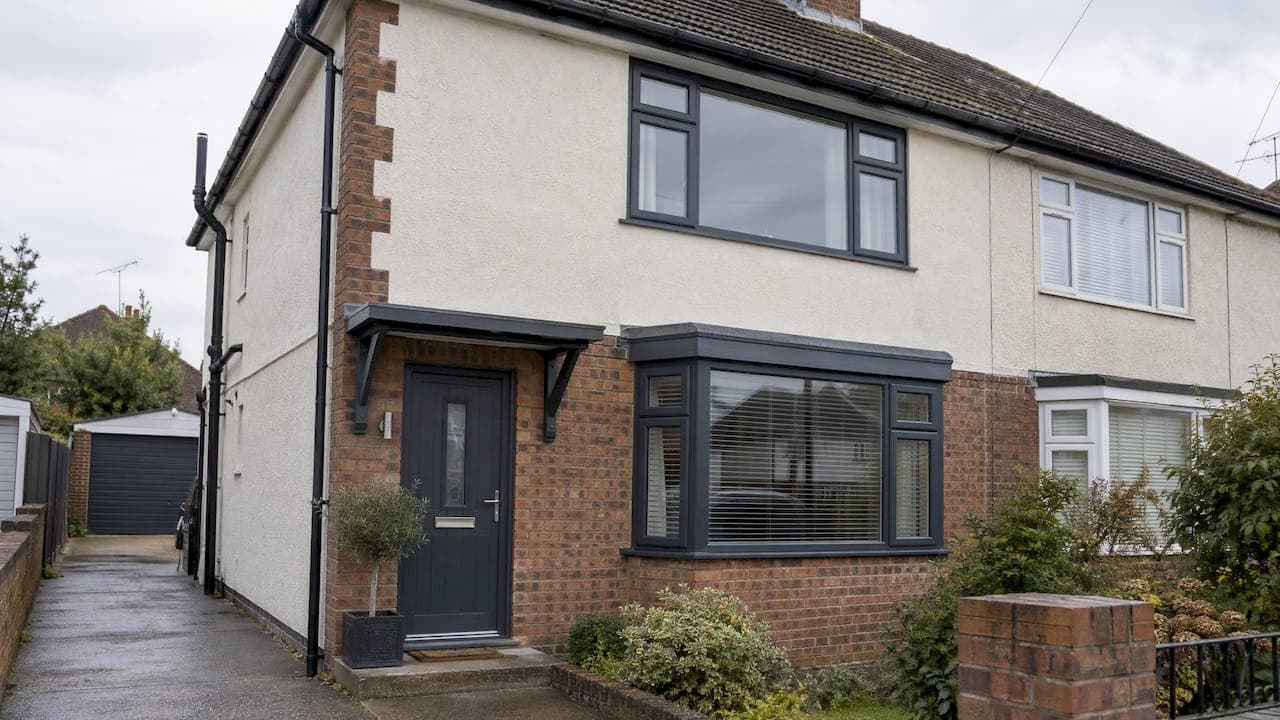
White remains the most common uPVC window colour across the UK, with anthracite grey holding the lead among non-white options. Softer neutrals such as agate and pebble grey are climbing fast, black and dark brown tones are gaining ground on period and statement homes, and matt woodgrain foils still suit traditional properties. If your existing frames are the wrong colour rather than the wrong age, a professional respray can usually change that without a full replacement.
TL;DR:
- Most homeowners choose white or anthracite grey for their uPVC frames, with soft greys like agate and pebble rapidly gaining popularity.
- Darker colours such as black and dark brown are mainly for period properties, demanding careful surrounding detailing to enhance their bold contrast.
- Respraying sound frames offers a durable, less invasive alternative to replacement, especially when the only issue is the colour or finish.
- Checking local conservation or listed status is crucial before changing window colours in protected areas, as permission may be necessary.
- In 2026, the trend favors respray solutions for most homes, with matching the type of colour system (RAL, BS, or custom) being key for accurate results.
Table of Contents
- Top uPVC colours and when to choose them
- Finishes and colour systems you'll see from UK suppliers
- How to choose the right uPVC colour for your home
- Respraying versus replacement: what to expect and when to pick each option
- Planning, conservation areas and quick legal checks in the UK
- A practical take on colour choice for 2026
- Refresh your frames with Refinishing Studio in South Wales
- FAQ
- Sources
Top uPVC colours and when to choose them
Most UK homeowners choosing new or refreshed uPVC frames pick from a surprisingly short list. Renolit's 2025 data shows the top 10 finishes account for around 90% of market demand, and solid colours now make up more than 80% of that figure. The palette is wide, but the real choices most people make are narrow.
Crystal or clean white still sits at the top for straightforward reasons. It suits almost any brick, render or roof colour, costs less than special finishes, and matches the original frames on most post-war housing stock. For a straightforward swap or a rental property, it remains the safest default.
Anthracite grey (RAL 7016) is the clear leader among non-white choices. It reads as modern and architectural, which is why it turns up so often on contemporary extensions, new-build estates and renovated semis with light brick or render. Our analysis of anthracite grey trends covers why it photographs well against pale walls and why it has become something of a shorthand for a refreshed exterior.
Agate grey and pebble grey are the names to watch next. Window News reporting notes that agate grey rose quickly through 2025 and overtook some long-standing woodgrain finishes in the rankings. These softer greys give a contemporary look without the stronger contrast of anthracite, which suits homeowners who want something neutral rather than bold. Our pebble grey respray guide walks through how this shade reads against different brick tones.
Black and dark brown tones create high contrast and suit period properties where a strong frame colour complements Victorian or Edwardian brickwork. These colours demand more attention to surrounding detailing, since a dark frame draws the eye to door furniture, guttering and trim. We cover the practical side of this choice in our piece on spraying brown uPVC frames.

Woodgrain foils give a warm, traditional look that suits cottages, farmhouses and conservation-adjacent properties, though their overall market share continues to shrink as solid colours dominate demand.
Sage and earth tones remain a niche pick, but one that's growing. RENOLIT's Ulti-Matt range has recorded strong growth in matt black and sage finishes, reflecting a wider interest in muted, nature-led colour schemes.
| Colour | Typical property fit | Market position |
|---|---|---|
| White | Any style, especially period and rental | Most common colour overall |
| Anthracite grey (RAL 7016) | Contemporary extensions, new-build | Leading non-white colour |
| Agate/pebble grey | Modern homes wanting softer neutrals | Fast-rising, overtaking some woodgrains |
| Black/dark brown | Period homes, bold statement frontages | Growing niche |
| Woodgrain foils | Cottages, traditional properties | Declining share of total demand |
| Sage/earth tones | Homes with biophilic or natural palettes | Small but growing matt-finish segment |
A few practical pointers worth keeping in mind:
- Darker colours absorb more heat and can show dust and pollen more visibly between cleans.
- Lighter neutrals generally offer the widest resale appeal to future buyers.
- Checking what's already common on your street avoids a frame colour that clashes with the wider streetscape.
Finishes and colour systems you'll see from UK suppliers
Colour name is only half the decision. The finish, sheen and reference system behind it all affect how the frames look day to day and how suppliers quote for them.
Solid-colour foils give a flat, even colour across the frame and are the easiest to keep clean. Woodgrain foils add a textured, grained surface that mimics timber, which looks warmer but shows dust in the grain lines more readily than a flat finish.
Sheen matters as much as colour. Super-matt systems such as Ulti-Matt give a chalky, contemporary look that has become popular on anthracite and black frames. Satin sits between matt and gloss, offering a slight sheen that's easier to wipe clean than true matt. Gloss reflects more light and suits traditional white or cream frames rather than darker shades, where it can show surface marks more obviously.
Many homeowners also choose dual-colour frames: white on the inside, a stronger colour outside. This keeps interior rooms bright and neutral while giving the exterior a modern finish, and it's a popular middle ground for people who like anthracite outside but prefer white window boards indoors.
When it comes to ordering or quoting, UK suppliers and respray specialists typically reference colours by:
- RAL codes (the European standard most uPVC foils and paints are matched against).
- British Standard (BS) references, still used on some older product ranges.
- Custom colour matches, where a supplier mixes or sprays a bespoke shade against a sample.
Knowing which system your supplier uses makes it far easier to get a genuine colour match between new work and existing frames, fascias or doors.
How to choose the right uPVC colour for your home
Picking a colour that still looks right in five years means working through a few practical steps rather than choosing on impulse from a brochure.
- Look at your property style first. A Victorian terrace, a 1930s semi and a new-build estate house all carry different colour expectations from neighbours and potential buyers.
- Match to what's already there. Check your roof tiles, brickwork or render and existing neighbouring properties before settling on anything too bold.
- Favour neutrals if resale matters. White and grey tones tend to have wider appeal than strong colours if you plan to sell within a few years.
- Ask for a physical sample panel. Colours can look different on a screen or a small swatch than they do across a full-sized frame in daylight.
- View the sample at different times of day. Morning, midday and evening light all change how a colour reads, particularly with darker greys and browns.
- Check lead times and cost for non-standard colours. Bespoke or less common shades can carry longer waits and a price premium compared with stock colours.
- Ask your supplier the right questions, including whether they offer a sample, what warranty covers the finish, how colourfast the coating is expected to be, and whether they can match ancillary items such as fascias and gutters to the same shade.
Pro Tip: Hold your sample panel against the actual wall of your house, not indoors under artificial light, since render and brick tones shift how a grey or white reads outdoors.
Respraying versus replacement: what to expect and when to pick each option
Changing colour doesn't always mean changing frames. Professional uPVC respraying has become a genuine alternative to full replacement for homeowners who want a new colour without the disruption or cost of ripping out existing windows.
A proper respray job typically follows a set sequence: inspection of the existing frames, thorough cleaning and preparation to key the surface, application of a factory-grade 2K coating system, spraying in controlled conditions, and a curing period before handover. Done this way, the finish can meet the same standard as a factory-applied foil, in any RAL, BS or custom colour and in matt, satin or gloss sheen.
Respraying can achieve factory-standard, durable finishes when carried out with proper 2K coating systems and surface preparation, which is why it's increasingly treated as a like-for-like alternative to buying new frames rather than a cosmetic shortcut.
Our own service reflects that standard: we offer a five-year warranty on every respray project, and we've completed more than 1,000 projects across South Wales using hand-spray application rather than subcontracted or production-line methods. We explain the process step by step in our homeowner's guide to respraying uPVC.
Cost and disruption are the other half of the decision. Respraying is generally quicker and less invasive than removing and refitting frames, since there's no need to disturb plaster, sills or surrounding brickwork. Full replacement remains the right choice when:
- The frames themselves have structural failure, warping or water ingress rather than just a dated colour.
- You need a genuine thermal upgrade, such as moving from single to double or triple glazing.
- The existing seals or hardware are beyond economical repair.
If your frames are structurally sound and the only issue is colour, a respray is usually the more practical route.
Planning, conservation areas and quick legal checks in the UK
If your home sits in a conservation area or is listed, changing window colour can need formal permission rather than being automatically allowed. Article 4 directions can remove permitted development rights that would otherwise cover this kind of work. Before booking any respray or replacement, check your local planning authority's website for your property's conservation or listed status, and photograph your existing frame colour as a record. When in doubt, ask your council's planning department for pre-application advice. Our guide to painting uPVC and planning permission covers these checks in more detail.

A practical take on colour choice for 2026
Trend data points one way, but the sensible move for most homeowners is simpler: pick a colour that suits your house and street, then solve the "how" with whichever method costs less and disrupts your home less. In 2026, that usually means respraying sound frames rather than replacing them outright. If your frames are structurally fine, treat colour as a finish problem, not a frame problem.
— Mitchell
Refresh your frames with Refinishing Studio in South Wales
Choosing a new colour is only useful if you can actually get it applied well. We offer uPVC window spraying across South Wales, with matching door, fascia and gutter spraying available so your whole exterior stays consistent. Every job carries a five-year warranty, and we spray in-house rather than through subcontractors.
To get a quote, have ready: photos of your current frames, the colour you're considering, and whether your property is listed or in a conservation area. After a site visit, we'll confirm the finish, timeframe and price before any work begins.
- Hand-sprayed finish in your choice of RAL, BS or custom colour.
- Five-year warranty included as standard.
- Matching fascia, gutter and door spraying available on the same visit.
| What we offer | Detail |
|---|---|
| uPVC window spraying | From £80 to £2,200 per project |
| uPVC door spraying | From £250 to £650 per project |
| Fascia & gutter spraying | From £350 to £850 per project |
If your project involves a wider renovation or a new extension, specialists such as EvoStruct handle the build side, while we handle matching the finish once the structure is ready.
FAQ
What is the most popular colour for uPVC windows?
White remains the most common uPVC window colour in the UK, chosen for its low cost and broad compatibility with most property styles. Renolit's 2025 data shows solid colours, led by white, make up the bulk of current demand.
Which colour is best for uPVC windows?
There's no single best colour: white suits period and rental properties, anthracite grey suits contemporary extensions, and softer greys like agate work well on modern homes wanting a subtler look. The right choice depends on your property style, surrounding brick or render, and how bold a contrast you want.
What are the trending window colours for 2026?
Anthracite grey continues to lead non-white choices, while agate and pebble grey are rising quickly and have overtaken some traditional woodgrain finishes according to recent UK colour trend reporting. Matt black and sage tones are also growing within newer super-matt product ranges.
Can I change my uPVC window colour without replacing the frames?
Yes, professional respraying can change the colour of sound uPVC frames using factory-grade coating systems, avoiding the cost and disruption of full replacement. We offer this service with a five-year warranty on completed work, through UPVC window spraying.
Do I need planning permission to change my window colour?
Usually not, but conservation areas, listed buildings and properties covered by an Article 4 direction can require formal permission for a colour change. Check your local planning authority's website or request pre-application advice before booking any work.
Sources
- UK & Ireland Colour Trends for 2025 so far - Window News
- RENOLIT share 2025 colour trends | Glass & Glazing Products Magazine