Professional resprays typically come with a written workmanship warranty rather than a vague verbal promise, and the benchmark worth holding out for is a transferable guarantee running several years. Anything shorter than a year, or anything only offered "on trust", is not a warranty in any meaningful sense.
TL;DR:
- A transferable respray warranty should last several years, with at least three to five years being the standard for full jobs on kitchens or UPVC.
- Warranties typically cover specific failure types such as peeling, cracking, adhesion loss, or fading, and only on surfaces explicitly listed on the job order.
- Rust, pre-existing damage, impact, weather damage, and poor maintenance are common exclusions that must be closely reviewed before signing.
- To maintain warranty validity, get all terms in writing, document surfaces before and after work, and follow maintenance instructions carefully.
- Legal options include demanding proper repairs under the Consumer Rights Act or pursuing small claims if the warranty claim is unjustly refused.
Table of Contents
- What does a respray warranty actually cover?
- Why do warranty lengths vary so much between jobs?
- What exclusions and red flags should worry you?
- How do you verify and keep your warranty valid?
- How do you make a claim when a fault shows up?
- What legal remedies exist if a valid claim gets refused?
- What does a strong five-year warranty actually look like?
- What tradespeople actually see when resprays fail
- Get a written five-year warranty on your next respray
- Sources
- FAQ
What does a respray warranty actually cover?
A genuine respray warranty splits into two things: workmanship and materials. Workmanship cover means the supplier stands behind the way the paint was applied, the surface was prepared and masked. Materials cover relates to the paint or coating product itself, and that's often backed separately by the manufacturer rather than the installer.
Most legitimate warranties list specific failure types rather than promising blanket protection:
- Peeling or lifting of the finish from the substrate
- Cracking or crazing in the topcoat
- Adhesion failure, where the coating separates from the panel
- Fading, though this is usually reserved for higher warranty tiers
The wording matters more than most buyers realise. Sprayglo's warranty terms apply strictly to the panels and surfaces named on the job order, not to the whole vehicle or kitchen. If your hallway cupboard door wasn't listed on the paperwork, a fault on it later almost certainly falls outside cover.
Why do warranty lengths vary so much between jobs?
Ask three suppliers for a warranty length and you'll likely get three different answers, and the gap isn't random.
- 90 days to 1 year: common for quick cosmetic touch-ups or spot repairs rather than full respraying
- 1 to 3 years: a reasonable mid-tier offer for partial resprays or budget packages
- 3 to 5 years: the benchmark for full strip-and-spray jobs done to a professional standard
- 5 years or longer: increasingly offered on kitchen and UPVC work, where the substrate is stable and preparation is more repeatable than on a car body exposed to road grit and stone chips
Sprayglo's tiered structure, running from a 2-year entry package up to a 5 year "Extreme" tier, illustrates the pattern well: longer cover is tied to more thorough prep and higher grade materials, not just a marketing flourish. Kitchen and UPVC specialists sometimes go further still, with some suppliers advertising workmanship guarantees of several years on that basis.
What exclusions and red flags should worry you?
Every warranty has exclusions, and that's not automatically a bad sign. What matters is whether the exclusions are honest limits on liability or a way to dodge every plausible claim.
- Rust recurrence is almost universally excluded, especially where corrosion existed under the surface before the respray began.
- Pre-existing structural faults, prior filler work, or dents the supplier didn't cause are standard exclusions too.
- Environmental or accidental damage, stone chips, impact marks, extreme weather exposure, sits outside any respray warranty.
- Poor maintenance, using abrasive cleaners or pressure washers against the supplier's instructions, can void cover entirely.
Watch the wording closely. Phrases like "subject to undetected conditions" or "cosmetic only" can be perfectly reasonable, or they can be a get-out clause dressed up as small print. A common real-world case: a panel resprayed over hidden rust looks flawless for six months, then the coating bubbles as corrosion pushes through from beneath. That's precisely why warranty terms typically limit cover to the exact surfaces on the repair order and exclude conditions nobody could have seen at the time.
How do you verify and keep your warranty valid?
A warranty is only as good as the paperwork behind it. Before any work starts, get the terms in writing and check the repair order names every panel, surface, or cupboard door being covered, along with the specific paint code used.
- Request written warranty terms, not a verbal assurance from whoever answers the phone
- Get a signed job sheet listing every covered surface and the exact colour or paint code applied
- Take dated before and after photos yourself, and keep every receipt
- Ask whether the supplier issues maintenance instructions, and follow them
- Check whether the warranty transfers to a new owner if you sell the property or vehicle, and how that transfer is recorded
Some suppliers build transferability into the warranty as standard. One example is a bodyshop offering a written six-year warranty that passes to the next owner and covers peeling, lifting, fading and adhesion failure, which shows what a well-structured transferable guarantee looks like on paper.
Pro Tip: Photograph every surface before work begins, even the bits that look fine. If a dispute arises later, "before" evidence is worth far more than your memory of what the cupboard looked like eighteen months ago.
How do you make a claim when a fault shows up?
Spotting a defect is only the first step. What you do in the following days decides whether the claim succeeds.
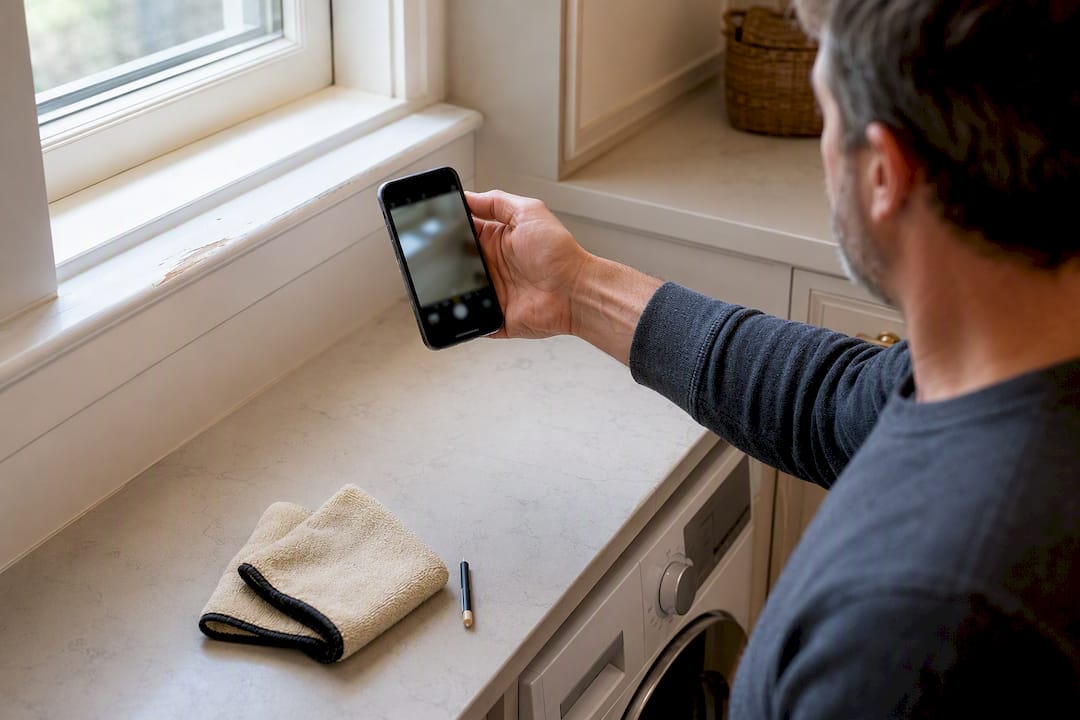
- Photograph and date-stamp the fault immediately, from multiple angles and in good light.
- Contact the supplier in writing, by email rather than a phone call, so there's a record of when you reported it.
- Gather your evidence pack: the original job sheet, paint code, before and after photos, receipts, and any handover notes the installer gave you.
- Keep every reply, including anything that looks like a refusal, since that record matters if you need to escalate.
Outcomes vary depending on the fault and the terms. A minor localised failure usually gets a repair of just the affected area. A widespread adhesion problem across multiple panels can justify a full repaint under a stronger warranty. If the cause turns out to be an excluded condition, such as rust that was already present before the job, the supplier can legitimately reject the claim, which is exactly why the paperwork from the verification stage matters so much.
What legal remedies exist if a valid claim gets refused?
Even a strong warranty sometimes gets a poor response from the supplier. UK consumers aren't left without options.
Under the Consumer Rights Act 2015, services must be carried out with reasonable skill and care, and using the wrong materials or badly prepping a surface breaches that standard regardless of what the warranty document says. Your first right is usually repeat performance, meaning the supplier fixes the job properly, or a price reduction if repeat performance isn't possible or appropriate.
- Raise a formal complaint with the supplier first, in writing, referencing your evidence pack
- Escalate to Trading Standards or Citizens Advice if the supplier stonewalls you
- Consider Alternative Dispute Resolution schemes, which are often faster and cheaper than court
- Small claims court remains an option for losses that are proportionate to pursue, generally worth it once professional repair quotes run into the hundreds of pounds
Courts expect clear, dated evidence linking the fault to the original work, so the photos and paperwork from earlier aren't just good practice, they're what wins or loses the case.
What does a strong five-year warranty actually look like?
Refinishing Studio backs its gloss kitchen resprays with a written multi-year warranty, covering finish failures such as peeling and adhesion loss, and sets out the preparation and coating standards that make that period realistic rather than a number picked to sound impressive.
Five years is a meaningful marker for UPVC and kitchen finishes specifically, because well-prepared professional resprays commonly last well beyond a decade when the substrate is stable indoors or on fixed frames. When comparing suppliers, confirm the terms cover the actual finish type you're buying, not just a generic reference to "the paintwork".
- Detailed, itemised job sheets naming every surface and paint code
- A visible portfolio of completed, comparable projects
- No subcontractors doing the actual spraying
- Public liability insurance, which reputable kitchen and UPVC specialists list as standard
What tradespeople actually see when resprays fail
Most failures trace back to prep, not paint. Rust nobody stripped properly, or a surface sprayed over grease, tends to fail within a year regardless of the warranty printed on the invoice. Weigh warranty length against maintenance requirements before you sign anything, and treat any verbal "don't worry, it's guaranteed" with real suspicion. If it isn't written down, it isn't a warranty.
— Mitchell
Get a written five-year warranty on your next respray
Refinishing Studio offers a respraying service as an alternative to full kitchen or UPVC replacement for homeowners seeking factory-standard results without demolition and disruption. The company provides a written warranty on their work, with hand-spraying carried out directly by their own team.

Whether you're weighing up UPVC window and door respraying against full replacement, or considering a kitchen cabinet respray instead of a new fitted kitchen, the same five-year written guarantee applies to the work. You can review the full terms on the warranty page before you commit to anything, then request a quote and ask for your warranty certificate to be issued alongside the job sheet once the work is signed off.
Sources
FAQ
How long is paint covered under a respray warranty?
Most professional respray warranties run between one and five years, with three to five years as the realistic benchmark for a full, well-prepared job on kitchen or UPVC surfaces.
Does respraying a car void the manufacturer's warranty?
Respraying itself doesn't usually void a vehicle's original manufacturer warranty, but any defect that stems from the respray work will be excluded from that manufacturer cover and falls under the respray supplier's own warranty instead.
Is paintwork always covered under warranty?
No. Paintwork is covered only for the specific failures named in the warranty document, such as peeling, cracking or adhesion loss, and only on the exact surfaces listed on the job order.
What isn't covered under a respray warranty?
Rust recurrence, pre-existing structural damage, accidental or environmental damage, and faults caused by poor maintenance are standard exclusions across almost every respray warranty on the market.