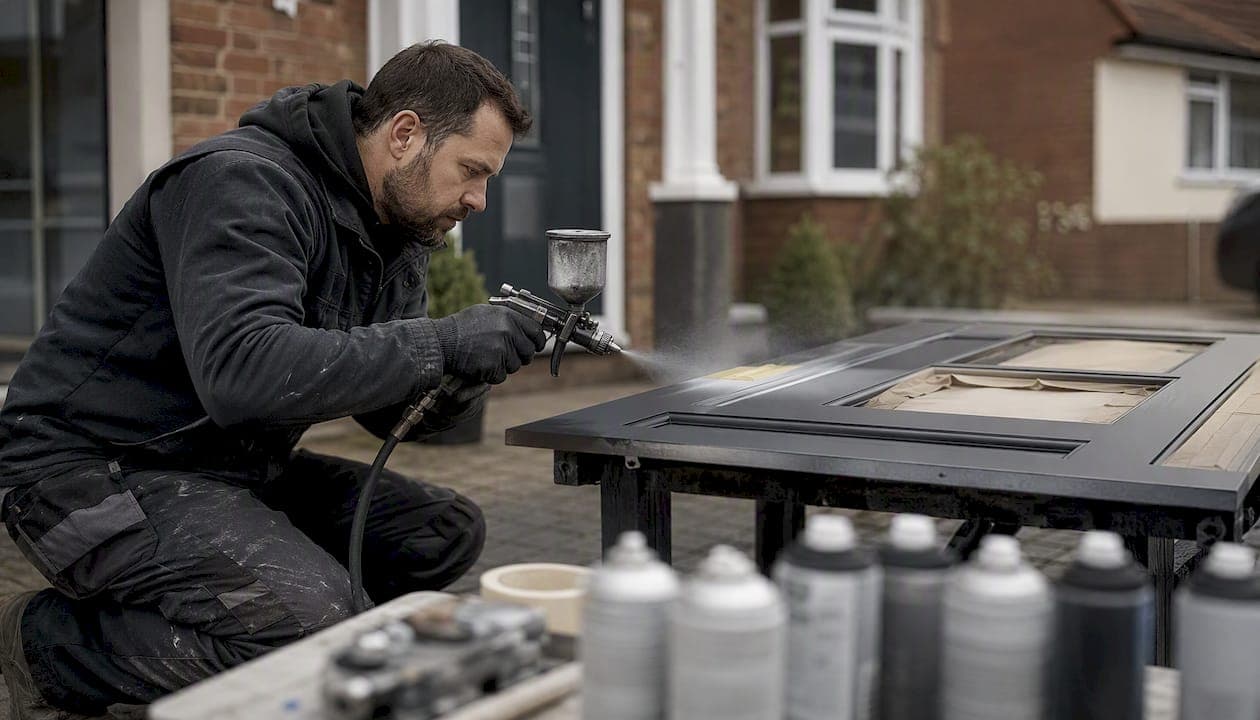
A professional composite door respray typically costs £150–£350 in the UK, with most door-and-frame jobs sitting around £200–£250. That puts a respray at roughly one-tenth the price of a new composite door fitted, which currently runs £1,000–£2,500 supplied and installed. If your door is structurally sound but faded, scratched, or simply the wrong colour, a respray is almost always the better financial call. Replace only when the slab is warped, the frame is rotten, or the locking mechanism has failed beyond repair.
Quick price snapshot:
- Door only (plain composite slab): £150–£180
- Door and frame: £200–£250
- Door with sidelights or decorative glazing: £280–£350+
- Advertised 'starts from' prices (e.g. £200 plus VAT) are lead prices — always request an itemised written quote after a site visit
Request a site visit before committing to any figure; a professional who quotes without seeing the door is guessing.
Key takeaways
A professional composite door respray in the UK costs £150–£350 for most jobs, making it a far more cost-effective option than replacement for any structurally sound door.
| Point | Details |
|---|---|
| Typical UK cost range | £150–£350 covers most jobs; door-and-frame averages around £230. |
| Top three cost drivers | Door complexity, glazing/sidelights, and hardware removal push prices higher. |
| When to respray vs replace | Respray if the door is structurally sound; replace if the slab is warped or the lock has failed. |
| What to insist on in a quote | Written itemised quote, stated warranty, VAT breakdown, and public liability insurance. |
| Refinishingstudio | Offers hand-spray composite door resprays across South Wales with a five-year transferable warranty. |
Table of Contents
- What does a composite door respray cost in the UK?
- What does a professional respray include?
- What factors push the price up or down?
- Respray or replace: which makes more sense?
- How to choose a professional resprayer
- UK pricing data that supports these figures
- A resprayer's perspective on what actually matters
- Refinishingstudio: composite door respraying in South Wales
- Sources
What does a composite door respray cost in the UK?
The table below shows typical UK price bands for professional composite door respraying in 2026. These figures cover on-site hand-spray work using trade-grade primers and topcoats.
Checkatrade's 2026 cost guide puts the average uPVC door-and-frame respray at around £230, which aligns with the mid-range above. MyJobQuote's uPVC spraying guide lists door-and-frame jobs at £200–£250 with a typical completion time of 1–2 hours on site.
A few things worth knowing about how quotes are presented:
- Door-only vs door-and-frame: Many trade guides quote a door-and-frame price because masking and prepping the frame adds meaningful labour. A door-only figure will be lower, but check exactly what is and is not included.
- VAT: Most professional resprayers quote ex-VAT. A quote of £200 plus VAT becomes £240 at 20% — always confirm whether the figure you are given includes VAT before comparing quotes.
- 'Starts from' pricing: Advertised lead prices are useful for a ballpark but rarely reflect the final cost once prep, repairs, and hardware removal are factored in.
What does a professional respray include?
Understanding what you are paying for helps you compare quotes fairly. A professional composite or uPVC door spraying job follows a consistent sequence of steps.
- Survey and site visit — the resprayer assesses the door's condition, substrate (GRP/fibreglass composite, uPVC, timber), and any repairs needed before quoting.
- Cleaning and degreasing — all surface contamination, wax, and silicone residue is removed. Skipping this step causes adhesion failure.
- Light repair and filling — minor scratches or chips are filled and flatted. Deeper damage may be quoted separately.
- Sanding and abrading — the surface is keyed to accept primer. Trade guidance confirms that correct surface preparation is non-negotiable for a durable finish on composite doors.
- Masking — glazing, hardware, and surrounding brickwork are masked off. The scope of masking directly affects labour time.
- Primer/undercoat — a trade-grade adhesion primer is applied. This is the coat most DIY attempts skip, and it is the one that determines how long the finish lasts.
- Top coats — typically two coats of a thermoset or exterior-grade topcoat in the chosen colour and finish.
- De-masking and inspection — masking is removed, edges are checked, and any touch-ups are completed.
- Cure — the door can usually be used lightly within a few hours, but full cure takes 24–48 hours depending on temperature and humidity.
Curing note: most professional resprayers advise leaving the door closed but unlocked for the first 24 hours and avoiding pressure washing or harsh cleaning for at least two weeks.
What is typically included in the quoted price:
- Frame and trim (when quoted as door-and-frame)
- Hardware removal and re-fitting (letterbox, knocker, handle)
- All masking materials
- Primer and top coats
What is often charged separately:
- Deep scratch or chip repair
- Lock servicing or replacement
- Scaffolding for awkward access
Pro Tip: Ask the resprayer to service your multi-point lock before the final coat is applied. Post-cure mechanical work around the lock face risks chipping the new finish, and a stiff lock is far easier to address before painting than after.
What factors push the price up or down?
Several variables move a composite door respray cost away from the mid-range figure.
- Substrate: GRP (fibreglass) composite doors and uPVC doors require different primers. Timber doors need additional prep including knotting compound. Each adds time.
- Door size and complexity: A standard 840mm × 2,040mm slab is the baseline. Wider doors, stable-door configurations, or doors with multiple decorative panels all take longer to mask and coat.
- Glazing and decorative inserts: Each glazed panel needs careful masking. Decorative leaded or stained glass adds significant masking time.
- Hardware removal: Removing and re-fitting a letterbox, knocker, and handle takes 20–30 minutes. Some resprayers include this; others charge extra.
- Repairs: Surface scratches are usually included in the prep stage, but deep gouges, impact damage, or delaminating composite skin are priced separately.
- Access: Ground-floor front doors are straightforward. Raised porches, bi-fold arrangements, or doors requiring ladder access add cost.
- Number of colours: A two-tone finish (different colour inside and out) roughly doubles the masking and coat time.
- On-site vs workshop: Most door resprays are done on-site (hand-spray). Workshop resprays offer a more controlled environment but require door removal and rehang, which adds cost and a period without a functioning front door.
Colour system and finish choice also matter. The RAL colour system and British Standard (BS) palette are the two most common references for exterior door colours. Standard RAL and BS shades are mixed from stock and carry no premium. Custom or bespoke colour matches can add £20–£50 to the job depending on the paint supplier's mixing fee. Finish options — matt, satin, or gloss — are generally priced the same, though some resprayers charge a small premium for a high-gloss topcoat because it requires more preparation to achieve a flawless result.
Respray or replace: which makes more sense?
The financial case for respraying is straightforward when the door is structurally sound. A full composite door replacement, supplied and fitted, typically costs £1,000–£2,500. A professional respray sits at £150–£350. That is a saving of £700–£2,000+ for a door that looks factory-fresh.
When a respray makes sense:
- Colour is faded, chalky, or simply dated
- Minor surface scratches or scuffs
- Door is thermally and structurally sound
- Hardware is in good working order
- You want a colour change without the disruption of replacement
When replacement is the better call:
- The composite slab is warped or bowed — spraying is an aesthetic fix only and will not correct geometry
- The frame is rotten or structurally compromised
- The multi-point locking system has failed and cannot be economically repaired
- There is significant delamination of the composite skin
- Security ratings are no longer adequate for your insurer
A useful decision framework for painting versus replacing suggests treating structural integrity as the first filter: if the door passes that test, aesthetics and cost almost always favour respraying.
Warranty comparison:
| Option | Typical cost | Typical warranty |
|---|---|---|
| Professional respray | £150–£350 | 5–10 years (finish) |
| New composite door fitted | £1,000–£2,500 | 10 years (manufacturer) |
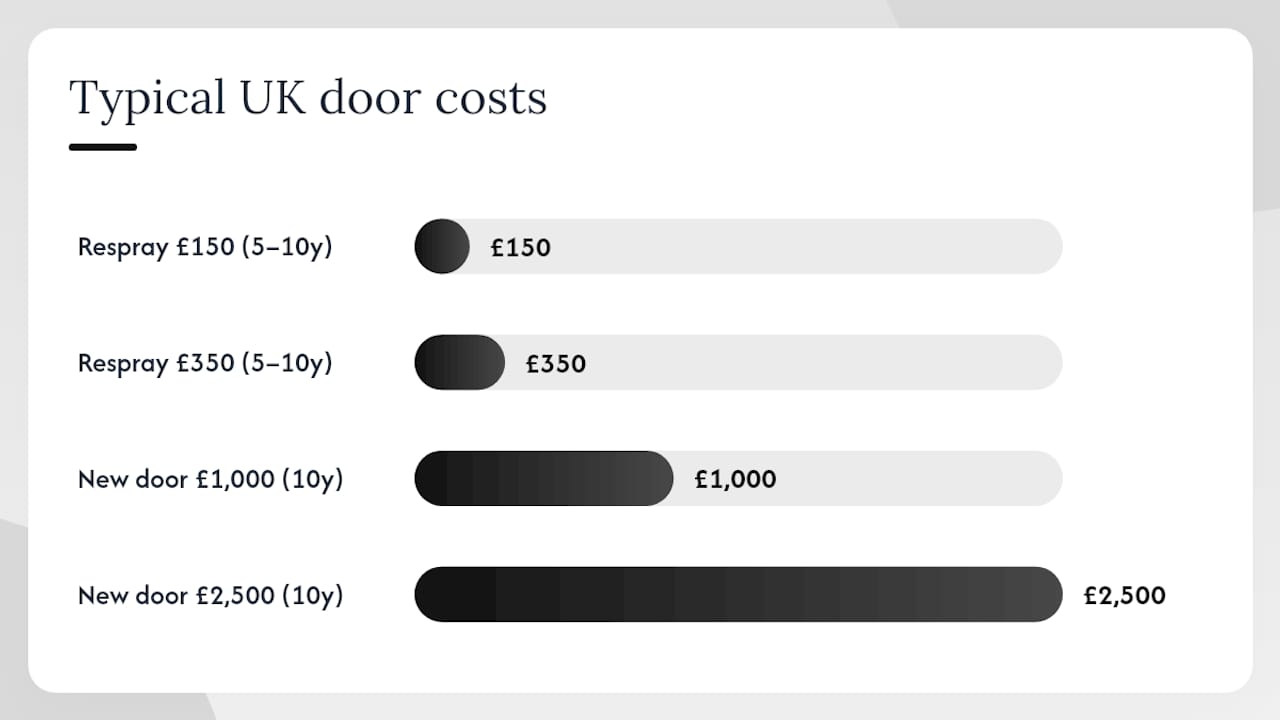
A reputable resprayer offering a finish guarantee can give meaningful protection at a fraction of the replacement cost.
How to choose a professional resprayer
Getting three comparable quotes is the standard advice, but only if those quotes are genuinely comparable. Here is what to ask and what to look for.
Questions to ask every resprayer:
- Will you carry out a site visit before quoting?
- How many coats of primer and topcoat do you apply?
- What brand and type of primer and topcoat do you use?
- What is the masking scope — does it include the frame, threshold, and surrounding brickwork?
- Is hardware removal and re-fitting included?
- What is the cure time, and are there any aftercare restrictions?
- Do you carry public liability insurance, and can you provide a certificate?
- Will the quote be written and itemised, with VAT shown separately?
- What is the warranty length, and is it transferable if I sell the property?
- Can I see a portfolio of completed door resprays?
Red flags:
- A quote given over the phone without a site visit
- Vague estimates with no itemised breakdown
- No before-and-after portfolio or customer reviews
- Reluctance to provide a written guarantee
- No mention of insurance
Trust signals to look for:
- Fixed written quote with itemised inclusions
- Before-and-after photo gallery
- Stated warranty of five years or more
- Public liability insurance confirmed in writing
- Clear VAT presentation (ex-VAT and inc-VAT figures shown)
- Verified reviews on Trustpilot, Google, or Checkatrade
UK pricing data that supports these figures
The price bands in this article draw on several UK cost guides. Here is a summary of the key sourced figures.
| Source | Job type | Typical range | Duration |
|---|---|---|---|
| Checkatrade (2026) | Door and frame | ~£230 average | Not stated |
| MyJobQuote uPVC guide | Door and frame | £200–£250 | 1–2 hours |
| MyJobQuote exterior painting | Plain composite door | £150–£180 | 2–3 hours |
| Costwise (2026) | Respray/repair | £150–£280 | Not stated |
Prices vary by region, door condition, and the scope of work. A site visit from a local professional will always give a more accurate figure than any national average.
A resprayer's perspective on what actually matters
The question homeowners ask most often is whether a respray will last. It is a fair concern, and the honest answer is: it depends almost entirely on preparation, not on the topcoat brand.
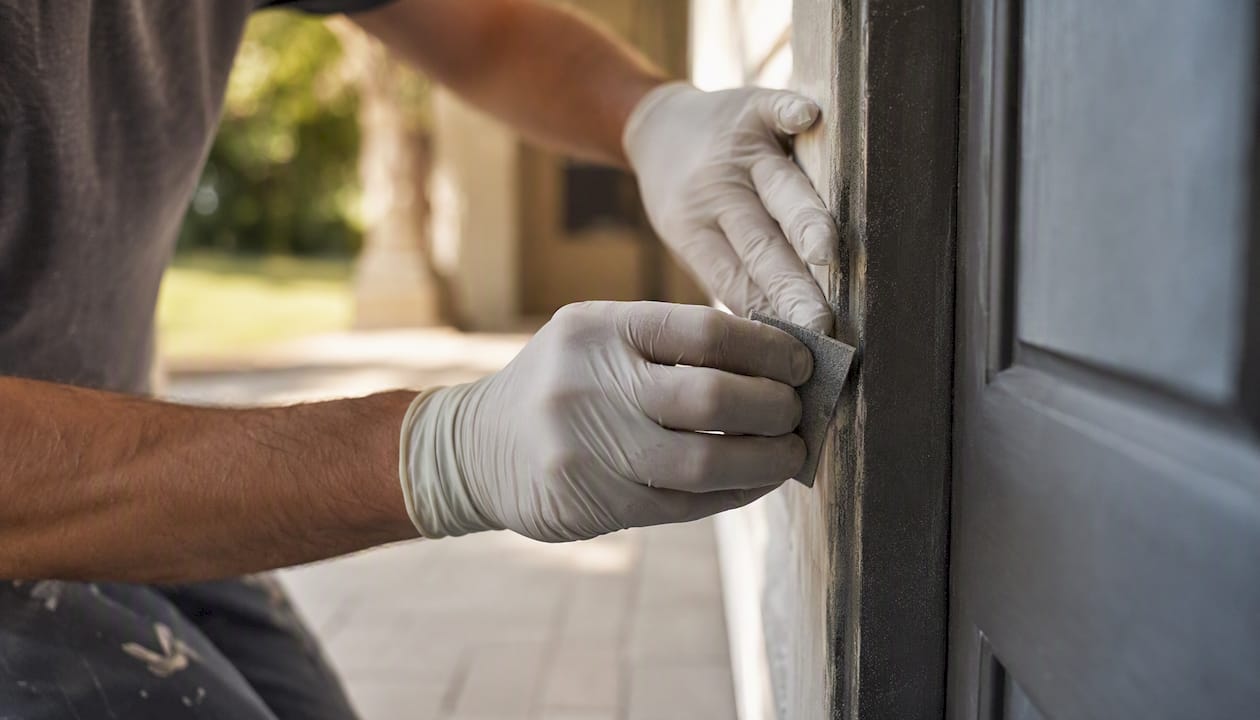
A hand-spray finish applied over a properly degreased, abraded, and primed surface will outlast a brush-applied paint job by years, regardless of which topcoat is used. The finish failures I see most often trace back to one skipped step: silicone contamination left on the surface before priming. It is invisible, it repels adhesion, and it causes the finish to peel within months. A professional who cannot explain their degreasing process in detail is a professional worth questioning.
The second thing homeowners underestimate is the value of a transferable warranty. A five-year guarantee that passes to the next owner is a genuine selling point when the property goes to market. Buyers notice a fresh, well-finished front door, and a documented warranty removes any doubt about its durability.
Refinishingstudio: composite door respraying in South Wales
A respray is only as good as the person holding the spray gun. Refinishingstudio offers professional hand-spray composite and uPVC door respraying across South Wales, with every job carried out by the studio's own team — no subcontractors, no handoffs.

Every job includes a site visit, full surface preparation, trade-grade primer and topcoat, hardware removal and re-fitting, and a five-year transferable warranty. Colour options span the full RAL and British Standard palettes, with matt, satin, and gloss finishes available. Public liability insurance is in place on every job, and quotes are written, itemised, and VAT-clear.
With over 1,000 completed projects across South Wales, the before-and-after portfolio gives you a realistic picture of the finish quality before you commit. To get an accurate, itemised quote for your door, request a site visit — it takes around 20 minutes and costs nothing.
Sources
The pricing guidance in this article draws on the following UK cost guides and trade pages.
- UPVC Spraying: Cost Breakdown 2026 | Checkatrade
- uPVC Spraying: Cost Breakdown 2026 | Checkatrade
- Composite door cost calculator 2026 | Costwise
- Exterior Door Paint Cost In 2026: How Much To Paint A Door?