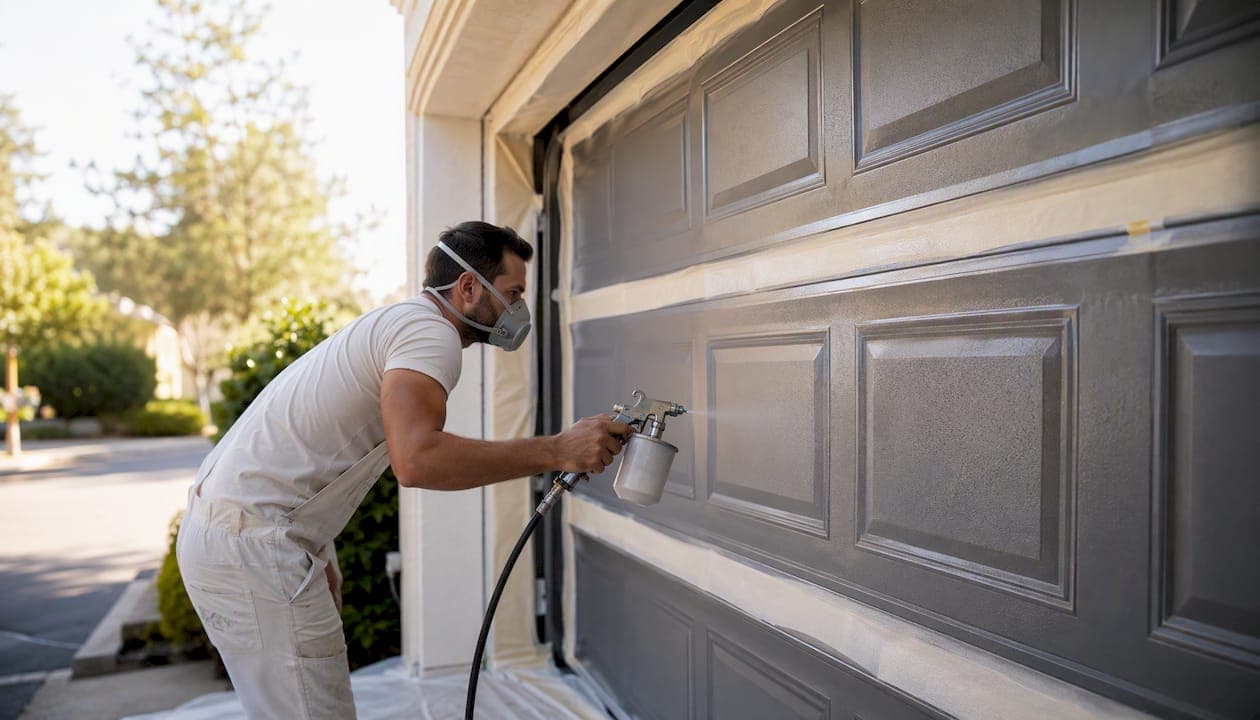
A professional garage door respray is usually the right call when the door itself is sound and you just want it looking new again. Most single doors take a single day to complete, and you'll typically pay a fraction of what a full replacement costs. A fraction of what a full replacement costs according to industry pricing if you compare like for like against a new door and installation.
It works best in three situations:
- The finish has faded, chalked, or gone patchy from years of sun and rain.
- You want a colour change to match a renovation or kerb appeal refresh.
- There's minor surface damage or scuffing but no structural or mechanical fault.
Key Takeaways
A professional garage door respray restores a factory-standard finish at a fraction of replacement cost, provided the door is mechanically sound before spraying begins.
| Point | Details |
|---|---|
| Cost versus replacement | A respray typically costs a fraction of a full door replacement for a comparable finish. |
| Confirm mechanical soundness first | Structural damage, severe rust, or broken openers need repair before any respray is worthwhile. |
| Compare quotes like for like | Check coat count, paint specification, and prep detail before judging price alone. |
| Expect a one-day turnaround | Most single doors are cleaned, primed, sprayed, and cured within a day or an afternoon. |
| Refinishingstudio's offer | Hand-sprayed finishes across South Wales with a five-year transferable warranty and over 1,000 completed projects. |
Table of Contents
- How much does a garage door respray cost?
- Which garage doors can be resprayed?
- What happens on the day: the respray process step by step
- Choosing colours and finishes that actually last
- How durable is a respray, and what warranty should you expect?
- When a respray won't fix the problem
- How to choose the right professional for the job
- Why Refinishing Studio's approach stands out
- What our team notices on the job
- Get a free quote for your garage door respray
- Sources
How much does a garage door respray cost?
Pricing depends on the door, but you can work with sensible brackets. A standard single up-and-over door typically sits at the lower end of the market. Sectional or roller doors cost more because of the extra panels and slats involved, and double doors sit higher still simply due to surface area.
Several things move the price up or down:
- Size and door type — sectional doors take longer to mask and spray than a flat up-and-over panel.
- Material — steel and aluminium prep differently to timber or UPVC.
- Condition — rust spots, flaking paint, or heavy grime mean more prep time before a sprayer ever gets near it.
- Access — a door tucked behind a tight driveway or shared access takes longer to protect and mask.
- Finish choice — metallics and bespoke colour matches usually add cost.
Pro Tip: Before accepting any quote, check it itemises the prep work, states the number of coats, names the paint specification, and confirms whether travel or parking charges apply. A one-line quote with just a total figure is the easiest way to get stung by hidden extras later.
Which garage doors can be resprayed?
Most common garage door materials respray well, including UPVC, aluminium, steel, timber, composite, and the individual slats on roller and sectional doors. If the panels are intact and the door still opens and closes properly, it's almost certainly a candidate.
Some things rule a respray out, or at least mean repairs come first:
- Structural damage such as bent panels or a warped frame.
- Severe corrosion that's eaten through the metal rather than just surface rust.
- Broken springs, cables, or motor faults on electric doors.
- Persistent warping that stops the door sealing or running smoothly.
Pro Tip: Textured or heavily weathered finishes sometimes need a specialist primer to get proper adhesion. If your resprayer skips this step on a chalky or flaking surface, ask why before they start.
What happens on the day: the respray process step by step
A proper respray follows a fixed sequence, and knowing it helps you judge whether a quote is thorough or corner-cutting.
- Site survey and written quote — measurements, condition check, colour confirmation.
- Homeowner prep — you move vehicles and clear access to the door.
- Deep clean and degrease — removes dirt, grease, and old wax that would stop paint bonding.
- Light abrasion or deglossing — keys the surface so the new coating grips properly.
- Masking and protection — brickwork, glass, and nearby plants get covered before anything's sprayed.
- Primer — applied where the substrate needs it, with roughly 24 hours' drying time before topcoats go on.
- Topcoats — typically three coats, sprayed rather than brushed for an even finish.
- Cure and inspection — a final check for coverage, drips, or missed spots.
- Tidy and handover — masking removed, area cleared, door signed off.
A single door often wraps in an afternoon once cleaning and light abrasion are done; a double door or one needing heavy prep can run a full day. Ask your contractor to confirm the paint spec, coat count, and drying times in writing before booking.
Pro Tip: Ask how overspray is managed on the day. A contractor using proper spray shields and masking tape protects your brickwork and windows automatically, whereas a rushed job can leave a fine paint mist on everything nearby.
Choosing colours and finishes that actually last
Finish choice affects more than looks. Matt hides surface imperfections well but shows dirt marks faster. Gloss reflects light beautifully but highlights every scratch or ripple underneath. Satin and eggshell sit in between, offering a durable middle ground that's easy to keep clean.
Most resprayers work from RAL or BS colour charts, and you can usually get:
- Standard shades at no extra cost.
- Bespoke or metallic RAL matches, which often need extra coats and cost more.
- Coordinated colours across garage doors, windows and fascias for a unified look.
Pro Tip: A dark charcoal or anthracite in satin often reads differently to the same colour in gloss. Ask to see a sample board in daylight before committing, not just under a showroom light.
How durable is a respray, and what warranty should you expect?
A quality respray does more than refresh the colour. Professional coatings shield the surface against UV, moisture, and dirt, which is what actually slows down fading and cracking over the years rather than the paint colour itself.
Warranty terms vary, but multi-year guarantees are standard across the trade, and some resprayers offer up to ten years on the paintwork itself, provided the door was mechanically sound when sprayed. Get these points confirmed in writing:
- What the warranty actually covers (paint failure, peeling, fading).
- What it excludes (mechanical parts like springs, motors, or hinges).
- Whether it transfers to a new owner if you sell the property.
When a respray won't fix the problem
Not every tired-looking door is a paint job. Watch for these red flags before booking anyone:
- Visible sagging, structural damage, or panels that no longer sit flush.
- Rust that's gone through the metal rather than sitting on the surface.
- Water ingress, failed seals, or an opener that's struggling mechanically.
On the contractor side, be wary of vague quotes with no prep detail, no mention of public liability insurance, or pricing that seems too low to include proper masking and multiple coats. If in doubt, get a structural or mechanical inspection before spending money on cosmetics.
How to choose the right professional for the job
A good respray contractor will happily answer direct questions, so ask them.
- Do they provide a written, itemised quote naming the paint system, such as a 2K polyurethane coating?
- How many coats are included, and what prep work comes before spraying?
- What's the warranty length, and is it transferable if you sell up?
- Can they show public liability insurance and before-and-after photos of past work?
- Do they use subcontractors, or does the same team turn up on the day?
Pro Tip: Compare quotes on the same basis. A cheaper price using two coats and no priming isn't a bargain against a slightly higher quote covering three coats and proper prep. You're not comparing the same job.
Why Refinishing Studio's approach stands out
Refinishingstudio specialises in exactly two things: UPVC and kitchen surface respraying, including garage doors, across South Wales. That focus shows in the finish. Every job is hand-sprayed on site rather than run through a factory booth, which means the same attention to masking, prep, and coat application whether it's a single garage door in Swansea or a full kitchen respray in Llanelli.
Every project comes with a five-year transferable warranty, no subcontractors, and direct contact with the team doing the work. That's backed by over 1,000 completed projects across South Wales homes.
What our team notices on the job
We see the same pattern on most garage door jobs: the door itself is completely sound, it's just tired and faded. Getting the prep right (proper degreasing, careful masking) is what separates a finish that lasts from one that peels in a year. There's something genuinely satisfying about watching a dull, chalky door come back looking factory-fresh by the end of the afternoon.
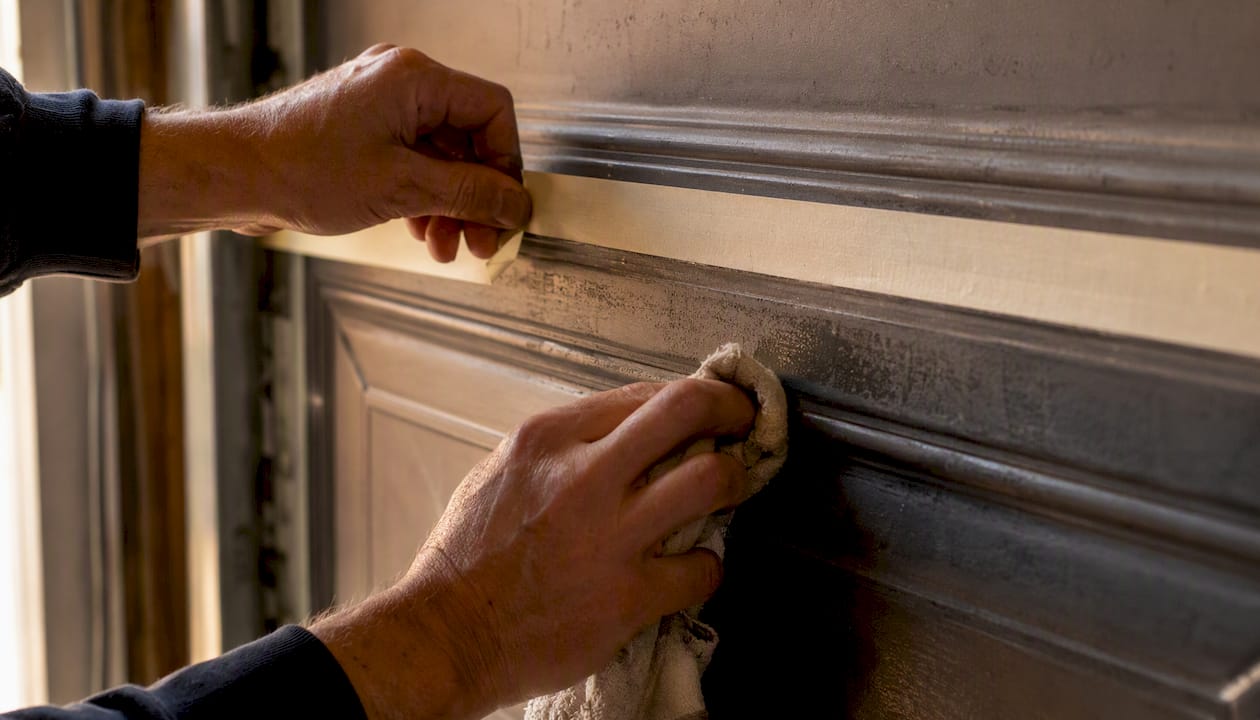
Get a free quote for your garage door respray
Refinishingstudio's garage door respray service covers UPVC, aluminium, steel, timber, and composite doors across South Wales, with the same hand-spray approach used on our UPVC and kitchen work. A free quotation includes a site survey, colour and finish advice, and a fixed price, so there are no surprises once work starts. Every job carries a five-year transferable warranty, and you deal directly with the team doing the spraying, never a subcontractor.

If you're ready to get a price, head to the garage door spraying service page and request your free quote. Have a few photos of your door, its rough dimensions, and a note of any damage ready. It speeds up an accurate quote no end. If your garage door sits next to UPVC windows or a front door you'd also like refreshed, the UPVC spraying page covers how we keep colours consistent across a whole façade.
Sources
- Garage Door Spraying & Refurbishment — Any Colour, In a Day
- Garage Door Spraying & Painting Manchester | Garage Door Resprays
- Garage Door Spraying Kenilworth, Warwick, Leamington Spa, Nuneaton, Rugby and Coventry
- Paint a Garage Door