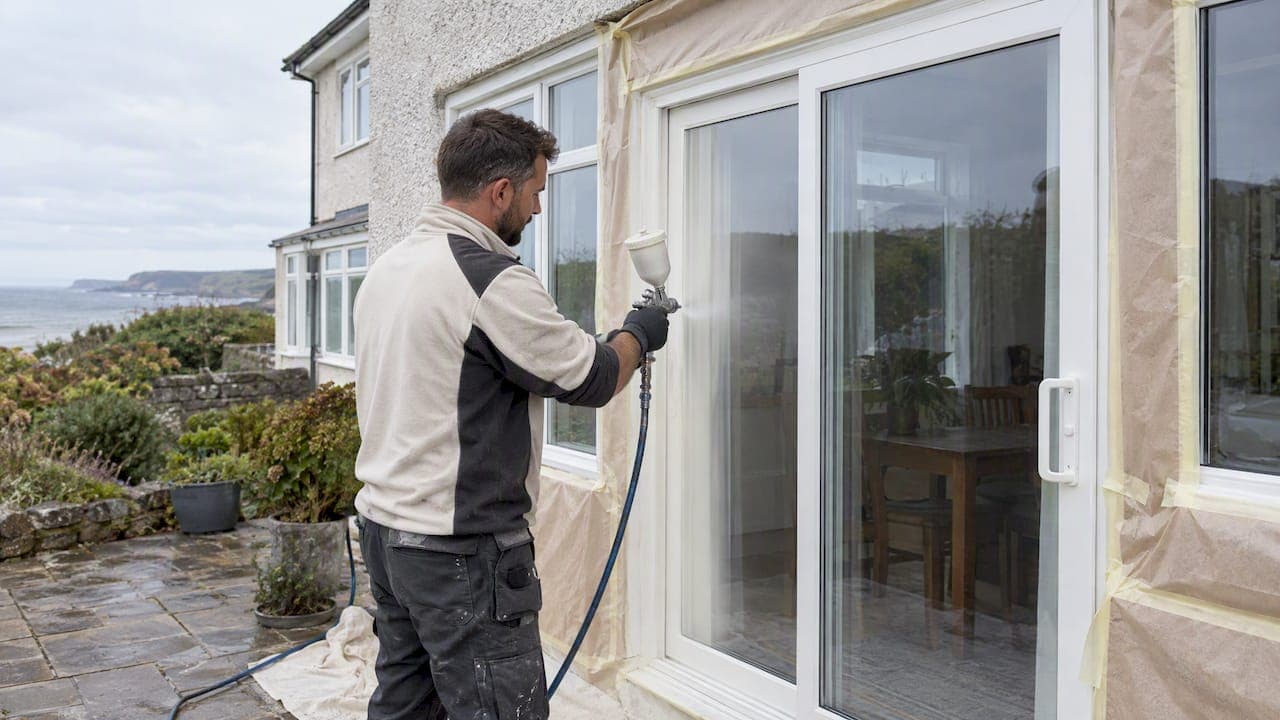
When UPVC frames on a coastal property are structurally sound, professional spraying restores a factory finish for a fraction of replacement cost and causes far less disruption to your home. UK averages sit around £1,350 for a whole house, with jobs typically finished in a day or two. Booking a survey is a sensible first step to explore professional respraying services with warranty options.
TL;DR:
- Coastal UPVC spraying is most effective when frames are structurally sound, faded, or chalky, but not rotten or warped, which require repair or replacement.
- The average cost for a whole-house UPVC spraying in the UK is around £1,350, with prices influenced by access requirements, repairs, and custom colors.
- Salt exposure accelerates corrosion of hardware and causes salt films on glass and frames, making marine-grade stainless steel fittings and salt-resistant glass essential for durability.
- A professional UPVC spray job lasts approximately 8 to 15 years, with proper prep and hardware upgrades, especially stainless steel, improving longevity in coastal conditions.
- Contractors should provide detailed written quotes with warranty periods, examples of coastal work, and options for hardware upgrades; suspiciously low quotes often skip essential prep work.
Table of Contents
- What coastal UPVC spraying covers and when it works
- Typical UK costs and what changes your quote
- Coastal-specific considerations: salt, corrosion and maintenance
- What to expect from the professional spraying process
- How to choose a contractor for coastal UPVC spraying
- A specialist hand-spray approach for coastal homes
- Get a quote for coastal UPVC spraying
- FAQ
- Sources
What coastal UPVC spraying covers and when it works
Respraying means stripping back the existing finish, repairing minor defects and applying a new factory-grade coating by hand, rather than replacing the whole unit. It suits UPVC, and in many cases aluminium and composite surfaces too, provided the underlying frame is still sound.
Most coastal jobs cover:
- Windows and window frames, including casements and tilt-and-turn units
- Entrance doors, patio doors and French doors
- Conservatory frames and roofline trims
- Fascias, soffits and guttering
- Garage doors
Spraying is the right call when frames are structurally intact but faded, chalky or discoloured from salt exposure, which is common on exposed coastal elevations. It is not a fix for rotten timber substrates, warped frames or failed double-glazed units with internal condensation: those need repair or replacement first. Conservation and local authority guidance generally favours repair over premature replacement where the structure permits, which is exactly the logic behind spraying sound coastal frames rather than ripping them out. For a fuller comparison of the two routes, our respraying versus replacement guide sets out the trade-offs in more detail.
Typical UK costs and what changes your quote
Costs vary with the size of the job, access and the finish you choose, but UK pricing tends to cluster around recognisable figures. A whole-house respray averages around £1,350, while individual elements are priced separately.
Several factors push a quote up or down:
- Scaffolding or cherry-picker access for upper-floor windows and conservatory roofs
- Minor repairs needed before spraying, such as resealing joints
- Custom RAL or BS colour matches rather than standard stock shades
- Large or unusually shaped items, including bay windows and conservatories
A proper quote should state what is included (prep, materials, labour) and flag likely extras such as hardware replacement or scaffold hire separately, so you can compare like for like. Our own 2026 pricing guide breaks these variables down for South Wales jobs specifically.
Coastal-specific considerations: salt, corrosion and maintenance
Sea air behaves differently from inland conditions. Salt-laden spray settles on glass and frames more often, leaving a film that dulls finishes faster, and it accelerates corrosion in metal fittings well beyond what you would see a few miles inland. Hardware and glazing specialists point out that standard hinges, handles and locks can corrode quickly in these conditions, and that the most common failure point after a coastal respray is the hardware itself rather than the coating.
It is worth asking your contractor to assess existing hardware during the quote stage and to price marine-grade stainless steel fixings as an option. Replacing a handle or hinge at the same time as spraying costs far less in disruption than doing it as a separate job later.

Glass choice matters too. Self-cleaning units such as Saint-Gobain's Bioclean coastal glass are designed to resist salt-film etching and cut down on cleaning frequency for hard-to-reach coastal aspects, reportedly reducing salt-spot cleaning needs by 50 to 70% in field reports. Coastal properties generally need more frequent rinsing of frames and glass than inland homes, regardless of glass type.
Pro Tip: Ask your contractor to price marine-grade stainless fixings alongside the spraying quote, rather than treating hardware as an afterthought once corrosion has already set in.
What to expect from the professional spraying process
A proper job follows a sequence that affects both the finish and how long it lasts:
- Survey and condition check, confirming the frame is structurally sound and identifying any repairs needed.
- Thorough cleaning and degreasing of all surfaces to remove salt film and grime.
- Masking of glass, seals and surrounding surfaces, followed by etching or priming to help the coating bond.
- Application of a two-pack (2K) topcoat by hand spray, in the agreed colour and finish.
- Controlled curing time before the area is handed back for use.
Checkatrade's guidance notes that poor preparation is the main reason spray finishes fail early, which is why the cleaning and priming stages matter as much as the topcoat itself. Our interior versus exterior spraying guide goes into more detail on why exterior UPVC specifically needs a 2K system rather than a single-pack finish.
A properly applied professional finish typically lasts 8 to 15 years, with guarantees commonly running from five to ten years depending on the provider.
Timescales vary with scope: a single door or window can often be sprayed and cured within a day, while a whole-house job with scaffolding needs several days once access is arranged. Look for contractors who state their materials specification in writing, show examples of completed coastal work and back the job with a written warranty rather than a verbal promise.
How to choose a contractor for coastal UPVC spraying
Coastal jobs demand more scrutiny than a standard inland respray, because the finish and hardware both face harsher conditions. Before signing anything, check for:
- Public liability insurance and a written specification naming the 2K coating system used
- A clearly stated warranty length, ideally five years or more
- Photographs or examples of previous coastal projects, not just inland work
- Willingness to discuss marine-grade hardware upgrades as part of the quote
When comparing quotes, ask directly whether they will replace corroded hardware with marine-grade stainless steel, whether scaffolding is included or billed separately, and how they handle RAL colour matching if you want a specific shade. A contractor who cannot answer these clearly is worth questioning further.
Pro Tip: Treat a very low quote with suspicion: skipped prep work and thin coatings are the usual reasons a coastal respray fails within a year or two.
Red flags include no portfolio of completed work, a vague or unwritten materials specification, no warranty offered in writing, and pricing well below the ranges quoted above. If conservatory roof access is part of the job, it is also worth having the roof itself checked for leaks or damage before scaffolding goes up, since roofing issues are easier to spot and fix separately from the spraying work, as JH Roofing Kent's maintenance guidance sets out for conservatory roofs generally.
A specialist hand-spray approach for coastal homes
Generic contractors who cover many trades rarely develop the eye for coastal-specific problems that a specialist builds over repeated jobs. A specialist team handling surveys, preparation, and spraying from start to finish without subcontractors is important for continuity on coastal work. That continuity matters on coastal work, where hardware condition and salt damage need the same person assessing the quote and doing the spraying. Backing jobs with a warranty and hand-spraying finishes to match factory standards can keep waste down compared with a full replacement.
— Mitchell
Get a quote for coastal UPVC spraying
If your frames are sound but weathered by sea air, a quote costs nothing and gives you a clear picture of what a respray would involve. We cover the full range of exterior work, including UPVC window spraying, UPVC door spraying and fascia and gutter spraying, alongside kitchen respraying for homeowners tackling both projects together.

Quotes from certain local providers often include a warranty and cover a range of coastal areas. Before we visit, it helps to clear access to windows and doors and move anything delicate away from the work area. Get in touch to:
- Book a survey to check your frames are suitable for spraying
- Request a written quote with materials and hardware options specified
- Ask about colour matching for a custom RAL or BS shade
Visit our UPVC spraying services page to see the full scope of work and start the conversation.
FAQ
How long does a coastal UPVC spray finish last?
A properly applied professional finish typically lasts 8 to 15 years, though coastal salt exposure can shorten this if hardware and prep are not addressed. We back our own work with a five-year transferable warranty.
Can you spray UPVC doors as well as windows?
Yes, UPVC doors can be sprayed using the same two-pack coating process as windows, provided the door frame is structurally sound. UK pricing for door spraying typically runs from £250 to £650 per door, and our own homeowner guide to UPVC spraying covers the practical limits in more detail.
Which window company makes their own windows in the UK?
Several UK manufacturers produce their own UPVC window systems, but this is a separate market from respraying services, which restore existing frames rather than manufacture new ones. If your current windows are sound, spraying is usually the lower-cost route regardless of who originally made them.
What are the best windows for coastal homes in the UK?
For coastal properties, the glazing choice often matters as much as the frame material: self-cleaning glass units designed for coastal use, such as Saint-Gobain's Bioclean range, resist salt-film etching and reduce cleaning frequency. Pairing existing sound frames with marine-grade hardware and a quality respray is often more practical than full replacement.
Is spraying cheaper than replacing UPVC windows?
Yes, professional spraying typically costs a fraction of full replacement, with UK averages around £150 per window compared with the much higher cost of new units and installation. Spraying also causes far less disruption since frames stay in place throughout the job.
Sources
- UPVC Spraying: Cost Breakdown 2026 | Checkatrade
- Titon — coastal hardware corrosion resistance
- Saint-Gobain Bioclean Self-Cleaning Coastal Unit (28mm)
- Maintenance, Repair and Restoration — Bradford guidance