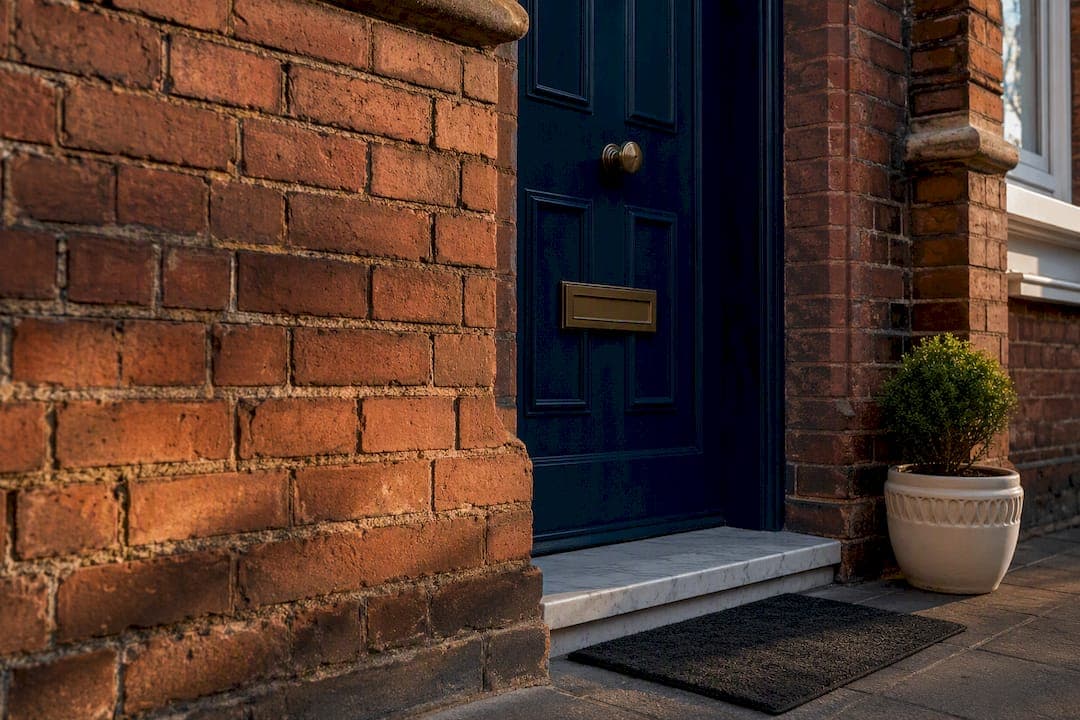
Classic darks and a curated shortlist of trending statement colours cover most UK homes well. Heritage navy, softened black and deep green suit period brick and stone, while mustard, dusty pink and warm taupe carry render and new builds into 2026. The right choice depends on your facade material and your door's substrate, so test before you buy.
TL;DR:
- Heritage navy, softened black, and deep green remain the most versatile and resilient colours for UK homes, especially for period brick and stone facades.
- Lighter shades like dusty pink, mustard ochre, and warm taupe are trending for 2026 but require high-quality exterior formulations to withstand UK weather.
- Testing colours at different times of day on your actual door is crucial to avoid surprises caused by light or substrate restrictions before purchasing paint.
- High-quality, factory-finished resprays are recommended for uPVC and composite doors to achieve a more durable, even finish than DIY painting.
- Hardware and metal finishes significantly influence how a paint colour appears, with contrasting metals offering a simple way to enhance curb appeal without repainting.
Table of Contents
- The 12 best front door colours for UK homes in 2026
- How to choose the right front door colour for your home
- Colour map: which shades suit your facade type
- Best paints, finishes and durability for UK front doors
- Hardware and styling: how accessories change colour impact
- How to test your front door colour before you commit
- When professional respraying beats a DIY repaint
- What your front door colour says about your home
- Seasonal colour trends and how well they last in UK weather
- Balancing trend and timelessness
- Get a factory-finish respray from Refinishing Studio
- Sources
- FAQ
The 12 best front door colours for UK homes in 2026
Every colour below pairs a specific hue with the facade type it flatters most, plus a UK product reference you can ask a decorator or supplier for by name.
- Hicks Blue or heritage navy: a deep, slightly greyed blue that reads as classic rather than corporate. Works brilliantly against red brick and Victorian terraces. Try Farrow & Ball's exterior range or Dulux Weathershield's navy tones.
- Pitch Black or off-black: Farrow & Ball's Pitch Black No.256 is the benchmark softer black exterior brands lean on. A blue or brown-tinted black often looks less flat than pure jet black under British light.
- Studio Green: a mossy, forest-toned green suited to stone cottages and anywhere brickwork leans warm. Feels rooted rather than trendy.
- Mary Berry pink or dusty pink: works on pale render and pastel-friendly coastal streets. Keep the surrounding trim neutral so the door still reads as a feature.
- Cardamom or warm taupe: a modern neutral for muted grey or beige render where black feels too stark.
- Eating Room Red or heritage red: strong against stone surrounds and Georgian or Victorian terraces with white or cream detailing.
- Plummett or smoke grey: the default for 1960s and new-build refurbishments wanting a contemporary edge without going full black.
- India Yellow or mustard ochre: a genuine statement colour for pale render or under a slate roof. Not for the cautious, but unbeatable for kerb appeal.
- Pure or off-white: suits coastal cottages and creates striking contrast against dark brick or slate.
- Sage or lichen green: soft, forgiving, and works across more facade types than almost any other shade on this list.
- Bronze red or oxblood: a moody, heritage-leaning alternative to standard red for period stone properties.
- Anthracite or navy: the safe, contemporary default for urban terraces and modern extensions alike.
How to choose the right front door colour for your home
Start with what your house already tells you, not with a colour chart. Period properties in red brick or stone generally suit heritage palettes: navy, deep green, oxblood, heritage red. Contemporary builds and rendered facades carry muted darks and slate greys with more ease.
Light matters more than most people expect. A south-facing door gets strong, warm sunlight most of the day, which can make deep colours look richer but also fade faster; north-facing doors sit in flatter, cooler light where bold colours can look duller than expected on the tin.
Decide what job the door needs to do. Some homeowners want it to be the standout feature against a plain facade; others want it to blend in for a calmer, more saleable frontage. Dulux's own guidance stresses checking house style, light and hardware together before committing to a colour, and that's sound advice whichever palette you're drawn to.
Before you pick a tin, work through this:
- What material is the door: timber, composite, uPVC or aluminium?
- Does the manufacturer restrict site painting or respraying?
- Is the property in a conservation area?
- Is the door facing direct sun for most of the day?
- Do you want the door to stand out or blend in?
- What metal finish are the handle, knocker and letterbox already in?
Pro Tip: Photograph your door at three different times of day before you buy paint. Colours that look perfect at noon can turn muddy or flat by early evening.
Colour map: which shades suit your facade type
Matching a colour to your existing exterior material narrows the shortlist fast. Here's a practical starting palette by facade type.
| Facade type | Recommended colours | Avoid |
|---|---|---|
| White render | Anthracite, heritage navy, oxblood | Pale pastels (too little contrast) |
| Cream or Cotswold stone | Sage green, Studio Green, heritage red | Bright primary blue |
| Grey render or brick | Mustard ochre, dusty pink, off-white | Mid-grey (disappears into the wall) |
| Red brick | Hicks Blue, Pitch Black, Studio Green | Orange-toned reds (clash with brick) |
| Yellow stock brick | Anthracite, deep navy, bronze red | Bright yellow or lime green |
| Slate or stone | India Yellow, Plummett grey, sage | Very pale neutrals |
| Coastal cottages | Pure off-white, dusty pink, sage | Heavy dark tones (can look severe) |
RAL 9005 (jet black) and RAL 7016 (anthracite grey) remain among the most specified RAL codes for UK front doors, useful reference points if you're asking a supplier or respray specialist for an exact match rather than a paint-chart name.
Best paints, finishes and durability for UK front doors
Finish changes how a colour reads almost as much as the colour itself. Gloss throws light and makes a dark shade look richer, but it also shows every brush mark and surface flaw. Satin and eggshell soften the same colour and hide minor imperfections, which is why most trade decorators now default to satin on period doors.
UK-available product families worth asking for by name:
- Dulux Weathershield Quick Dry
- Farrow & Ball exterior finishes
- Crown Trade Fast Flow Quick Dry Gloss
- Sandtex 10 Year Exterior Gloss
- Johnstone's Trade Aqua Guard
- Leyland Trade Fastdry
Prime bare timber before topcoats, apply at least two full coats, and allow full manufacturer-stated drying time between coats rather than going by touch. Check the technical datasheet against BS EN 927, the British Standard covering performance of exterior wood coatings, and plan on repainting timber doors every three to five years depending on exposure. A 2026 UK preview dataset found that 71% of homeowners changed their initial colour pick after seeing a rendered preview of it on their own door, saving roughly £22 per abandoned 750ml tin.
Hardware and styling: how accessories change colour impact
The same paint colour reads completely differently depending on what metal sits against it. Warm greens and reds lift when paired with brass fittings; cool greys and blacks look sharper next to satin chrome or black iron.
- Victorian terrace: heritage navy or Studio Green with polished or antique brass letterbox, knocker and numerals.
- Contemporary new build: anthracite or Plummett grey with black iron or satin chrome hardware and a slimline light.
- Coastal cottage: off-white or sage with simple black or bronze fittings to avoid over-decorating a small door.
Choosing hardware in a contrasting rather than matching metal is one of the cheapest ways to lift a respray without touching the colour at all.
How to test your front door colour before you commit
Get this step right and you avoid buying paint twice.
- Preview the colour on a photo of your actual door using a visualiser app or online tool, checking more than one angle.
- Paint small sample panels or tester pots on scrap timber, or a discreet corner if the door allows it.
- View the sample at morning, midday and evening light before deciding.
- Confirm your door's substrate rules first: many composite and aluminium doors need factory-approved finishes, and painting outside those rules can void the manufacturer's warranty.
- Where the substrate restricts DIY painting, a professional respray delivers a factory-standard finish without that risk.
When professional respraying beats a DIY repaint
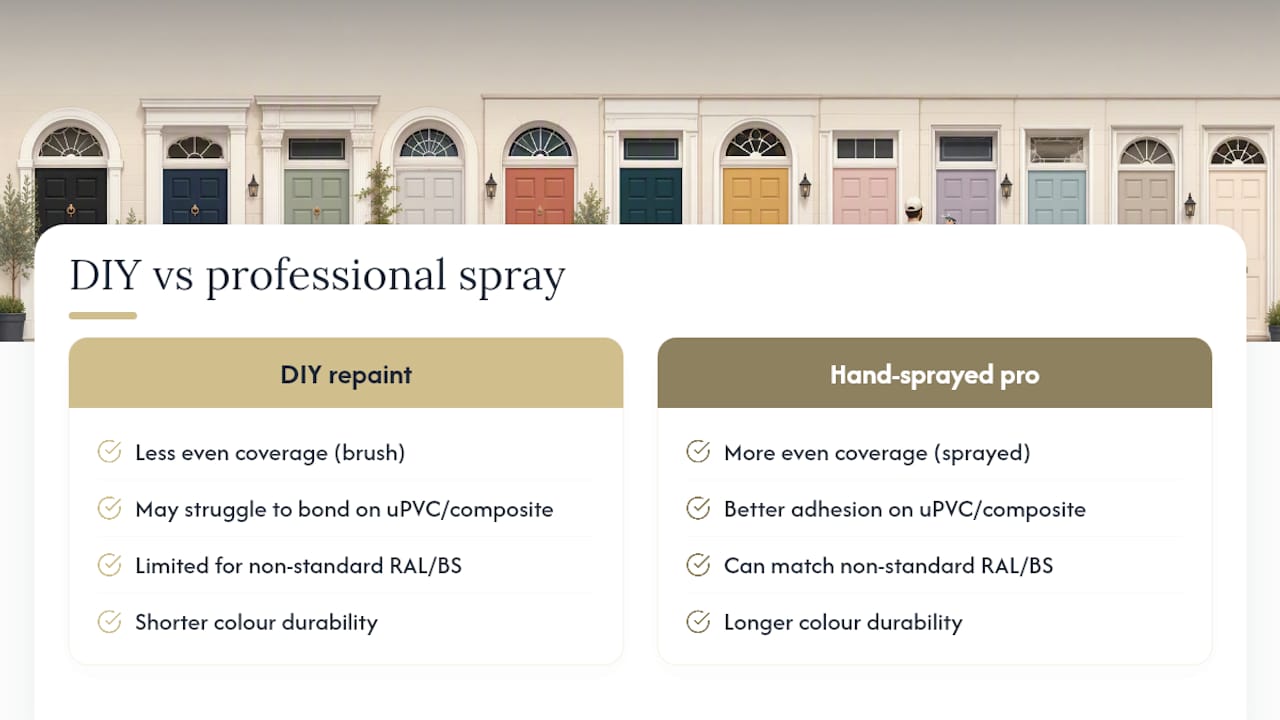
A hand-sprayed finish gives more even coverage than a brush and holds colour longer, particularly on uPVC and composite doors where site paint can struggle to bond. It's the sensible route when you want a non-standard RAL or BS colour, or when preserving resale value matters more than a weekend project.
What your front door colour says about your home
Colour choice on a front door carries more psychological weight than most homeowners realise, because it's the one exterior surface visitors interact with directly. Black and navy read as composed and trustworthy, which is part of why they dominate estate agent photography and remain the safest bet for resale value. Deep green suggests permanence and a connection to a garden or rural setting, which explains why it sits so comfortably on stone cottages and period homes with mature planting out front.
Red carries more energy and confidence, historically associated in Britain with grand entrances and civic buildings, though a heritage-toned red sits more comfortably on a terrace than a bright, primary shade would. Yellow and mustard tones signal warmth and approachability, and on a street of similar-looking render, a mustard door does more to make a house memorable than almost any other single change. Pink has shifted from a bold, slightly cheeky statement to something closer to considered and design-led, particularly in dusty or muted tones rather than bright fondant shades.
The practical upshot for kerb appeal: a colour that clashes psychologically with its setting, a jarring bright orange on a Georgian terrace, for instance, tends to unsettle viewers even if they can't articulate why. Matching the emotional register of the colour to the property's actual character, rather than chasing a trend in isolation, is what makes a front door look considered rather than accidental.
Seasonal colour trends and how well they last in UK weather
Trends move faster than paint durability, and that gap matters more in Britain than in drier climates. A colour that looks striking in a magazine shoot in spring sunlight can behave very differently by the following winter, when a typical UK front door faces months of driving rain, damp, and temperature swings that most warmer climates simply don't test paint against.
Darker heritage tones, navy, forest green, oxblood, have stayed dominant for a reason beyond fashion: they hide UV fading and weather staining better than pale or bright shades, which show chalking and dirt streaks far more visibly. Mustard and dusty pink have both gained ground through 2024 to 2026, but they demand a higher-quality exterior formulation to avoid looking patchy after a wet winter, since paler and more saturated mid-tones tend to reveal uneven weathering faster than deep, muted colours do.
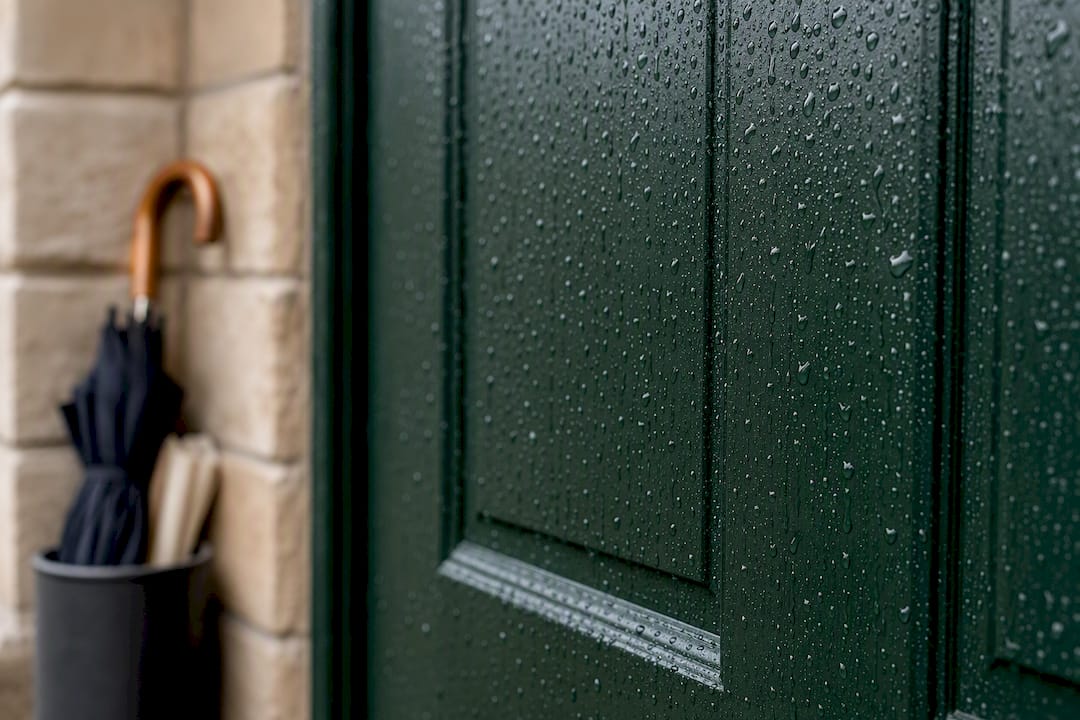
Gloss and satin finishes also weather differently. Gloss sheds rain more effectively and stays cleaner-looking through winter, while a flatter finish can show water spotting more readily on darker colours. If you're chasing a 2026 trend colour on a west-facing or exposed door, budget for slightly more frequent touch-ups than you would with a classic navy or anthracite, which tend to go five years or more between full repaints on a well-prepared surface.
Balancing trend and timelessness
Chase a mustard or dusty pink if it genuinely suits your facade, but test it properly first. For most homes, a slightly toned black or navy, rather than pure jet black, ages better and holds resale appeal longer than anything strictly of-the-moment.
— Mitchell
Get a factory-finish respray from Refinishing Studio
Refinishing Studio gives South Wales homeowners a genuine alternative to replacing a tired uPVC front door: a hand-sprayed factory finish in almost any RAL or BS colour, at a fraction of the disruption and cost of a full new door.
Every job comes with a choice of matt, satin, eggshell or gloss finishes and a five-year transferable warranty, backed by completed projects across the local region. There's no subcontracting and no factory queue, just a specialist who comes to your property, matches your chosen colour, and sprays it to a finish that outperforms a brush-applied repaint. If your door's substrate rules out DIY painting, or you simply want the shade done properly the first time, get a quote through the UPVC spraying service page and find out what your front door could look like before winter sets in.
Sources
- Front Door Colours UK 2026: Complete Dulux & F&B Guide
- How to pick a front door colour | Dulux
- Front Doors | Exterior Ideas
FAQ
What is the best colour for a front door in the UK?
There's no single best colour, but heritage navy and softened black tones consistently perform best across the widest range of UK facade types and remain the safest choice for resale value.
What are the trendy front door colours for 2026?
Mustard ochre, dusty pink and warm taupe have all gained ground through 2024 to 2026, alongside continued strong demand for deep forest green and smoke grey on contemporary properties.
What is the best paint for a front door in the UK?
Dulux Weathershield, Farrow & Ball's exterior range, Crown Trade Fast Flow Quick Dry Gloss and Sandtex 10 Year Exterior Gloss are all widely used UK exterior formulations; check the technical datasheet against BS EN 927 before buying.
What is the most attractive colour for front doors?
Attractiveness depends on the facade, but heritage red, deep green and navy consistently score well on period brick and stone homes, while anthracite and slate grey suit rendered or contemporary properties.
Should I use a professional respray instead of painting my door myself?
If your door is uPVC or composite, a professional hand-sprayed respray gives a more even, longer-lasting finish than site painting and avoids the risk of voiding a manufacturer's warranty.