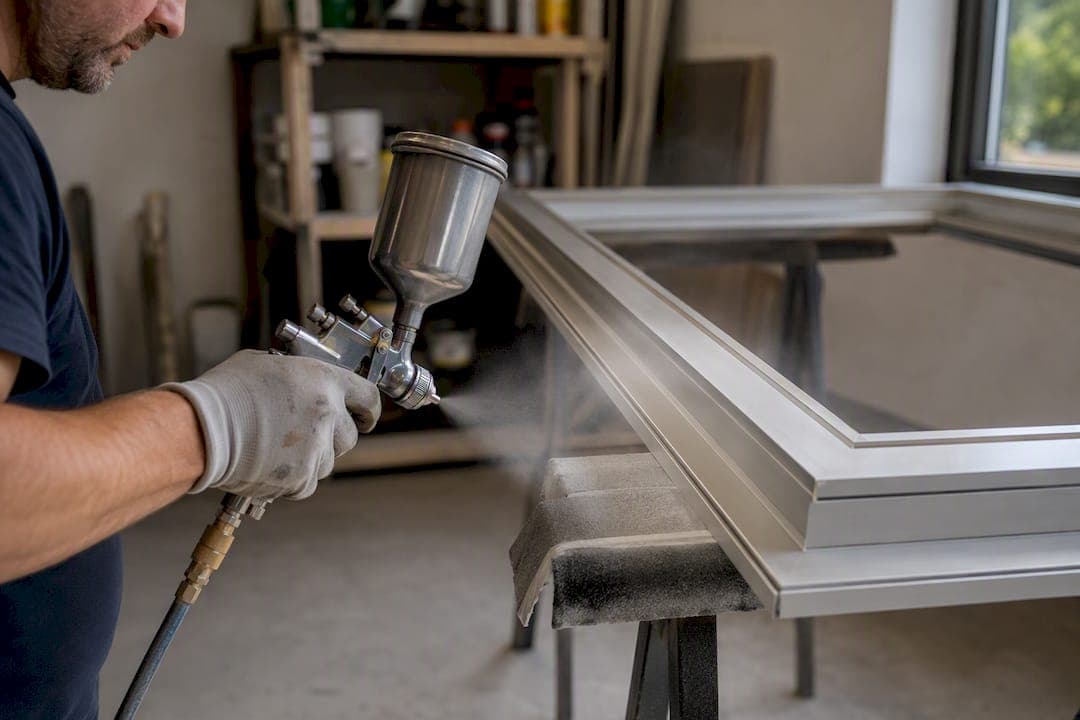
Yes, you can spray aluminium window frames, but only when you prepare the surface properly and use an aluminium-specific primer with an exterior-grade topcoat. Skip either step and the coating will lift within a season. The immediate action is simple:
- Small, isolated repairs on well-prepared frames — reasonable DIY territory if you have the patience for proper prep.
- Whole elevations, visible frontages, or anodised finishes — arrange a professional survey first.
Professionals get the nod for full jobs because they carry the right etch primers, spray equipment and masking discipline to hit a factory-standard finish without chipping or overspray. That gap in equipment and experience is where most DIY resprays fall apart.
Key Takeaways
Spraying aluminium window frames works reliably only when degreasing, mechanical abrasion and an aluminium-bonding primer precede the topcoat.
| Point | Details |
|---|---|
| Prep decides the outcome | Degrease, abrade and prime properly, since surface condition matters more than paint brand. |
| Match the primer to the metal | Self-etching or aluminium-bonding primers are needed; ordinary primers won't hold. |
| Anodised needs extra work | Specialist abrasive media are often required to break through the anodic layer before priming. |
| Choose your method by scope | HVLP suits fine control, airless suits larger jobs, and aerosol is touch-up only. |
| Go professional for visible or large jobs | Refinishing Studio offers on-site hand-spray respraying across South Wales with a five-year warranty and over 1,000 completed projects. |
Table of Contents
- Which aluminium surfaces can actually be resprayed?
- How do you prepare aluminium before spraying it?
- What primer and paint should you use on aluminium?
- Spray gun, roller, or aerosol: which method actually works?
- DIY or professional: how do you decide?
- Why does a resprayed aluminium finish fail early?
- What should you ask before hiring an aluminium window sprayer?
- What actually matters when you're weighing this up
- Get a professional aluminium respray quote in South Wales
- Sources
Which aluminium surfaces can actually be resprayed?
Not all aluminium behaves the same way under a spray gun. Powder-coated frames respond well to resurfacing because the existing coating gives a stable base once it's roughened and cleaned. Bare or mill-finish aluminium takes primer readily too, provided the oxide layer is removed first. Anodised aluminium is the awkward one: its dense anodic layer resists ordinary abrasion, and specialist abrasive media are often needed to break through it before any primer will grip.
Corrosion changes the calculation entirely.
- Surface pitting and light oxidation can usually be sanded back and primed over.
- Deep corrosion, warped sections, or failed seals mean spraying is masking a structural problem, not fixing one.
- Frames facing coastal salt spray or heavy sun exposure will need a tougher topcoat and shorter recoat intervals than a sheltered rear elevation.
If the existing coating is flaking off in sheets rather than just chalking, that's a full strip-back job, not a quick refresh.
How do you prepare aluminium before spraying it?
Preparation decides whether the paint stays put or peels within months. Surface condition is the single biggest determinant of success, and prep almost always takes longer than the actual spraying.
- Degrease thoroughly. Use a solvent or sugar-soap wash to strip silicone residue, wax and airborne grime, then rinse and dry completely.
- Abrade to create a key. Light sanding works on powder-coated and bare aluminium; anodised surfaces need coarser abrasive media to cut through the anodic layer.
- Deal with corrosion. Sand back oxidation spots, treat any pitting, and remove loose or flaking material back to sound metal.
- Check seals and gaskets. Replace perished rubber before you spray, not after, or you'll be masking around a job that needs redoing anyway.
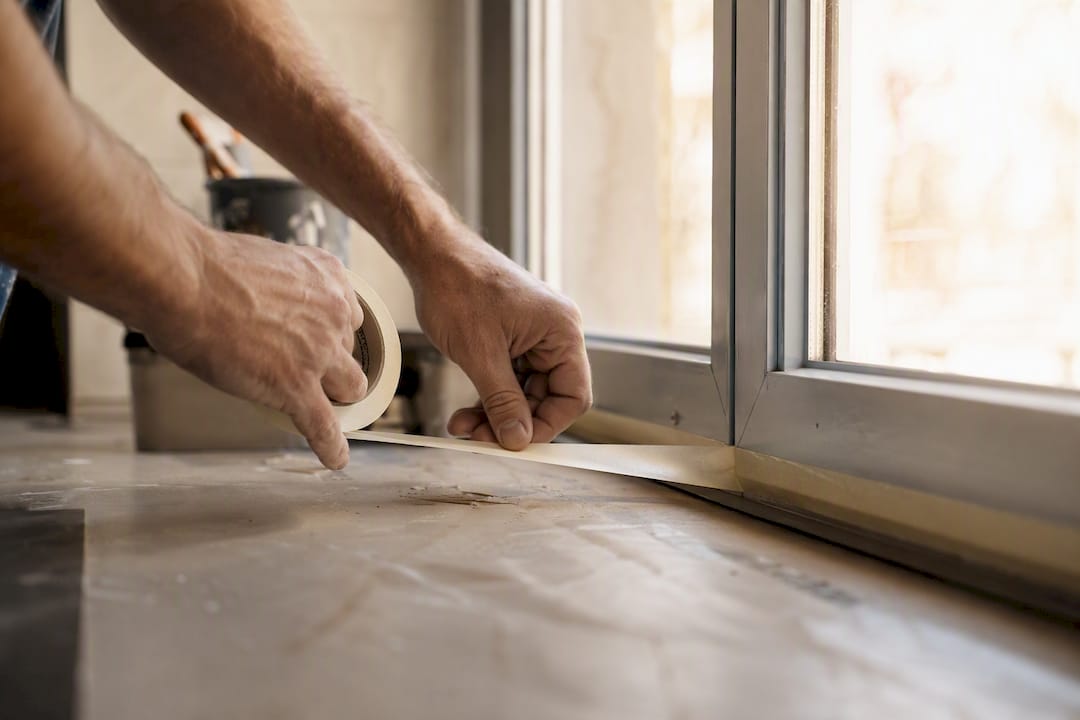
- Mask everything. Glass, handles, hinges, brickwork and sills all need careful protection before a drop of primer goes on.
Pro Tip: Budget more time for masking than you think you'll need. A crew doing this properly will often spend longer protecting glass and adjacent surfaces than they spend actually spraying the frame.
What primer and paint should you use on aluminium?
Aluminium's non-porous surface is the reason ordinary paint fails on it. Standard household paints simply don't bond to bare or powder-coated metal without help, whatever the tin might claim.
- Self-etching or aluminium-bonding primers are close to mandatory. They chemically key into the metal in a way generic primers can't.
- Two-pack acrylic or polyurethane topcoats give the UV resistance and flexibility needed to survive UK weather cycles long-term.
- Single-pack exterior paints can work for very low-exposure spots, but they chalk faster and offer weaker adhesion, so treat them as a stopgap rather than a finish.
- Sheen level matters as much as colour. Satin and eggshell finishes tend to hide minor surface imperfections better than high gloss, which shows every flaw in the prep work.
Done correctly, a proper primer and topcoat system on aluminium can extend service life by 5 to 20 years depending on substrate and exposure, a wide range but a real one, since a sheltered courtyard frame ages nothing like an exposed coastal one.
Spray gun, roller, or aerosol: which method actually works?
Choice of tool matters more on aluminium than on wood, because the narrow profiles and flat panels of a window frame show every inconsistency.
- HVLP sprayers give fine atomisation and tight control, ideal for the slim profiles of a window frame and well suited to careful DIY or specialist work.
- Airless sprayers move faster over larger areas but are less forgiving. HVLP suits control while airless suits production, provided the operator has the skill to avoid overspray.
- Aerosol cans are fine for small chips and touch-ups, but rarely deliver a consistent finish across a full frame.
- Brush or roller will get paint onto the surface, but on a visible frame it usually leaves brush marks and roller stipple that a sprayed finish avoids entirely.
Whichever tool you use, the fundamentals stay the same: keep the gun moving in steady, overlapping passes at a consistent distance, and never linger in one spot. Loaded corners and dry patches are the two most common giveaways of a rushed job.
DIY or professional: how do you decide?
Run through this before picking up a sprayer or the phone:
- Size and scope. One small frame is a different job to twelve windows across a three-storey house.
- Profile complexity. Simple flat sections are forgiving; ornate mullions and narrow glazing bars are not.
- Visibility. A side gate gets away with more than a street-facing bay window.
- Security hardware. Locks, hinges and multi-point mechanisms need careful masking or removal, which adds time and risk.
- Weather and access. Spraying outdoors depends on dry, still conditions, and upper-storey frames may need scaffolding or a cherry picker.
A single well-prepared window is realistically a weekend DIY project. A full house of windows, done properly, is a multi-day job even for an experienced crew, since on-site aluminium respraying is a recognised commercial alternative to full replacement precisely because it avoids the disruption of stripping frames out. Cost varies with size, access, colour change complexity and how much repair work the corrosion needs. Red flags that mean call a specialist: anodised finishes, extensive corrosion, upper-storey access, or any frame with security certification you can't afford to compromise.
Why does a resprayed aluminium finish fail early?
Nearly every early failure traces back to the same handful of causes: skipped degreasing, an ordinary primer swapped in for an aluminium-bonding one, or masking done in a hurry. Overspray, tape bleed and sagging paint are the classic visual tells of rushed technique, and they show up within weeks, not years.
- Wipe frames down with mild soapy water every few months. Avoid abrasive cleaners that dull the topcoat.
- Touch up small chips as soon as they appear, before moisture gets under the edge.
- Check seals annually. A perished gasket lets water track behind the coating and lift it from the inside out.
A properly specified system, applied correctly, should comfortably outlast a decade before it needs attention again.
What should you ask before hiring an aluminium window sprayer?
Refinishing Studio's approach reflects what a proper specification looks like in practice: a specialist hand-spray technique applied on-site to factory standards, backed by a five-year guarantee and built on more than 1,000 completed projects across South Wales. That combination of technique, warranty and track record is what separates a job that lasts from one that needs redoing in eighteen months.
Ask any prospective sprayer to specify, in writing, exactly which bonding primer and topcoat system they intend to use, and what warranty covers workmanship versus product failure.
Before you sign anything, ask to see photos of completed work on similar profiles, confirm the primer and paint brands by name, check they carry public liability insurance, and clarify how they'll protect glass, brickwork and neighbouring surfaces during the job.
What actually matters when you're weighing this up
Most guides on this subject treat spraying aluminium as a paint problem. It isn't. It's a surface chemistry problem wearing a paint problem's clothes. The reason so many DIY resprays fail within a year has almost nothing to do with the colour chosen or even the brand of paint on the tin. It comes down to whether the anodic or oxide layer was actually broken through before primer went on.
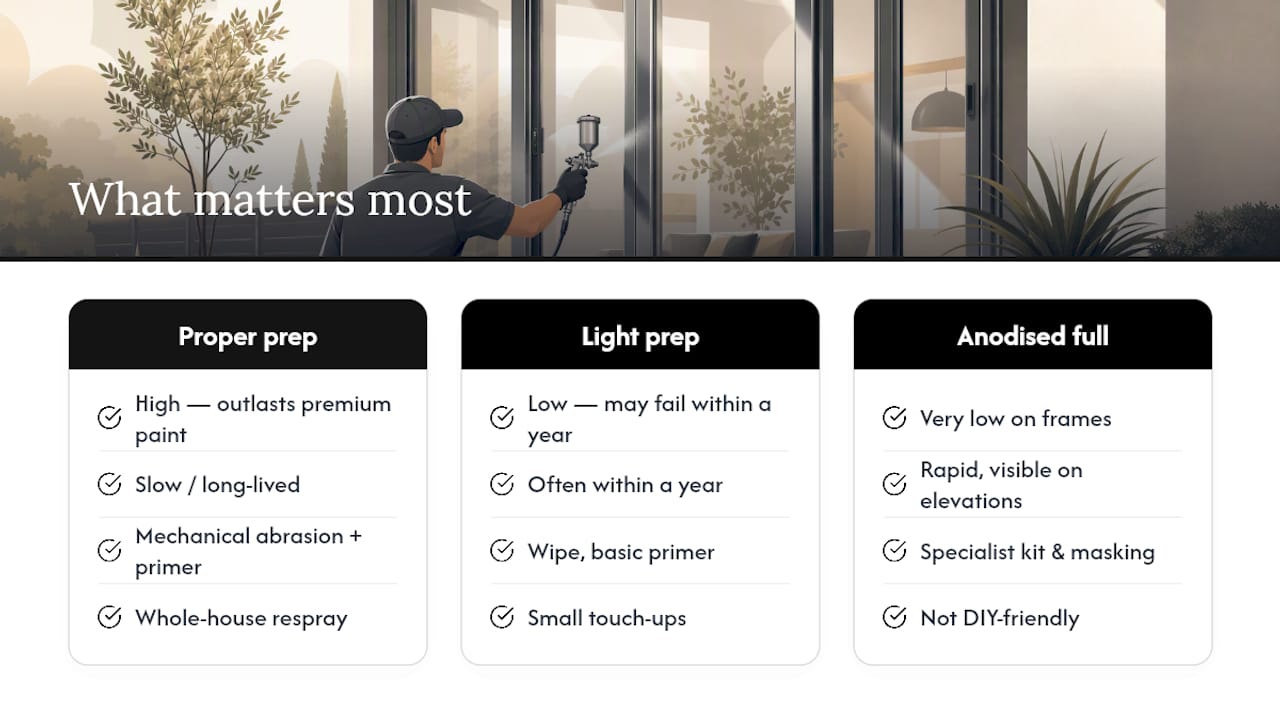
The conventional advice, sand it, prime it, paint it, undersells how much anodised aluminium in particular fights back against that first step. That's the detail most homeowners skip past, because it sounds like the least important part of the job. It's the opposite. If you take one thing from this article, prioritise the prep over the product. A mediocre topcoat on a properly abraded, correctly primed surface will outlast a premium paint slapped over a lightly wiped frame.
Where DIY guidance gets genuinely risky is on full elevations and anodised finishes. Small touch-ups are forgiving. A whole house of frames is not, and that's precisely where the gap between amateur and specialist equipment, and specialist masking discipline, starts to show on the finished wall.
Get a professional aluminium respray quote in South Wales
If your frames are anodised, badly corroded, or simply too visible to risk a DIY finish, Refinishing Studio handles the whole job on-site, without the disruption or cost of full window replacement. The service covers UPVC, composite, timber and aluminium windows, doors, conservatories and fascias across South Wales, using a hand-spray technique specified to factory standards and backed by a five-year transferable warranty.

Every job starts with a site survey to assess frame condition, agree the primer and topcoat system, and confirm colour in RAL, BS or a custom match. On the day, the crew handles masking of glass, hardware and surrounding surfaces, applies the coating system, and leaves the site clean. If you're weighing up whether to spray or replace, start with a free aluminium window spraying quote and get a specific answer for your frames rather than a general one.
Sources
- How to paint aluminium window frames | The Paint Shed
- Spray painting aluminium on-site | Vanda Coatings
- Repainting aluminium window frames | Professional Window Cleaning