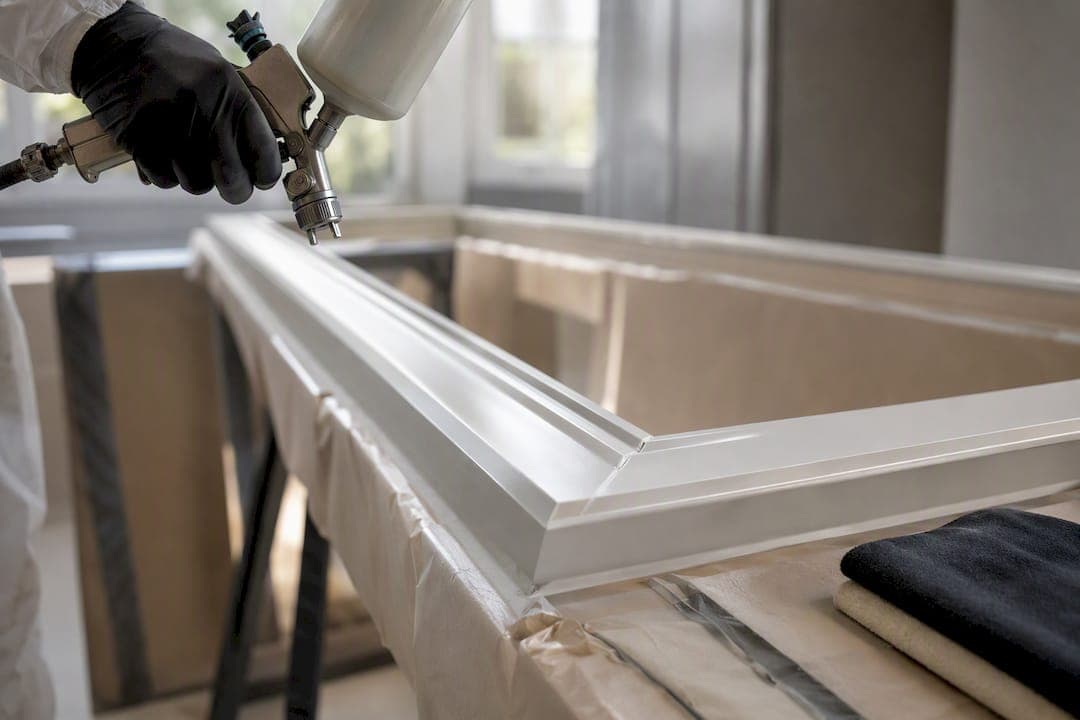
A single uPVC window respray typically costs around £150, with whole-house jobs running £900 to £1,800 depending on size and condition. Respraying is usually the better-value choice when your frames are structurally sound and just tired-looking or outdated. The catch is that price swings sharply with access, colour choice, and how many items you're doing at once.
TL;DR:
- Respraying a whole house costs between £900 and £1,800, with per-window prices dropping significantly when multiple items are sprayed together.
- Door, garage, and conservatory resprays typically range from £180 to £900, depending on size and complexity.
- The quality and durability of a respray hinge on proper prep work, especially replacing old silicone seals and applying multiple coats of industrial-grade finish.
- Quotes vary based on access, frame condition, and color choice, with bespoke colors adding up to £150 per item.
- Respraying is cost-effective only if the frames are sound and the correct coating system, such as 2K polyurethane, is used with an included five-year warranty.
Table of Contents
- How much does a window respray cost per item and per house?
- What pushes a window respray quote up or down?
- What should be included in a window respray quote?
- Is respraying cheaper than replacing your windows?
- How long does a sprayed finish last?
- How do you get an accurate quote and what should you ask?
- What do real respray jobs typically look like?
- Is a respray actually worth it, or are you just delaying replacement?
- Refinishing Studio: a local respray specialist across South Wales
- Sources
- FAQ
How much does a window respray cost per item and per house?
Pricing hinges on scale more than almost anything else. A single window booked in isolation costs more per item than the same window done as part of a ten-window job, because a chunk of the price covers turning up, masking off the area, and mixing paint, not just spraying it.
Checkatrade's cost data puts the average uPVC spraying cost at around £150 per window, with a full-house respray averaging £1,350 and ranging from £900 to £1,800. Other UK providers quote lower entry points for straightforward jobs bundled with other work. SprayGenius's pricing data shows per-window costs as low as £40 to £90 when several windows are done together, with doors running £180 to £350 and larger properties reaching £1,800 to £3,500 for a full respray.
Here's how that breaks down by item:
| Item | Typical UK cost range |
|---|---|
| Single casement window | £40 to £150 |
| Bay window | £150 |
| Front or back door | £180 to £350 |
| Garage door | £180 to £350 |
| Conservatory (full) | £600 to £900 |
| Terraced house (whole property) | £900 to £1,800 |
| Semi-detached house (whole property) | £1,000 to £1,800 |
| Detached house (whole property) | £1,800 to £3,500 |
Most sprayers apply a minimum job charge, often around £180, to cover the setup cost of turning up for even one window. That's why a single window rarely feels like good value on its own; the mobilisation fee gets spread across just one item instead of ten.
Regional variation matters too, though less than volume does. Areas further from a sprayer's base often carry a small travel or mobilisation surcharge, which is one reason getting a local quote from a business already working in your area, such as one covering South Wales, tends to land closer to the lower end of these ranges.
What pushes a window respray quote up or down?
Two houses with identical windows can get very different quotes, and it's rarely random. The variables below account for most of the difference.
- Condition of the frames: chalking, hairline cracks, or perished seals mean extra prep time, and most sprayers add a small per-frame repair fee, often £15 to £25, to fix minor damage before painting.
- Access: ground-floor casements are quick to mask and spray; second-storey bay windows, dormers, or anything needing a ladder or scaffold tower take longer and cost more.
- Colour choice: standard shades like anthracite grey or black are usually included in the base price, but bespoke RAL or BS colour matches often add £80 to £150 for mixing and additional coats.
- Volume: doing the whole house in one visit spreads the fixed mobilisation cost across every item, which is why per-window prices drop sharply once you're past three or four frames.
- Materials and specification: proper jobs use 2K polyurethane or an equivalent industrial coating over a bonding primer, not a domestic-grade paint, and that specification affects both price and durability.
- Regional demand: pricing in and around Cardiff, Swansea, and the wider South Wales area tends to sit close to the national averages, though local sprayers with less travel time to cover often quote more competitively than firms based further away.
Pro Tip: Ask any quote to specify the coating system by name, not just the colour and finish. "2K polyurethane" or a named equivalent tells you it's built for exterior durability; a vague "premium exterior paint" answer is worth pushing back on.
What should be included in a window respray quote?
A properly priced quote covers far more than spraying colour onto the frame. The prep work is what determines whether the finish lasts five years or five months, and it's also where corners get cut on cheap quotes.
A comprehensive quote should include:
- Full clean and degrease of every frame, removing years of grime, algae, and old wax that would stop paint bonding properly.
- Masking of glass, handles, hinges, and surrounding brickwork or render to protect anything not being sprayed.
- Removal and replacement of old silicone seals around the frame, rather than painting straight over perished silicone, which is one of the most common causes of early peeling.
- Primer or bonding coat appropriate to uPVC, which allows the topcoat to adhere properly to a naturally slick plastic surface.
- Two or more topcoats of a 2K polyurethane or equivalent finish, applied by hand spray for even coverage.
- A written warranty, ideally five years or longer, covering adhesion and colour retention.
Watch for quotes that skip line three. Painting over degraded silicone rather than replacing it is a shortcut that shows up as bubbling and peeling within a year or two, and it's the single biggest giveaway of a rushed job. Also ask whether VAT is included in the headline figure and whether there's a separate call-out or mobilisation charge, since some quotes list an attractively low per-window price that doesn't include either.
Is respraying cheaper than replacing your windows?
Yes, usually by a wide margin. Full uPVC window replacement typically costs £550 to £900 per unit once you include the frame, glazing unit, and fitting labour. A respray at £40 to £150 per window works out at roughly 20 to 25% of the replacement cost, which on a ten-window house can mean saving several thousand pounds for a comparable visual result.
That saving only holds when the frames themselves are sound. Respraying is the wrong call when:
- The frame has structural damage, warping, or rot beneath the surface.
- The double glazing units have failed and gone misty between the panes, since spraying doesn't fix that.
- The window mechanism (hinges, locks, handles) is worn out and needs replacing anyway.
For everything else, a respray gets you the same kerb appeal as new frames at a fraction of the outlay. Anthracite grey and other contemporary colours are the most requested finishes precisely because they let older uPVC pass for a much newer installation, which matters if you're weighing up how the work affects property value ahead of a sale or letting.
In short: if your frames are sound, you're likely paying a quarter of replacement cost for a comparable finish. Sellers and landlords in particular tend to find this the more sensible route, since it refreshes the exterior without the disruption of a full reglazing project. A detailed respray versus replacement comparison covers the visual and practical trade-offs in more depth.
How long does a sprayed finish last?
A properly specified job, with correct prep and a 2K polyurethane topcoat, typically holds up for the length of its warranty and often well beyond it, with five years being the standard guarantee period offered by reputable sprayers. What shortens that lifespan almost always traces back to preparation, not the paint itself; skipped degreasing or unreplaced silicone seals are the usual culprits behind early failure.
Timelines depend heavily on scope:
- A handful of windows can often be completed within a single working day, including drying time between coats.
- A whole-house job, covering ten or more windows plus doors, typically needs two to three working days to allow proper curing between coats.
- Spraying is weather-dependent work; most contractors avoid exterior spraying in rain, high humidity, or temperatures below around 10°C, so winter bookings sometimes need rescheduling.
- Expect some noise and the smell of solvents on the day, and keep windows closed for a few hours after each coat while it cures.
More detail on maintenance and what affects longevity is covered in this guide to uPVC spray durability.
How do you get an accurate quote and what should you ask?
Getting quotes that are genuinely comparable takes a bit of groundwork, because "spray my windows" means different things to different tradespeople. Use this checklist before you commit to anyone.
- Ask what coating system is used. You want a named product, ideally a 2K polyurethane or equivalent industrial-grade finish, not a vague description like "specialist exterior paint."
- Ask how many coats are included. Two topcoats over a primer is standard; anything less is a red flag for durability.
- Confirm whether silicone seals will be replaced. This should be a standard inclusion, not an optional extra.
- Get the warranty length and terms in writing. Five years is the benchmark; ask what specifically it covers (adhesion, colour fade, or both).
- Check they carry public liability insurance. Any tradesperson working at height on your property should have this as standard.
- Request a sample or portfolio of previous work in your chosen colour and finish, ideally on the same substrate (uPVC, not just timber examples).
- Get a written, itemised quote that separates prep, materials, and labour, so you can compare it against other quotes line by line.
Pro Tip: If you're only planning to spray a couple of windows now, ask the quote what the price would be for the whole house at the same time. Bundling almost always brings the per-window cost down enough to make doing extra items worthwhile.
Steer clear of any quote that's dramatically cheaper than others with no explanation, or one that won't put the warranty in writing. Vague specifications are usually vague for a reason.
What do real respray jobs typically look like?
Scale changes the maths more than anything else, and real jobs illustrate that clearly. A small job, say four windows and a front door on a terraced house, tends to land somewhere in the £600 to £900 bracket once mobilisation is factored in, given the per-window and per-door averages typical across the UK. A mid-size semi-detached property with eight to ten windows and two doors often sits closer to £1,200 to £1,600. A larger detached house with a full window and door respray, sometimes including a garage door or conservatory, can reach £2,500 to £3,500.
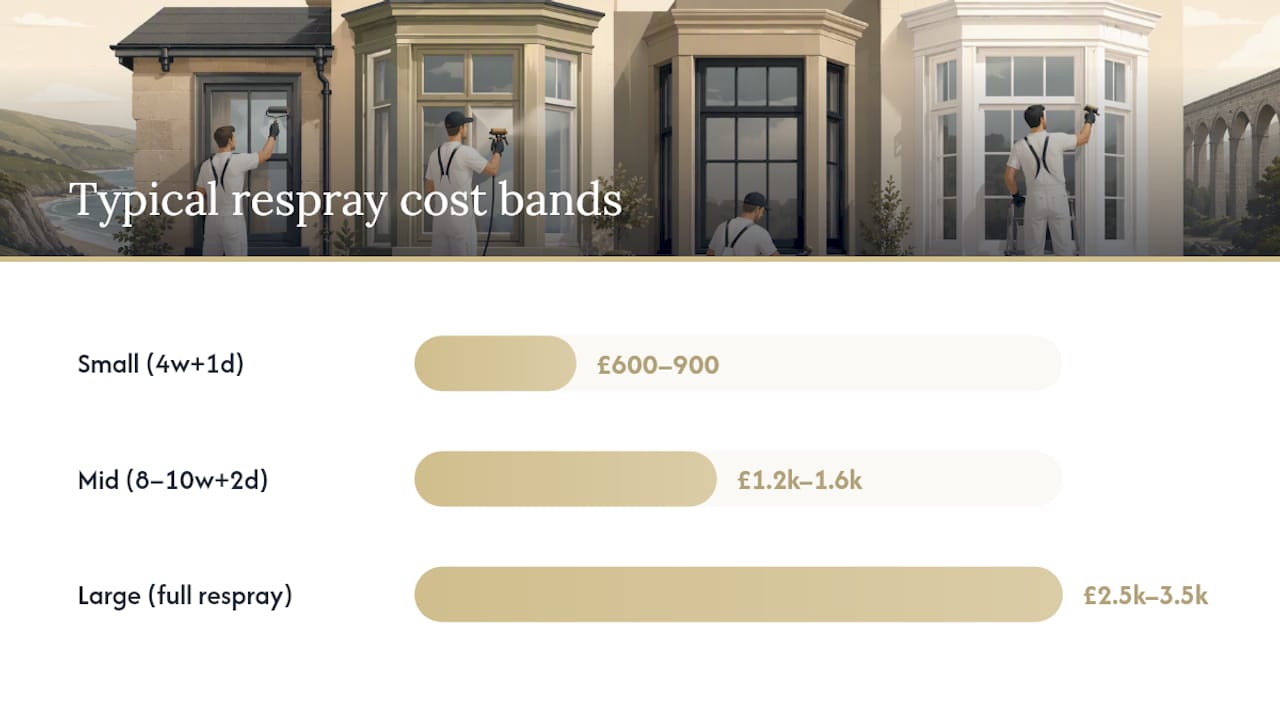
What these figures show consistently is that per-item cost falls as volume rises, and that specification, not scale, is what determines whether the finish lasts. A five-year warranty only means something if the prep behind it, particularly seal replacement and proper coat count, was done properly in the first place. More worked examples and local pricing detail are available in this UPVC respray cost breakdown.
Is a respray actually worth it, or are you just delaying replacement?
The industry line is that respraying is a like-for-like alternative to replacement, and for sound frames it genuinely is. What gets underplayed is how much the value of a respray depends on something homeowners rarely ask about upfront: whether the sprayer treats seal replacement as standard or as an upsell.
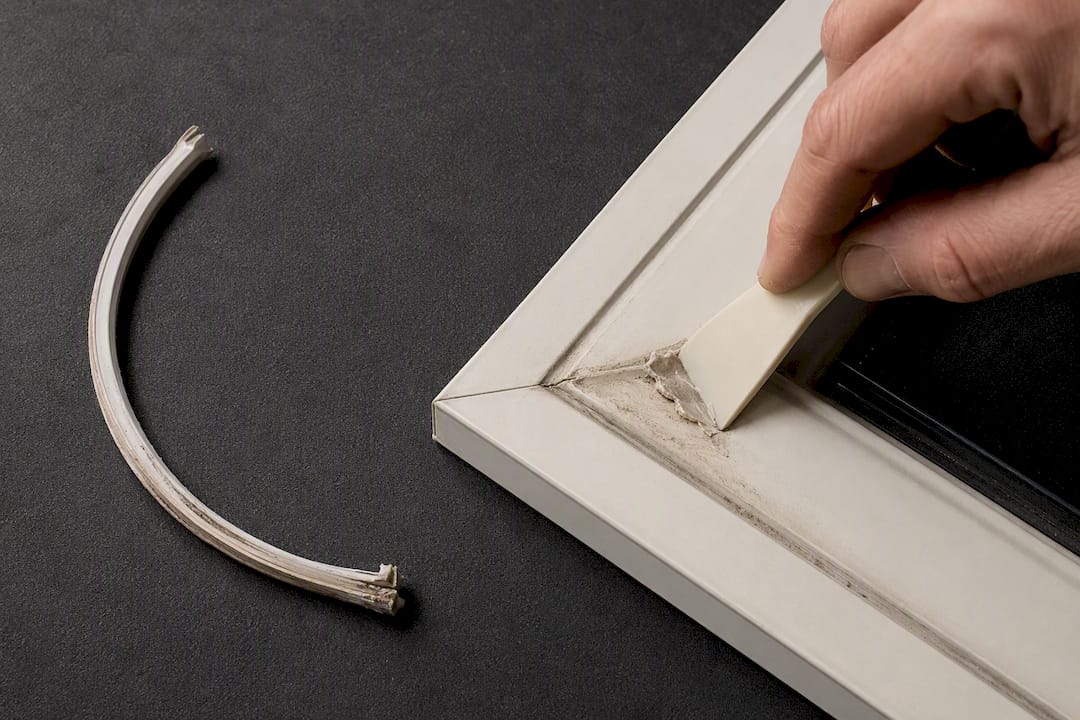
Painting over old silicone is the single biggest reason respray jobs fail early, and it's invisible on the quote if you don't ask. A cheaper quote that skips this step isn't really a cheaper respray. It's a shorter-lived one, and you'll likely be paying for the job twice within a few years.
The other underrated factor is timing decisions around volume rather than urgency. Homeowners often ring up about one tired-looking window at the front of the house, when doing the whole property at once would have brought the per-window cost down substantially. If you know you'll want the back windows done eventually, it's worth getting that full quote now rather than paying the mobilisation fee twice.
Where I'd draw the line firmly on replacement: misted double glazing units, warped frames, or failing hardware. No amount of good spraying fixes a fogged pane. Everything short of that is usually a respray decision, not a replacement one.
— Mitchell
Refinishing Studio: a local respray specialist across South Wales
There are companies offering alternatives to full window replacement quotes for homeowners in various regions. Instead of managing separate trades for frames, glazing, and fitting, you get one hand-sprayed finish across your uPVC windows, doors, fascias, and guttering, applied to factory-standard quality with no subcontractors involved.

Every job carries a five-year transferable warranty, and colours run from standard anthracite through to bespoke RAL and BS matches, in matt, satin, eggshell, or gloss finishes. Over 1,000 completed projects across Cardiff, Swansea, and the surrounding region back that up. If your frames are sound and you're considering a respray for your property, requesting a free, itemised quote and a proper written specification is advisable before deciding.
Sources
The figures in this guide are drawn from Checkatrade's UPVC spraying cost data, which supplies the whole-house average of £1,350 and per-window benchmarks, and SprayGenius's UK price guide, which covers lower-end per-item ranges, mobilisation costs, and bespoke colour surcharges. Both focus specifically on UK pricing and uPVC window construction rather than international window types.
- uPVC spraying cost guide: 2026 UK Prices
- How Much Does uPVC Window Spraying Cost in 2026? (UK Price Guide)
FAQ
Is it worth spraying uPVC windows?
Yes, when the frames are structurally sound.
How much does it cost to respray windows?
A single window typically costs £40 to £150, while a whole-house respray averages £900 to £1,800, depending on the number of windows, colour choice, and property access.
How long do sprayed windows last?
A properly specified respray using a 2K polyurethane finish and replaced silicone seals typically lasts at least as long as its warranty, usually five years, and often well beyond it with normal UK weather exposure.
How much does a painter charge to paint a window?
Standard exterior painters rarely quote for uPVC specifically, since it needs specialist coatings and equipment rather than conventional paint. Specialist uPVC sprayers charge £40 to £150 per window depending on size, condition, and volume booked.
Does respraying affect property value in the same way as replacement?
A well-executed respray gives near-identical kerb appeal to new frames, which supports resale and letting value similarly to replacement, provided the finish carries a written warranty homeowners can pass on to buyers.