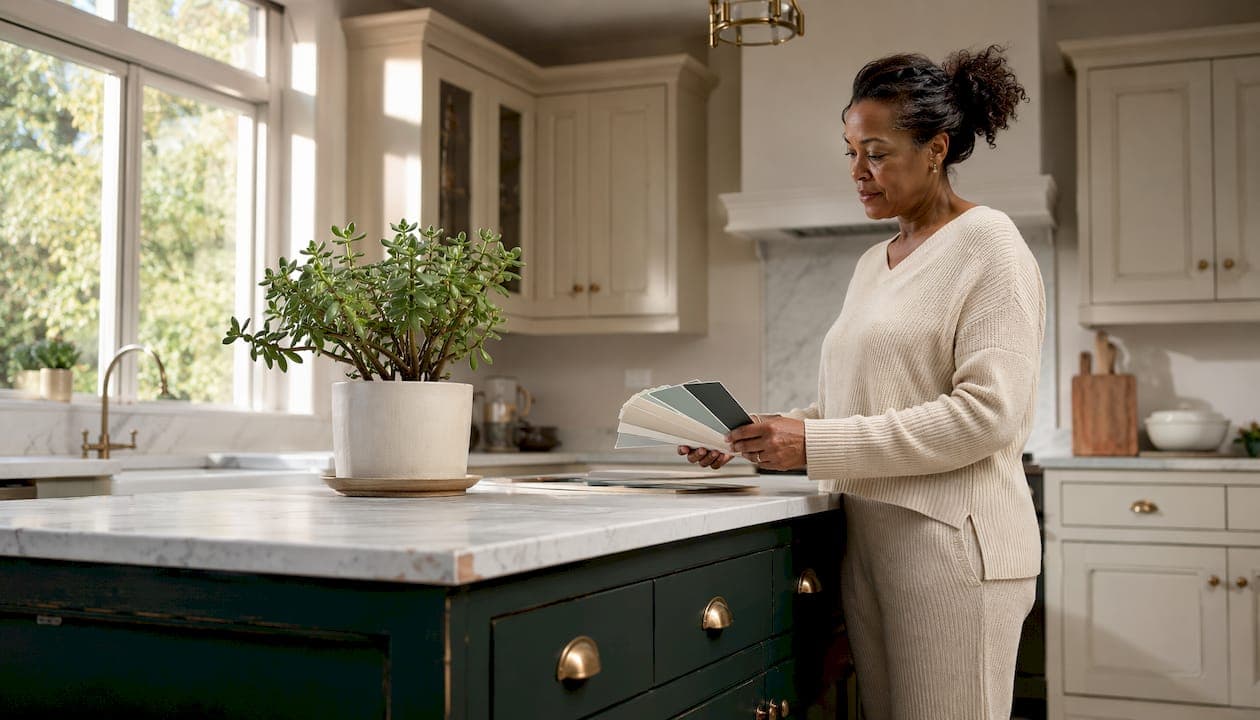
The most reliable kitchen island colour directions right now are deep navy or ink, forest and emerald green, sage with a grey undertone, warm terracotta, and anthracite or jet black. For open-plan rooms, the two-tone approach — light perimeter units paired with a darker statement island — is the single most effective strategy for adding drama without making the space feel heavy.
Quick colour-to-light pairings:
- North-facing kitchen: warmer tones (terracotta, warm sage, soft navy) counteract the cooler daylight
- South-facing kitchen: cooler shades (deep forest green, anthracite, ink blue) handle the stronger light without washing out
- Open-plan rooms: two-tone cabinetry distributes colour and keeps wall units light, preserving openness
The verdict: your island can be bolder than the perimeter units. Pick one accent colour for the island, then repeat it in small doses elsewhere — a pantry door, open shelving, or a window seat — so the scheme reads intentional rather than isolated.
For finish, match sheen to use. Matt suits a contemporary, sober look. Eggshell (as used on the anthracite Llanelli project) gives a soft sheen that hides fingerprints well. Satin is the practical choice for a heavily used island. Gloss works on period or furniture-effect islands where light reflection is part of the look. See the full finish comparison for detail.
Before booking a quote, run these checks: order sample panels and view them at morning, midday, and evening light; ask the resprayer for substrate compatibility (timber, laminate, UPVC, aluminium), RAL or BS colour matching, warranty terms, and turnaround time.
The island is the one surface in a kitchen that earns a bold colour. Get the finish right and the colour will look different — better — than it did on any swatch.
Pro Tip: Ask your resprayer for a physical sample panel in your chosen colour and sheen, then live with it in your kitchen for 48 hours before confirming. Lighting changes dramatically between morning and evening in South Wales homes.
Table of Contents
- Does island size and kitchen style change which colour works?
- How colour affects the mood of your kitchen
- How to coordinate your island with the rest of the kitchen
- Common colour mistakes and how to fix them
- What to do after choosing your colour
- How to choose a professional resprayer in South Wales
- South Wales projects: colours realised
- Refinishingstudio: professional island respraying across South Wales
- Key takeaways
Does island size and kitchen style change which colour works?
A large island in a small kitchen needs a lighter or mid-tone colour — deep navy on a 3-metre island in a compact galley will dominate. In a generous open-plan space, that same navy anchors the room beautifully. As a rule, the bigger the island relative to the room, the more restrained the colour choice needs to be, unless the perimeter units are very light.
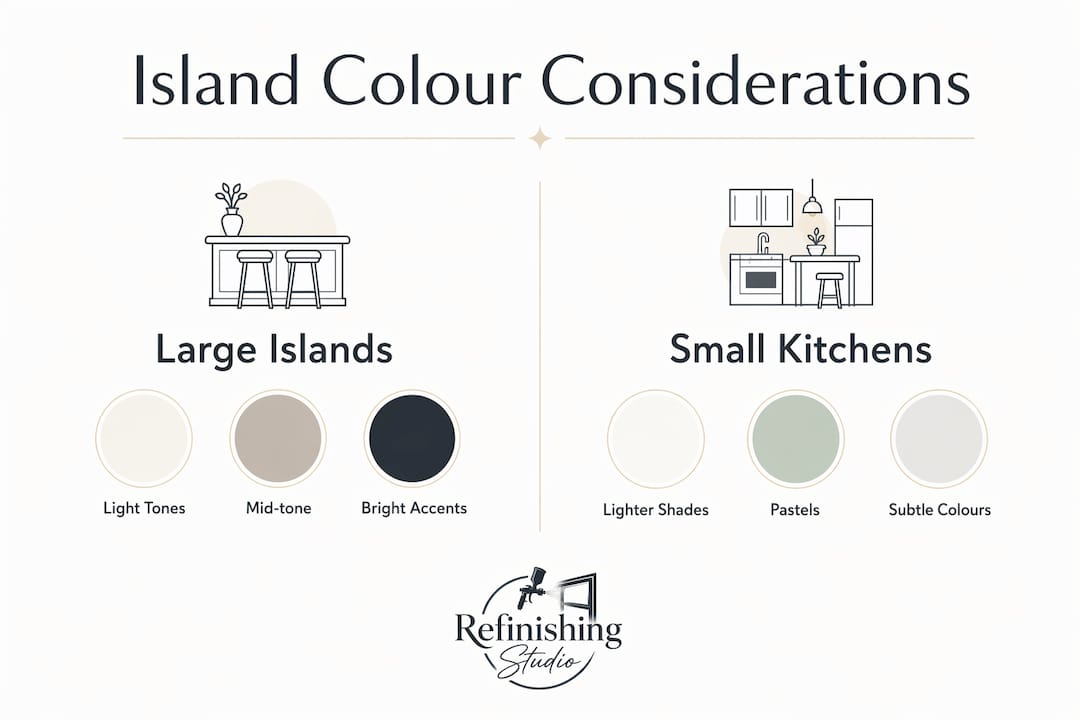
Kitchen style matters too. Shaker and traditional kitchens suit forest green, navy, or warm anthracite. Contemporary handleless kitchens carry RAL 9005 jet black or charcoal well. Farmhouse styles work with sage, terracotta, or dusty blue. For cabinet style pairings, matching the island colour to the architectural character of the cabinetry avoids a jarring result.
Durability is a practical consideration that often gets overlooked at the colour-selection stage. Dark colours show dust; light colours show grease. An eggshell or satin finish on a professional respray is far easier to wipe down than matt paint applied by brush.
How colour affects the mood of your kitchen
Colour psychology is not abstract in a kitchen. Deep greens and blues — emerald, bottle green, midnight blue — create a grounded, sophisticated atmosphere. They work best when the rest of the room is light and the island becomes a deliberate focal point.
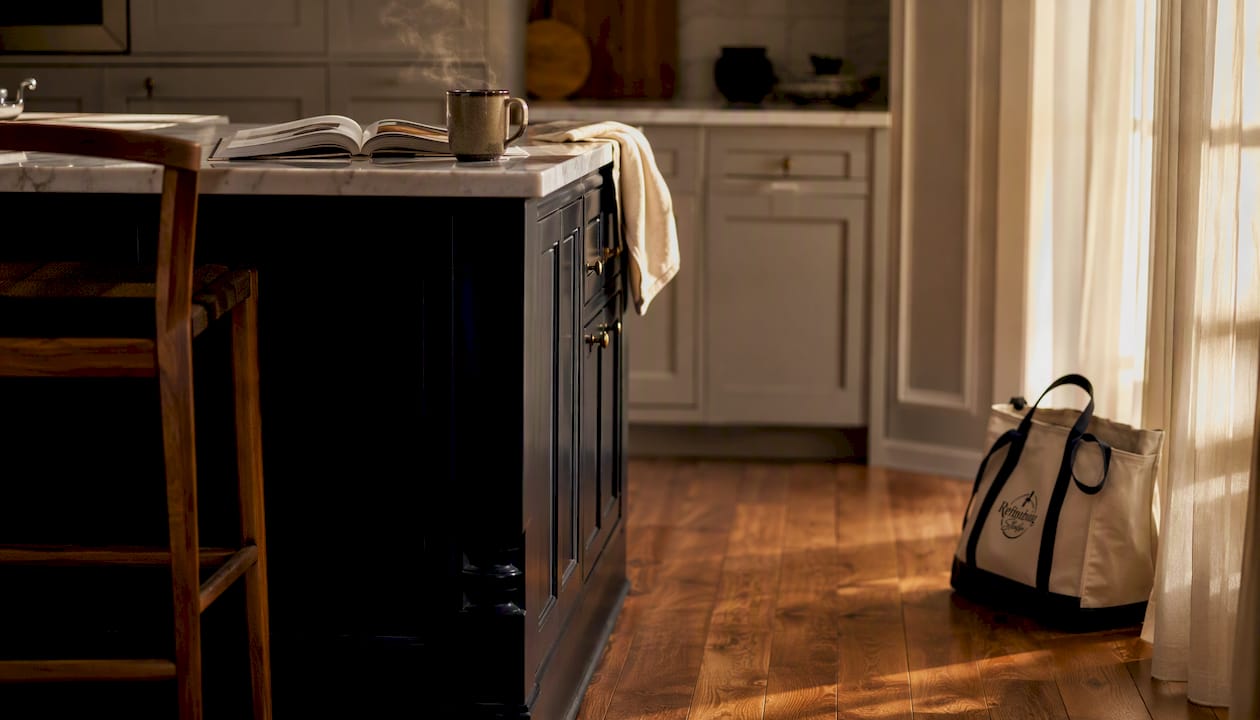
Sage green reads as calm and organic. It needs a grey undertone to stay sophisticated across different lights — a pure green sage can look juvenile under artificial light.
Terracotta brings warmth and personality. It works when everything else in the kitchen is restrained: white or near-white perimeter units, neutral countertops, simple hardware. Anthracite and jet black (RAL 7016 and RAL 9005 respectively) project confidence and modernity. They suit homeowners who want the kitchen to feel considered rather than colourful.
How to coordinate your island with the rest of the kitchen
The countertop is the first coordination point. A dark island (navy, forest green, anthracite) pairs well with light quartz or marble-effect worktops — the contrast keeps the island from feeling like a void. A warm terracotta island works with pale stone or oak-effect surfaces.
Flooring matters more than most homeowners expect. Mid-tone wood floors suit almost any island colour. Very dark floors with a very dark island create a heavy, low-contrast result — introduce a lighter countertop or backsplash to break it up.
For backsplashes, a neutral tile (white metro, pale grey, natural stone) lets the island colour lead. If the backsplash is already a feature, keep the island in a complementary rather than competing tone. Hardware — brushed brass, matte black, brushed nickel — should echo at least one other metal in the room to tie the scheme together.
Common colour mistakes and how to fix them
Matching island to perimeter units exactly removes all the visual interest a contrasting island creates. If you want a cohesive look, go tonal rather than identical — a slightly deeper or warmer version of the perimeter colour reads as intentional.
Choosing colour from a screen or small chip is the most common source of colour regret. Colours behave differently at scale and under your specific light. Always view a physical sample panel in the actual kitchen before committing.
Ignoring finish sheen is a close second. The same pigment in matt versus gloss behaves very differently under varied lighting. A colour that looks rich in eggshell can look flat in matt or plastic in high gloss.
Going bold without a repeat leaves the island looking like an afterthought. One small echo of the island colour elsewhere — a shelf, a door, a stool — resolves this immediately.
What to do after choosing your colour
- Confirm the substrate. Know whether your island is timber, MDF, laminate, or a combination. This determines primer choice and prep sequence.
- Order sample panels. A professional resprayer can produce a physical panel in your chosen RAL, BS, or custom colour and sheen. View it at different times of day.
- Ask about 3D visualisation. Visualisations at quoting stage reduce colour regret and help you check the colour against your countertops and flooring before any work begins.
- Clear the island area. Remove appliances, accessories, and anything stored on or around the island. The resprayer will protect worktops and adjacent surfaces, but a clear workspace speeds the job.
- Book the respray. Confirm colour, sheen, substrate, warranty terms, and turnaround in writing before work starts.
A professional prep sequence — de-grease, fill, sand, prime — is what separates a factory-standard result from a streaky DIY attempt. Skipping any stage is the primary cause of poor adhesion and uneven finish.
How to choose a professional resprayer in South Wales
Ask these questions before signing anything:
- Do you hand-spray or use a roller? (Hand-spray produces a far smoother, more consistent result.)
- What warranty do you offer, and is it transferable?
- Can I see a portfolio of completed kitchen island projects locally?
- Do you subcontract any of the work?
- Can you provide a physical sample panel in my chosen colour and sheen?
Red flags: no local portfolio, vague warranty terms, subcontracted labour, and no ability to match RAL or BS colours. A resprayer who cannot show you completed work in South Wales is a risk.
The kitchen respraying cost varies by island size, finish sheen, substrate condition, worktop protection required, and whether bespoke colour matching is needed. Get a written quote that itemises these factors.
South Wales projects: colours realised
Two completed Refinishingstudio projects illustrate what these colour choices look like in practice.
In Llanelli, an anthracite eggshell finish — close to RAL 7016 — was applied to a kitchen island in a north-facing room. The eggshell sheen softens the dark tone and handles fingerprints well, which matters on a surface used daily. The result sits between matt and satin: present without being reflective.
In Cardiff, a forest green custom respray on a Pontcanna kitchen island demonstrates how a bold colour lands when the perimeter units are kept light. The green reads differently at midday and in the evening — richer and deeper as the natural light drops — which is exactly what makes a statement island worth having.
Both projects used Refinishingstudio's hand-spray technique, delivering a finish consistent with factory production standards.
Refinishingstudio: professional island respraying across South Wales
A new kitchen costs thousands and takes weeks. A professional hand-spray respray from Refinishingstudio delivers a factory-standard finish on your existing island — in the colour and sheen you have chosen — for a fraction of that cost and typically within days, not months.
Refinishingstudio works directly with homeowners across South Wales, with no subcontractors involved. Every job carries a five-year transferable warranty, and the team has completed over 1,000 projects across the region. Substrates covered include timber, MDF, laminate, UPVC, and aluminium. Colours are matched to RAL, BS, or custom specifications, with multiple finish options — matt, eggshell, satin, and gloss — available on every job.
Cost depends on island size, finish sheen, substrate condition, and any colour-matching requirements. The full breakdown is on the kitchen respraying cost page. To see the process and book a quote, visit the kitchen respraying service page.
Key takeaways
The most effective kitchen island colour strategy pairs a bold island with light perimeter units, repeats the accent colour in small doses elsewhere, and matches finish sheen to how the island is used.
| Point | Details |
|---|---|
| Two-tone is the go-to strategy | Light perimeter units with a dark island add depth without making the kitchen feel heavy. |
| Light direction shapes colour choice | North-facing kitchens suit warmer tones; south-facing rooms handle cooler shades like deep green or anthracite. |
| Finish sheen matters as much as colour | The same pigment in matt versus gloss reads very differently under varied lighting. |
| Repeat the accent colour | Echo the island colour on a pantry door or shelving to make the scheme feel cohesive rather than isolated. |
| Refinishingstudio for South Wales | Hand-spray resprays with a five-year transferable warranty, over 1,000 completed projects, no subcontractors. |