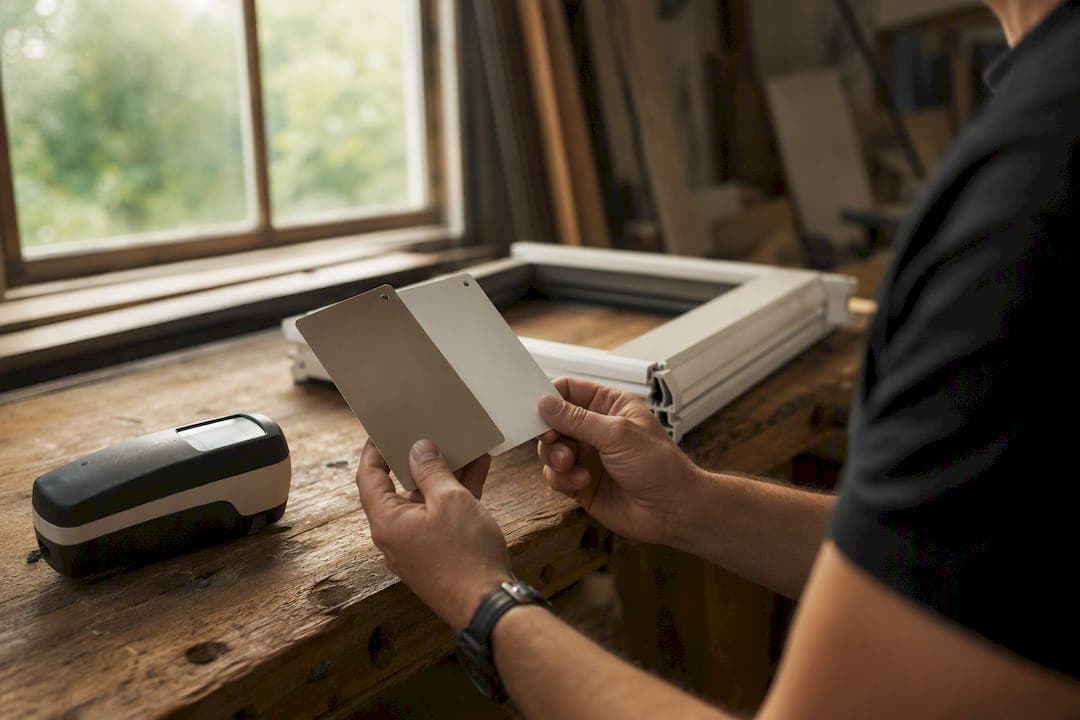
Farrow & Ball do not publish official RAL codes for any colour in their range. Every "RAL match" you find online is a visual approximation calculated by a third party, not a technical equivalent issued or endorsed by Farrow & Ball themselves. That distinction matters the moment you're specifying paint for a job that has to match years from now, or when a client asks you to reproduce "Railings" on a UPVC door frame using a completely different paint system.
If accuracy is genuinely critical, an online converter is a starting point, not a finish line. Your two reliable options are a spectrophotometer scan of a physical sample, or buying the original Farrow & Ball product outright. Everything else is a reasonable guess with a number attached.
Key Takeaways
Farrow & Ball colours have no official RAL equivalent, so any converter result should be treated as a starting estimate to verify with a physical sample, not a final specification.
| Point | Details |
|---|---|
| No official codes exist | Farrow & Ball does not publish RAL equivalents; every online conversion is a visual estimate. |
| ΔE tells you how close | A ΔE under 2 is generally indistinguishable; above 5 is visibly different in most lighting. |
| Hex values are imperfect | Screen-based converters often use hex, not measured paint data, so results need physical checking. |
| Physical samples are essential | Always test a sample pot or sprayed panel in situ, in daylight, before committing to a full job. |
| Professional respray delivers consistency | Refinishingstudio hand-sprays RAL, BS, or custom colour matches with a five-year warranty for lasting accuracy. |
Table of Contents
- Why Farrow & Ball doesn't have official RAL codes
- How converters find the "closest" RAL, and where they fall short
- Getting the most accurate professional match
- A quick way to verify a proposed RAL match yourself
- Which tools actually help you find a RAL equivalent?
- When to trust a converter and when to call in a professional
- Get a professional colour match instead of a guess
- Frequently asked questions
- Sources
Why Farrow & Ball doesn't have official RAL codes
RAL Classic is a fixed reference system: 213 numbered colours, each with a defined formulation, designed so a manufacturer in Hamburg and a decorator in Cardiff produce the same result. Farrow & Ball works the opposite way. Its palette is proprietary, developed for its own paint chemistry, and named rather than numbered on purpose, part of the brand's identity as much as its formulation.
That's the core problem with treating any converter result as gospel. Two paints can share a name-adjacent look on a screen and still diverge once you account for pigment load, binder type, and how a finish handles light. As colour-matching specialists at Rawlins Paints note, paint names alone are not a reliable basis for cross-brand matching because base chemistry changes the final appearance even when the target hex value looks identical.
Fixed standards exist precisely because proprietary palettes don't reproduce reliably across brands. RAL and BS codes give a formulation you can specify with confidence; a Farrow & Ball name gives you an artistic reference point that still needs translating.
Three situations where this distinction earns its keep:
- Specifying paint for a large project where multiple contractors need to match the same colour independently.
- Planning future retouches or extensions where you won't have the original tin years later.
- Cross-referencing a client's Farrow & Ball inspiration photo against a RAL or BS code for a respray quote.
How converters find the "closest" RAL, and where they fall short
Most online tools work by comparing colour values using Delta E (ΔE), a metric that quantifies how far apart two colours sit in perceptual colour space. The lower the number, the less the human eye can tell them apart.
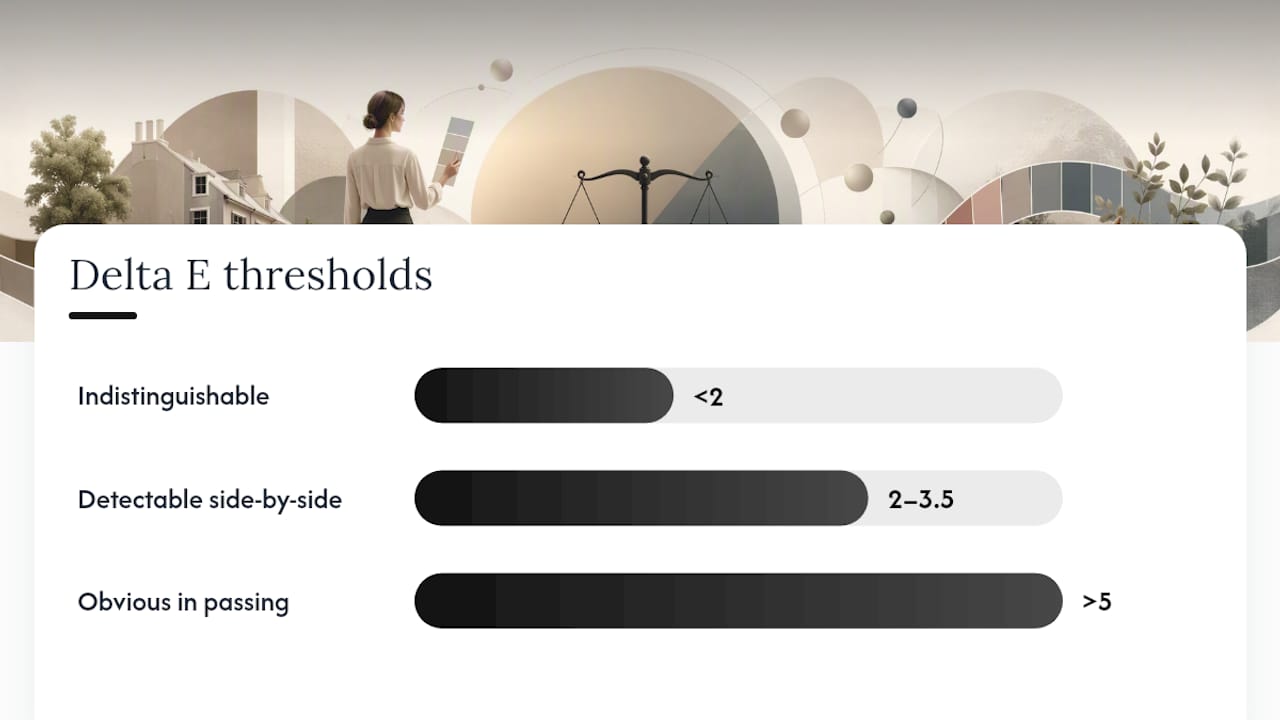
As a rough guide used across the colour-matching industry: a ΔE below 2 is generally considered indistinguishable to most people under normal lighting. Between roughly 2 and 3.5, differences become detectable if you're looking closely or comparing side by side. Above 5, the gap is obvious even in passing.
The catch: many converters calculate ΔE using published hex or RGB values scraped from screens, not measurements taken from an actual painted surface. Hex is a screen colour, calibrated for monitors, not pigment. A tool like Pontata's paint match finder ranks equivalents by ΔE and flags that anything above roughly 2 to 3 can show up under directional lighting or on a different substrate, which is exactly the scenario most respray and redecoration jobs involve.
Finish and sheen compound the problem further. A matt Farrow & Ball shade and a gloss RAL equivalent can carry the same underlying pigment and still look like two different colours in a room, because light behaves differently across each surface. Screen calibration, paint ageing, and the substrate underneath (timber, UPVC, plaster) all shift the result again.
Getting the most accurate professional match
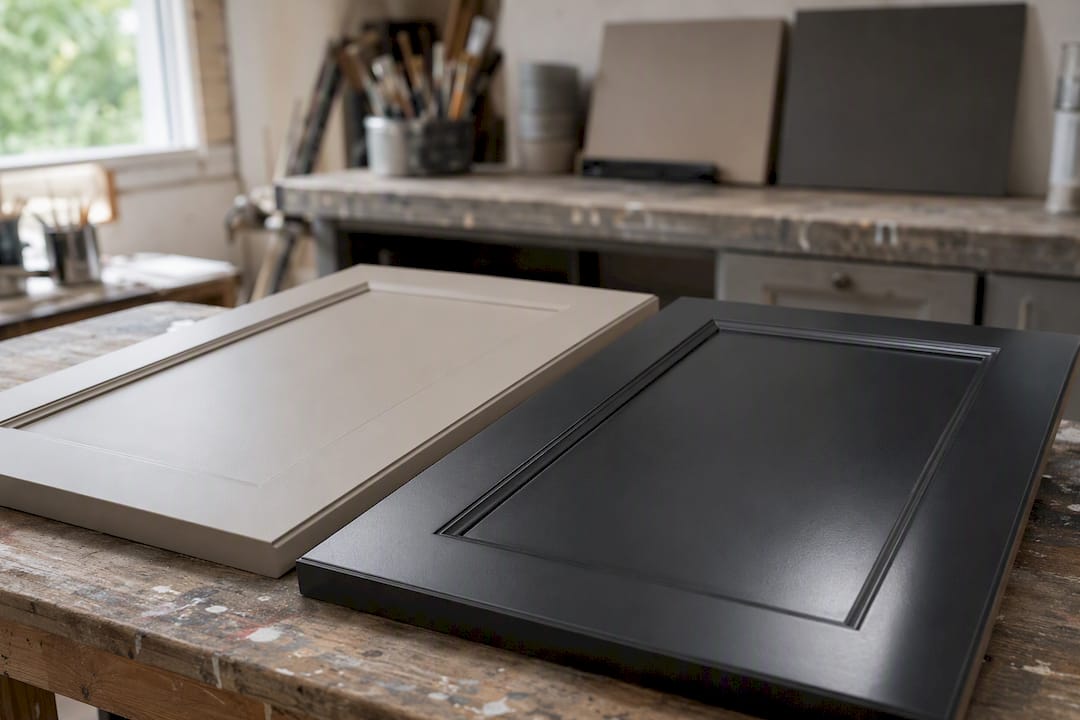
When a visual approximation isn't good enough, whether that's colour-matching a Farrow & Ball tin for a full kitchen respray or specifying a RAL equivalent for a whole terrace of UPVC windows, the workflow professionals use looks like this:
- Source a physical sample. A painted-out card, an offcut, or ideally a Farrow & Ball tester pot applied and cured on a surface similar to the final job.
- Scan it with a spectrophotometer. This instrument measures reflected light across the visible spectrum and produces precise Lab colour data, far more detailed than anything a hex value can offer.
- Convert the Lab data into a formulation within the target paint system, whether that's a RAL Classic tint, a BS 4800 reference, or a bespoke mix.
- Produce a test mix and check the ΔE. Reputable matching services aim for ΔE under 2 wherever the target paint chemistry allows it.
- Verify under natural daylight, not just workshop lighting, before committing to the full job.
For a straightforward domestic match, expect a professional colour scan and tint formulation to take a few working days, with sample pots or test panels adding another few days for drying and inspection before a full application goes ahead. Costs vary by supplier and paint system, but budget for the scan, the sample production, and a small contingency for a second test if the first mix needs adjusting under daylight.
Pro Tip: Always ask whether the ΔE quoted by a matching service was calculated against a physical scan or a published hex value. The two numbers are not interchangeable, and only the former tells you anything reliable about how the paint will actually look on your wall.
A quick way to verify a proposed RAL match yourself
You don't need a lab to sense-check a match before committing money to a full respray. Here's the sequence worth following:
- Run the Farrow & Ball name through an online converter and note the suggested RAL code and its ΔE score, if the tool provides one.
- Order a small sample pot or a sprayed test panel in that RAL from your target paint system, ideally on the same substrate you'll be using (UPVC, timber, MDF).
- View the sample at different times of day, in direct sun and shade, and note the room's Light Reflectance Value (LRV) if you have it. Undertones shift more than you'd expect.
- If it's close but not quite right, or the job is high-visibility (a front door, a full kitchen, a bank of windows), book a professional scan rather than compromising.
A few things worth flagging before you order anything:
- Photos and swatches on a phone screen are unreliable. Always check against a physical sample.
- Farrow & Ball's own fan deck remains the single most accurate reference for the true colour, if buying the original product is an option.
- A respray specialist working across finishes can advise on how sheen level will change the perceived match before you commit to a full job.
Pro Tip: Test panels dry lighter than they look wet, and most paints continue to shift subtly in tone for the first 48 hours as they fully cure. Never make a final call on day one.
Which tools actually help you find a RAL equivalent?
A handful of tools come up repeatedly when people search for Farrow & Ball conversions, and each does something slightly different:
- e-paint offers colour-matching data across multiple paint brands and is often used as a first-pass reference for professional specifiers.
- ral.to lets you browse the full RAL Classic palette and cross-reference by visual similarity.
- MatchThatPaint's dupe database shows that many Farrow & Ball colours have near-identical cross-brand equivalents at ΔE under 2, though a handful have no true dupe closer than around ΔE 5, meaning some shades simply won't reproduce well outside the original range.
- Color Designer's comparison tool is useful for checking ΔE between two specific colour codes once you already have candidates.
- Rawlins Paints, a specialist trade supplier, publishes explainer content and stocks RAL and BS reference materials for professionals who need physical swatches rather than screen approximations.
Use these for a quick sanity check on a low-stakes job. For anything permanent, visible, or expensive to redo, skip straight to a physical sample and, where the job demands it, a proper scan.
When to trust a converter and when to call in a professional
Accept an online RAL match for a quick cosmetic refresh: a single internal door, a shed, a piece of furniture nobody will scrutinise closely. The stakes are low and a ΔE of 3 or 4 rarely ruins the result.
For anything permanent, high-visibility, or expensive to redo, insist on a physical sample and, ideally, spectrophotometer verification. Substrate and finish change everything: a matt Farrow & Ball tone on plaster behaves nothing like a gloss RAL equivalent on UPVC. My rule of thumb: sample and spray a test panel for cabinets or radiators, but commission proper scanning for whole-house colour consistency or a full respray project, as seen in the benefits of a quick turnaround RTA cabinet for remodelers.
Get a professional colour match instead of a guess
There's a real gap between a ΔE score on a screen and paint on your actual windows or cabinets, and that gap is exactly where DIY converters let people down. Refinishingstudio closes it by working from the target colour you want, whether that's a Farrow & Ball inspiration, a RAL code, or a BS reference, and hand-spraying a factory-standard finish that's built to match, not just approximate.
Every project comes with a genuine choice of RAL, BS, or custom colours across matt, satin, eggshell, or gloss finishes, applied by hand rather than through a subcontractor, and backed by a five-year transferable warranty. That combination, an accurate colour brief plus a durable spray finish, holds up far better over time than a visual dupe applied without professional verification. If you're weighing up a Farrow & Ball look for UPVC windows, doors, or fascias, or a full kitchen cabinet respray, get in touch for a colour-match consultation and a site quote before you commit to a paint system.
Frequently asked questions
Does Farrow & Ball provide official RAL codes for its colours? No. Farrow & Ball has never published an official RAL conversion chart. Any RAL code attached to a Farrow & Ball name online comes from a third-party tool or supplier, not the brand itself.
How accurate is a Farrow & Ball RAL match from a free online converter? It depends on the ΔE gap and how the tool calculated it. A converter using measured Lab data can get close, but many rely on hex values, which are screen approximations rather than physical paint readings.
What's the difference between matching to RAL and matching to BS colours? RAL Classic and British Standard (BS 4800) are both fixed reference systems, but they use different numbering and slightly different colour ranges. Either works for specification, provided you and your contractor agree on the same standard from the outset.
Can a respray specialist match a Farrow & Ball colour exactly? A specialist can produce an extremely close match using a physical sample and professional colour data, particularly for UPVC and kitchen surfaces. An exact chemical match to the original Farrow & Ball product isn't guaranteed, since the paint systems differ, but a well-executed match is visually indistinguishable in most settings.
Sources
- Farrow & Ball Colours vs RAL, BS and NCS
- Color Designer — Compare colors
- Farrow and Ball Dupes | MatchThatPaint
- Paint Color Match — Find the Closest Color Across Every Brand