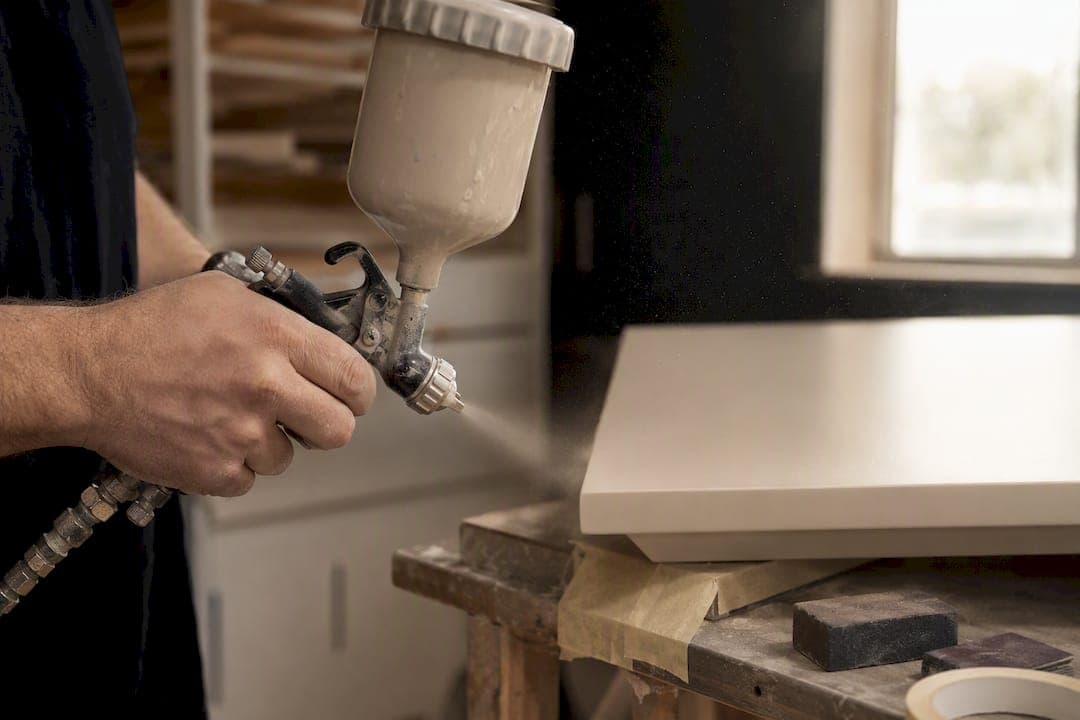
A professional hand-spray factory-standard respray is usually the right call for UPVC, aluminium or kitchen doors that are structurally sound but tired, dated or the wrong colour. It costs significantly less than full replacement and, done properly, looks and performs like the original factory coating. The next step is simple: book a site survey and get a written quote before you decide anything.
Two things worth checking before you pick up the phone:
- Ask whether the finish carries a five-year transferable warranty, which is the benchmark reputable specialists work to
- Look at real portfolio evidence, such as this forest green kitchen respray in Cardiff, to judge whether the colour matching and sheen actually hold up
TL;DR:
- Only respray substrates that are structurally sound and show no signs of delamination, swelling, or water damage to ensure long-term durability.
- Proper preparation, especially full stripping using mechanical or low-heat laser methods on MDF, is critical to prevent early coating failure.
- Hand-sprayed finishes using spray-gun atomisation deliver a uniform, factory-quality surface that surpasses brush or roller applications.
- Costs vary significantly depending on the scope, stripping method, and site access, so a detailed survey is essential for an accurate quote.
- Reputable specialists like Refinishing Studio offer proven results with over 1,000 projects and provide a five-year transferable warranty on UPVC and kitchen resprays.
Table of Contents
- What is a factory finish respray?
- Which materials can be resprayed, and when should you replace instead?
- How is the surface prepared before spraying?
- What finish options give a true factory standard?
- How long does it take and what does it cost?
- How do you choose the right professional?
- What happens on the day of your respray?
- How do you keep a respray looking factory-fresh?
- Why finish quality is the whole game
- Getting your factory finish respray quote from Refinishing Studio
- Key Takeaways
- Sources
What is a factory finish respray?
A factory finish respray is a hand-sprayed coating applied with a spray gun rather than a brush or roller. Atomisation breaks the paint into a fine, even mist, which is what gives the surface that flat, texture-free look you get on a new UPVC frame or a showroom kitchen door. Brush and roller work leaves visible strokes and uneven film thickness, which is exactly why it never quite passes for factory quality, however careful the painter.
The finish is only half the story. Getting proper adhesion on UPVC, aluminium or timber depends on the right primer or adhesion promoter for that specific substrate, because paint that sits on top of a slick UPVC surface without a bonding coat will peel within months.
- Spray-gun atomisation gives uniform texture and film build across every panel
- Substrate-specific primers create a mechanical and chemical bond that brush painting can't replicate
- The right system resists chipping, fading and yellowing far better than surface-level coatings
Pro Tip: If a quote doesn't mention a primer or adhesion promoter by name, ask what it is. "We just paint it" is the answer that precedes a respray that fails within a year.
Which materials can be resprayed, and when should you replace instead?
Most joinery around the house is a candidate. Here's what tends to respray well:
- UPVC windows, doors, conservatories and fascias
- Painted aluminium frames and garage doors
- Composite doors
- Solid timber
- MDF and veneered kitchen doors, provided the substrate itself is sound
The catch is condition, not material. Before committing, check for structural soundness, no delamination on veneer, minimal swelling around edges or handle cut outs, and no significant water damage. Respraying keeps usable doors out of landfill and costs far less than replacement, but only when the underlying board hasn't already failed.
Replacement is the honest recommendation when veneer has lifted, MDF edges have swollen or blown out, doors have warped, or you want a different door profile or layout altogether. An independent breakdown of structural warning signs on interior doors is worth a read if you're unsure whether your cabinets are past saving.
How is the surface prepared before spraying?
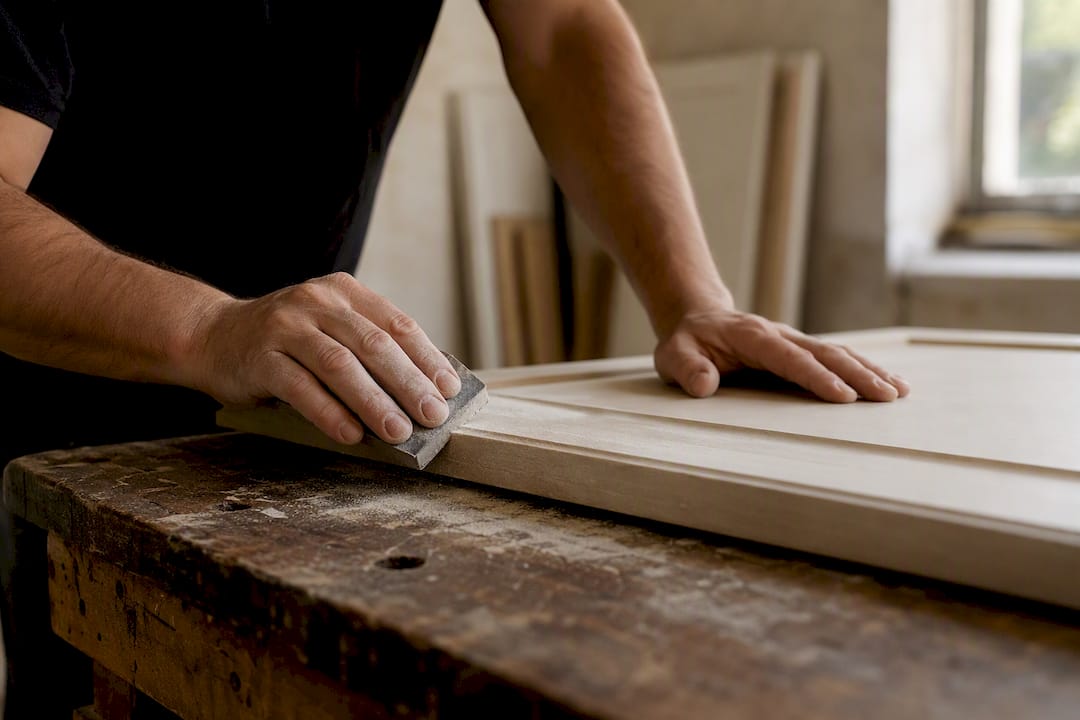
Preparation decides whether a respray lasts five years or five months. Old coatings with weak adhesion, silicone contamination, or a chalky, degraded top layer will undermine even the best paint system if they're not dealt with first. That's why reputable specialists distinguish between a full strip and a scuff-and-prime, and choose based on what the existing finish actually needs.
Three stripping approaches dominate the trade:
- Chemical or solvent stripping — effective on stubborn old coatings, but risks softening MDF cores if not controlled carefully
- Mechanical sanding and abrasion — reliable and low-risk on timber and UPVC, though slower on detailed mouldings
- Laser stripping — removes coatings without soaking or prolonged heat, which matters on MDF and veneered doors prone to swelling
The safest stripping strategy for MDF and veneered doors is a dry, low-heat method — mechanical or correctly tuned laser stripping avoids the edge swelling and blistering that chemical soaks and heat guns can cause.
Proper dust extraction and containment protect both the substrate and the surrounding room, and correct drying time between coats stops moisture getting trapped under the new finish.
Pro Tip: Ask specifically how kitchen doors are stripped, not windows. A method that's fine on solid timber can ruin an MDF edge in minutes.
What finish options give a true factory standard?
Sheen choice changes both look and practicality:
- Matt — contemporary, hides fingerprints well on kitchen doors
- Eggshell — a soft, low-glare middle ground popular on cabinetry
- Satin — durable, slightly more reflective, works well on UPVC frames
- Gloss — the highest shine, shows imperfections most readily
Colour matching to RAL or BS references, or a bespoke custom mix, is what lets a respray match an existing scheme or go completely bold, as shown in Refinishing Studio's forest green kitchen island project. A correctly prepared and sprayed finish should resist everyday knocks, UV fading and staining for years, and that's precisely what a five-year warranty is meant to back up.
How long does it take and what does it cost?
A typical project runs through survey, stripping, spraying, curing and a final walkthrough, usually spread across a few days depending on scope. Cost swings on a handful of factors: how many doors or frames are involved, which stripping method is needed, site access, the finish chosen, and how much on-site labour the job demands.
- Survey and quote: confirms scope and substrate condition
- Stripping and preparation: the most time-variable stage
- Spraying: applied in controlled conditions for even cure
- Curing: allows the finish to harden fully before handling
- Walkthrough: final inspection and sign-off with the customer
Treat any online price range as a rough guide only. Refinishing Studio's kitchen respraying cost guide is a useful starting point, but a firm figure only comes from a site survey, because access and door count vary hugely between a flat and a detached house.
How do you choose the right professional?
Ask direct questions before signing anything:
- Do you hand-spray, or is this a brush-applied job dressed up as a respray?
- What stripping method will you use on my specific substrate?
- What primers and paint systems are involved?
- How do you control overspray, dust and fumes on-site?
- Are your operatives directly employed, or subcontracted?
Trust signals worth requesting include a transferable warranty, real portfolio photographs rather than stock images, proof of insurance, and a track record you can verify. Refinishing Studio's UPVC service is built around a five-year transferable warranty and a direct-employed team with no subcontractors, which is the kind of detail worth asking any provider to match.
Red flags are just as telling: vague or undocumented warranties, no portfolio at all, pressure to skip stripping "to save time," or a quote that leans heavily on brush-and-roller work dressed up in spray-finish language.
Pro Tip: Ask to see one project that's at least two years old, not just fresh photos. Fresh paint always looks good. Longevity is the real test.
What happens on the day of your respray?
Preparation starts before the sprayer arrives:
- A survey confirms substrate condition, access and final colour and finish choices
- On the day, hardware is removed or masked and the work area is contained to control overspray and dust
- Spraying happens in controlled conditions, followed by a curing period before handling
- A final inspection and walkthrough confirms coverage, colour match and finish quality
For your part, clear access to the work area, move anything fragile nearby, and keep pets away from wet surfaces. Expect some odour during spraying and a curing window before doors or frames are back in full use.
How do you keep a respray looking factory-fresh?

Routine care is simple: wipe surfaces with a soft cloth and mild soapy water, and avoid abrasive pads or strong solvents that can dull the sheen. Small chips can often be touched up rather than requiring a full respray, and most reputable warranties cover this within the term. When reviewing a warranty, check the coverage period, whether it transfers to a new owner if you sell, and what's specifically excluded.
Why finish quality is the whole game
Over years of looking at respray work across South Wales, the pattern is consistent: the paint itself is rarely what fails. It's the preparation nobody sees. A door that looks flawless on handover but was scuffed rather than stripped will show its age within a year, while one that had proper substrate work done will still look sharp five years later.
That's the gap most homeowners don't know to check for, and it's why Refinishing Studio has built its reputation on over 1,000 completed projects and a five-year transferable warranty rather than just a nice-looking price. Get the preparation question right, and everything else about a factory finish respray tends to fall into place.
— Mitchell
Getting your factory finish respray quote from Refinishing Studio
Refinishing Studio is the practical alternative to a full kitchen or UPVC replacement in South Wales: you get a factory-standard hand-sprayed finish, a transferable five-year warranty, and a directly employed team with no subcontractors, all for a fraction of what new doors or frames would cost.

The service covers UPVC windows, doors, conservatories, fascias and garage doors, alongside full kitchen cabinet and door respraying, with matt, eggshell, satin and gloss finishes and bespoke colour matching to RAL, BS or custom references. Over 1,000 completed projects back that up, and the forest green kitchen island respray in Cardiff shows exactly what a well-matched, factory-standard finish looks like in a real home.
If your UPVC or kitchen doors are sound but tired, book a survey and get your quote for UPVC spraying and find out what a respray would cost for your property.
Key Takeaways
A factory-standard hand-sprayed respray restores worn UPVC, aluminium or kitchen surfaces to a factory-quality finish at a fraction of replacement cost, provided the substrate is properly prepared.
| Point | Details |
|---|---|
| Check condition first | Only respray substrates that are structurally sound, without delamination, swelling or major water damage. |
| Preparation decides longevity | Full stripping, using mechanical or low-heat laser methods on MDF, prevents early coating failure. |
| Hand-spray beats brush and roller | Spray-gun atomisation gives the uniform texture that defines a genuine factory finish. |
| Get a firm quote via survey | Costs depend on unit count, stripping method and access, so treat online ranges as guidance only. |
| Choose Refinishing Studio for proof | Over 1,000 completed projects and a five-year transferable warranty back its UPVC and kitchen respraying service. |
Primary sources and further reading
For an independent view on respray versus replacement, see LaserStrip's respray vs replace comparison. For proof of the client's own work, browse the full portfolio.