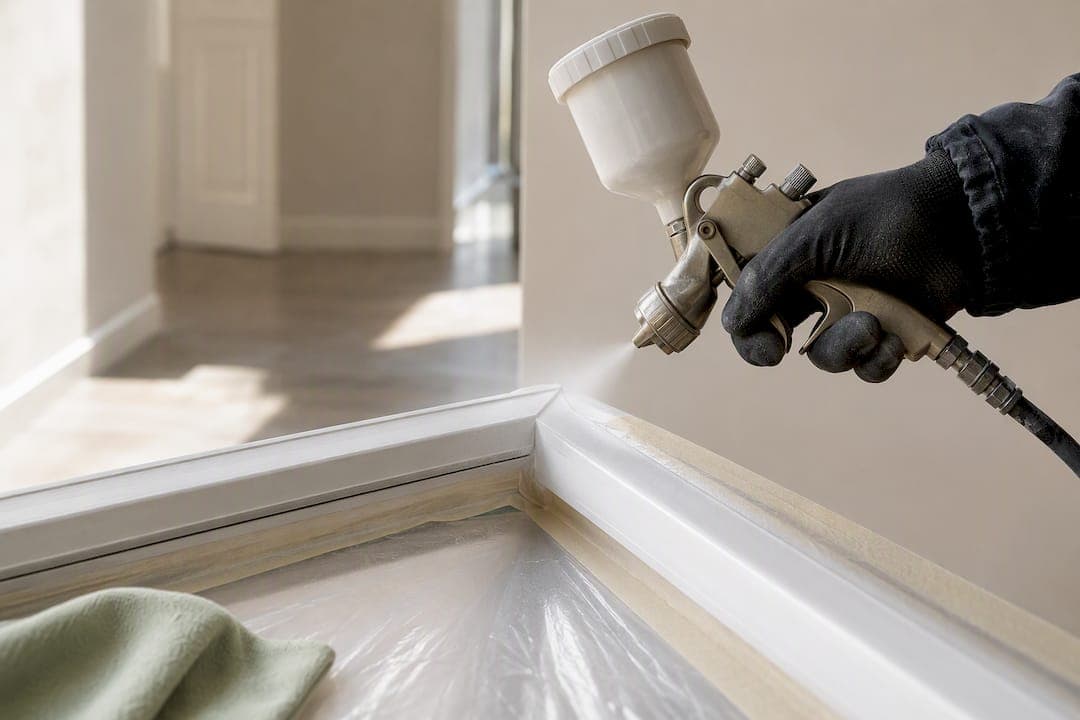
When applied professionally, decorative uPVC spraying does not change a window's thermal U-value or stop it working. The main exceptions are poor application, blocked drainage, mineral overspray from sprinklers, and abrasive cleaning after the job is done. The sections below explain the technical reasons why coating thickness barely touches thermal performance, and what to check before hiring anyone to spray your frames.
TL;DR:
- Decorative uPVC spraying only affects the surface finish and does not improve or degrade the window's thermal insulation or U-value.
- Proper application involves thorough cleaning, masking hardware, using flexible primer and coating, and controlled curing to prevent damage and preserve functionality.
- Repeated mineral buildup from garden sprinklers and improper cleaning can cause window damage, rather than the spraying process itself.
- Resprays typically last several years with regular gentle maintenance, but cannot fix structural or glazing issues that require replacement.
- Costs range from £80 to £2,200 per project, and the main consideration should be whether the frames are still sound or if replacement is the better option.
Table of Contents
- How spraying interacts with thermal performance
- What professional preparation and application actually involve
- The real risks that can genuinely harm your windows
- How long a professional respray lasts and what upkeep it needs
- Weighing up cost, disruption and whether to respray or replace
- What a decade of respraying jobs teaches you
- How Refinishing Studio can help if you are ready to respray
- Sources
- FAQ
How spraying interacts with thermal performance
A window's U-value, the measure of how much heat passes through it, comes from the glazing unit, the gas trapped between panes, the thermal break in the frame, and how well the whole assembly is sealed. A layer of paint measured in microns does not sit anywhere in that equation. It coats the outer surface of the frame and has no bearing on the cavity, the glass, or the seals that actually control heat loss.
It is worth separating decorative spraying from a different category of technology altogether: engineered water-spray or nebulisation systems designed to cool buildings. Research on these systems, including work referenced in MDPI's studies on water spray and cooling effects, shows that active water spray in specific fenestration systems can lower surface temperature and reduce cooling energy under laboratory and pilot conditions. That is a mechanical cooling technique built into the glazing system itself, not a coating applied to an existing frame, and the two should never be confused.
The practical takeaway for anyone weighing up a respray:
- A cosmetic respray will not lower your energy bills through improved insulation.
- It will not make your windows warmer or colder than they already are.
- It will not degrade the U-value either, provided the job is done correctly.
One of the clearer distinctions in the research is that nebulisation cooling systems reduce cooling loads in controlled experiments, while decorative spraying changes only the surface finish. Anyone expecting a respray to behave like an energy upgrade is comparing two unrelated technologies.
What professional preparation and application actually involve
A respray that protects your window's function follows a fairly consistent sequence, and skipping steps is where problems start.
- The frame is deep cleaned to remove grime, silicone residue and old coatings that would stop paint adhering properly.
- Handles, hinges, trickle vents and other hardware are masked or removed so that moving parts and drainage channels stay clear of overspray.
- A primer suited to uPVC is applied, followed by a flexible coating designed to move with the frame as it expands and contracts in the heat.
- The coating cures under controlled conditions before hardware is refitted and the window is tested for smooth operation.
Each step exists for a reason. Masking keeps weep holes and drainage channels open, so rainwater still escapes the frame instead of pooling inside it. A flexible, plasto-elastic coating matters because uPVC moves slightly with temperature, and a rigid paint would crack rather than flex, a point echoed in technical guidance on paintable frame sealants, which notes that compatible, movement-tolerant products are needed around frame joints.
Pro Tip: Ask any contractor for a written scope of work, before-and-after photos from previous jobs, and confirmation of the warranty before they start.
The real risks that can genuinely harm your windows
Spraying itself is rarely the problem. The damage homeowners actually report tends to come from elsewhere.
- Garden sprinklers that repeatedly overspray onto glass deposit minerals that build up over time.
- Abrasive pads or harsh chemicals used to remove overspray or clean frames can scratch the surface and strip protective coatings.
- Blocked drainage channels, whether from masking done carelessly or debris left in weep holes, can trap water against the frame.
Pilkington's technical guidance on sprinkler overspray warns that repeated mineral deposits from lawn sprinklers can stain or etch glass if left uncleaned, and recommends adjusting sprinkler positioning as prevention. The most common cause of visible window damage is this kind of hard-water overspray, not a professionally applied respray. Adjusting sprinkler heads away from glass, using soft cloths and mild detergent rather than abrasives, and checking seals and drainage once a year will do more for your windows than avoiding spraying altogether.
How long a professional respray lasts and what upkeep it needs
A good quality respray typically holds up well for years, though the exact figure depends on preparation quality, sun exposure, and the grade of coating used.
- South or west-facing frames that get more UV exposure tend to show wear sooner than shaded elevations.
- Regular gentle cleaning with soft cloths and mild soap keeps the finish looking sharp and prevents grime building up in corners.
- Avoiding prolonged contact with hard water, particularly from sprinklers, protects both the coating and the glass nearby.
- Annual checks on seals, weep holes and hardware operation catch small issues before they become expensive ones.
Respraying is a cosmetic and protective treatment, not a structural repair. If frames have warped, hinges have failed structurally, or the sealed glazing unit has misted between panes, no amount of coating will fix that. Those situations call for replacement rather than refinishing, since a respray can only restore what the frame and glazing are still capable of doing.
Weighing up cost, disruption and whether to respray or replace

Cost varies with the number of frames, how much preparation and repair the existing surface needs, whether you want a bespoke colour, and how easy the property is to access. UPVC window spraying is priced at £80 to £2,200 per project depending on scope, while UPVC door spraying runs from £250 to £650, and fascia and gutter spraying typically costs £350 to £850.
Most respray jobs are completed in a day or two with minimal disruption, since windows and doors usually stay usable while coatings cure. Before committing, ask yourself:
- Are the frames structurally sound with no warping or rot?
- Is the double glazing still clear, with no misting between panes?
- Do you simply want a colour change or refreshed finish rather than new performance?
If the answer to all three is yes, a respray is usually the more sensible route than full replacement.
What a decade of respraying jobs teaches you
A company specialising in refinishing has completed numerous projects and offers a five-year transferable warranty on their jobs. The most common mistake homeowners make is assuming any hard-water staining on their glass came from a recent respray, when it almost always traces back to sprinklers or years of untreated mineral build-up. A quick check of drainage channels and hardware movement before and after any job avoids most disputes.
— Mitchell
How Refinishing Studio can help if you are ready to respray
If your uPVC windows still work well but look tired, a professional respray gives you a factory-standard finish without the cost or upheaval of replacement. The respraying is done by hand rather than on a production line, with the same team handling the quote, preparation, and finish coat throughout.

What that means in practice:
- The service offers a wide choice of colours and finishes, includes a written warranty on the finish, takes payment only after customer approval, and does not use subcontractors.
A site visit lets us assess frame condition, confirm colour and finish, and give you a firm price before any work begins. If you would like a quote for your windows, get in touch through the UPVC window spraying page and we will arrange a visit.
Sources
Readers wanting to check the evidence directly can consult the PMC study on spray parameters and surface impact, the MDPI water spray cooling research, Pilkington's sprinkler overspray bulletin, and the Soudal frame sealant datasheet for compatibility and cleaning guidance. For a broader look at energy-efficient cooling measures, Frost Air Conditioning's guide to cooling your home explains why glazing or HVAC upgrades, not cosmetic spraying, are the proper route to lower cooling costs.
- MDPI - Studies on water spray systems and cooling effects
- Pilkington technical bulletin — sprinkler overspray guidance
- Soudal frame sealant technical data sheet
FAQ
Is it worth spraying uPVC windows?
Spraying is worth it when your frames are structurally sound but look faded, scratched or dated, since it restores a factory-standard finish at a fraction of replacement cost. It will not improve thermal performance, so it makes sense as a cosmetic and protective upgrade rather than an energy-saving measure.
How long does spraying uPVC windows last?
A professionally applied respray typically lasts several years, with exact longevity depending on preparation quality, sun exposure and the coating grade used. Regular gentle cleaning and avoiding contact with hard water or sprinkler overspray help the finish last as long as possible.
How much does it cost to have uPVC windows sprayed?
UPVC window spraying costs between £80 and £2,200 per project, depending on the number of frames, preparation needed and colour choice. Door spraying and fascia and gutter work are priced separately, so a site visit gives the most accurate figure for your property.
What are the downsides of painting uPVC?
The main downside is poor application: skipping masking, using rigid rather than flexible coatings, or blocking drainage channels can affect how the window drains and operates. When a professional handles preparation, masking and coating choice correctly, these risks are avoided and the frame's function stays unchanged.