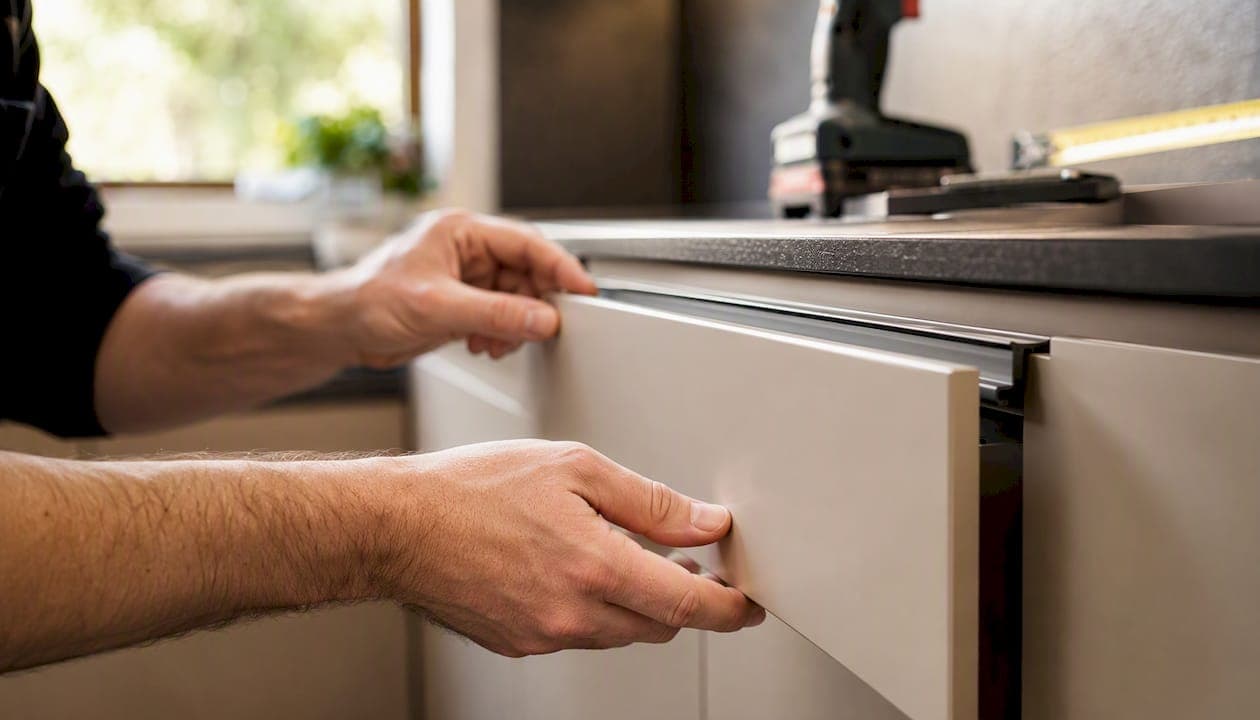
Yes, converting an existing kitchen to handleless is usually practical, and for most homeowners a retrofit rather than a full replacement gets you there. You keep your carcasses, keep your worktop, and swap the parts that actually create the handleless look.
Your realistic options, roughly in order of disruption:
- Add finger or lip pulls, or push-to-open hardware, to your existing doors
- Reface or replace door and drawer fronts with a J-pull profile
- Install a recessed Gola rail system (usually needs new fronts and sometimes new carcasses)
- Respray and refit as one combined job
- Full replacement, if cabinets are structurally poor
For most people wanting a smart finish without months of upheaval, a professional respray combined with a J-pull or push-to-open upgrade delivers the biggest visual change for the least mess.
Key Takeaways
Converting a kitchen to handleless is achievable through retrofit for most homeowners, and the right system depends on how much disruption, cost, and precision you're prepared to take on.
| Point | Details |
|---|---|
| Choose your system first | Gola gives the cleanest line but needs planning; J-pull is the easier retrofit; push-to-open suits lighter doors. |
| Audit before you order | Check door thickness, hinge type, carcass condition, and drawer weight before committing to hardware. |
| Budget by method, not size | Add-on hardware is the cheapest route; new Gola fronts or carcasses cost the most. |
| Pick fingerprint-resistant finishes | FENIX and matte lacquer show far fewer marks than gloss on grip-free fronts. |
| Consider a professional respray | Refinishingstudio combines handleless conversion with a five-year warranty and over 1,000 completed South Wales projects. |
Table of Contents
- What does "handleless" actually mean, and which system suits you?
- How do you actually convert your existing kitchen to handleless?
- How much does it cost, and how long does it take?
- Is a handleless kitchen actually a good idea for your household?
- Which finishes and materials suit handleless fronts?
- Why do so many homeowners choose a professional respray over DIY?
- What most guides get wrong about going handleless
- Get a handleless finish without a full kitchen replacement
- Frequently asked questions
- Sources
What does "handleless" actually mean, and which system suits you?
"Handleless" covers a few genuinely different systems, and mixing them up is the most common planning mistake homeowners make. True handleless, using a recessed Gola rail, hides an aluminium channel along the top or bottom of the cabinet run so your hand slides in with nothing to grip but the door edge. It gives the most continuous, architectural line of any option, but it needs planning and engineered cabinets built to accommodate the rail.
J-pull and angled finger pulls sit at the other end of the spectrum. Instead of a separate rail, the door itself has a routed groove or angled top edge that your fingers hook into. It is a more affordable route to the same aesthetic, and because it is built into the door front rather than the carcass, it is far easier to retrofit onto units you already own.
Push-to-open (sometimes called tip-on) hardware does away with a visible grip entirely. You press the door and a sprung mechanism releases it. It gives the cleanest slab-front look of the lot, but works best on lighter doors and less frequently used cupboards rather than heavy, high-traffic drawers, where a knock can trigger it accidentally if the hardware is cheap or poorly tensioned.
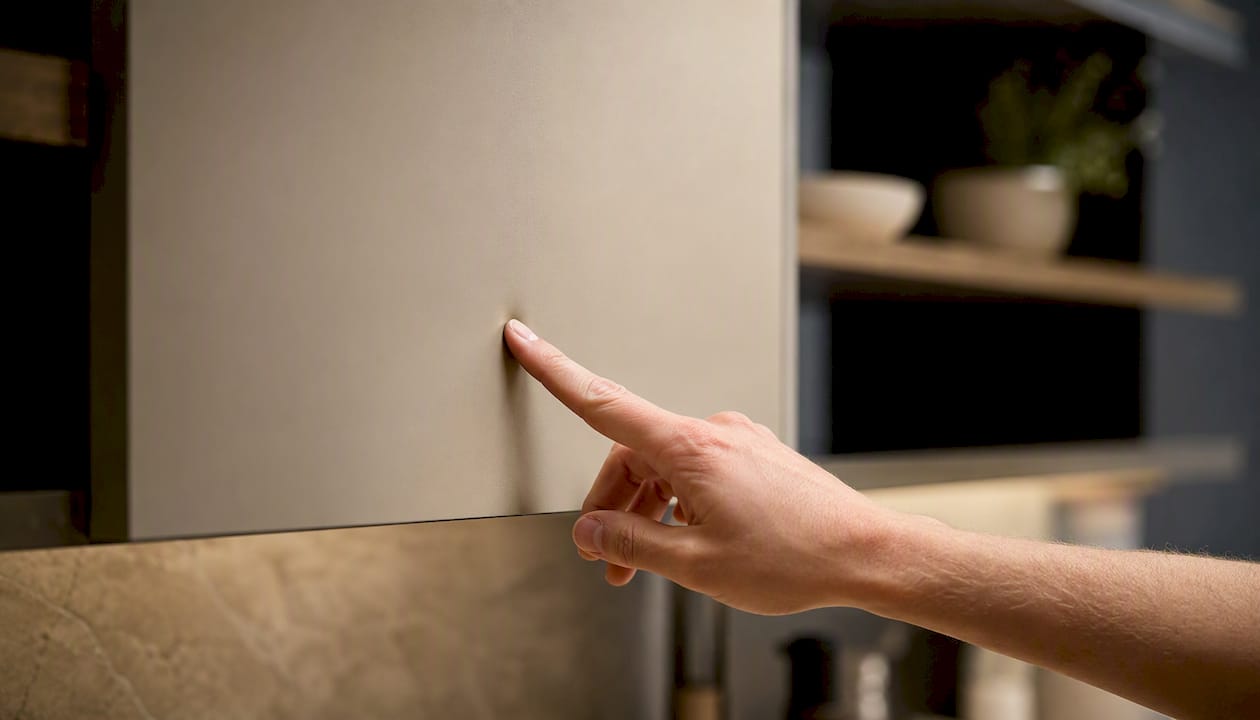
Electric and servo-assisted systems exist too, usually for tall larders or heavy pan drawers, opening with a light touch or a sensor. They are the most expensive and least common route, best reserved for specific problem cabinets rather than a whole kitchen.
There are four broad ways to get a handleless kitchen: Gola, J-pull, finger/lip pull, and push-to-open. Each changes both the look and how hard the job is to retrofit.
Pro Tip: Don't mix Gola rails on your wall units with J-pull on your base units unless you plan the transition carefully. The eye reads the two grip styles very differently, and a kitchen that switches system halfway up can look unfinished rather than deliberate.
How do you actually convert your existing kitchen to handleless?
Before you order a single part, audit what you have. Check door material and thickness, carcass condition, drawer runner weight ratings, appliance panel sizes, and whether your worktop overhangs or butts up against the cabinet line in a way that would interfere with a rail. This single hour of checking prevents most of the expensive mistakes people make on this kind of job.
From there, three practical routes cover almost every situation:
- Low disruption. Fit finger or lip pull hardware, or push-to-open catches, to your current doors, then respray the fronts for a unified finish. Good if your carcasses and doors are structurally sound and you just want the handles gone.
- Medium disruption. Replace or reface your door and drawer fronts with a routed J-pull profile, then respray or refinish to match. This works because J-pull retrofits are usually straightforward compared with recessed rail systems, since the change lives in the door, not the box behind it.
- High precision. Install a true Gola rail. This is the route most likely to need new carcasses or at least new front panels engineered for the rail, so it suits a fuller renovation rather than a weekend project.
A sensible DIY-versus-pro timeline: audit and measure (day one), source hardware and get quotes (week one), then either fit hardware yourself over a weekend, or book a professional for refacing or a full respray and handleless conversion over one to three weeks depending on scope.
Pro Tip: Record your exact hinge type, cup diameter, and door thickness before you order anything. Handleless hardware, especially push-to-open catches and J-pull channel profiles, is unforgiving of a few millimetres out. Getting this wrong is the single biggest cause of delayed installs.
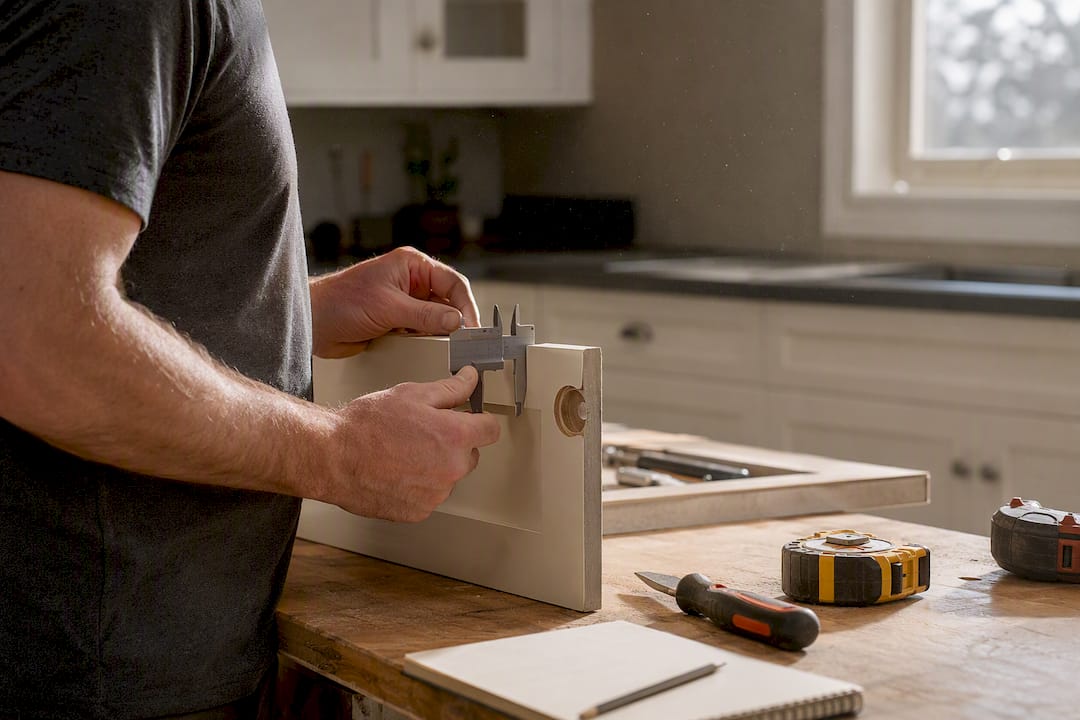
Precision matters throughout. Even a slightly misaligned rail or an inconsistent gap between doors breaks the seamless effect that makes handleless kitchens look expensive in the first place.
How much does it cost, and how long does it take?
Cost depends far more on which system you choose than on the size of your kitchen. The biggest single driver is whether you need new door fronts or can keep your existing ones; the second is hardware quality, since cutting cost on mechanisms tends to show up later as failure or misalignment rather than at installation.
| Conversion method | Cost band | Main driver |
|---|---|---|
| Add push-to-open or finger pulls to existing doors | Low | Hardware quality; no new fronts needed |
| Reface/replace fronts to J-pull profile | Medium | Number of doors and drawers, finish choice |
| Full Gola rail install | High | New carcasses or fronts, rail hardware, precision fitting |
| Full replacement kitchen | High | Cabinetry, worktop disruption, labour |
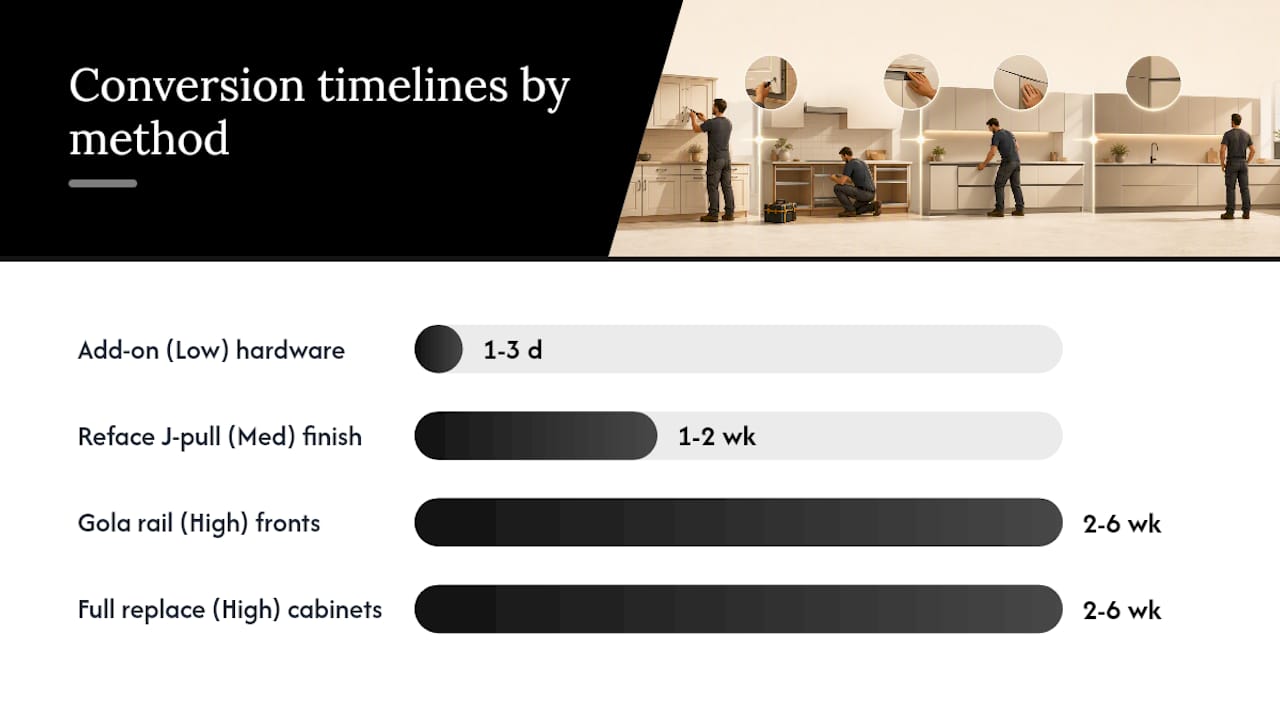
Timelines follow the same pattern. Add-on hardware jobs typically run one to three days. Refacing combined with a respray usually takes one to two weeks. A full Gola conversion, or a full replacement, can run two to six weeks once you account for manufacturing lead times on bespoke fronts.
Get quotes broken down line by line, not as a single figure. Measure twice before you commit to an order, since hardware returns on cut-to-size fronts are rarely straightforward.
Is a handleless kitchen actually a good idea for your household?
For plenty of households, yes; for others, it is a compromise worth thinking through first.
What you gain:
- A calmer, less cluttered visual line, particularly in smaller kitchens
- Easier movement past cabinets in tight galley layouts, since nothing snags on clothing or bags
- A finish that reads as contemporary and considered rather than dated
What you trade off:
- Fingerprints and smudges show more on dark or gloss handleless fronts, especially near handles-turned-grip-points
- Gola and routed systems are genuinely harder to retrofit than push-to-open or finger pulls
- Push-to-open mechanisms can release accidentally if bumped, particularly cheaper hardware
If you have young children or shared, high-traffic cupboards, finger pulls or J-pull tend to be more forgiving day to day than push-to-open. If accessibility is a priority, avoid systems that need a firm push, since J-pull or a shallow Gola groove needs less grip strength.
Which finishes and materials suit handleless fronts?
The finish matters as much as the system, since a handleless kitchen puts every fingerprint and smear on full display.
FENIX is worth knowing by name here: it is an anti-fingerprint surface material that resists marking better than standard laminate, which is exactly what you want on a grip-free door front. Matte lacquer is the more traditional alternative that hides fingerprints well, while laminate and wood veneer both suit a warmer, more traditional handleless look at a lower cost point. Interior door design trends are worth a look too if you're deciding on a broader material palette across a room, not just the kitchen fronts.
Keeping it clean is simple but easy to neglect:
- Vacuum or brush out Gola channels monthly; crumbs and dust settle in the recess.
- Wipe J-pull grooves with a damp cloth to stop grease building up in the routed edge.
- Check push-to-open catches periodically; a sticky mechanism is usually dirt, not a fault.
Darker gloss finishes near hobs and sinks show grease fastest, so choosing a satin or eggshell finish in those zones tends to age better than high gloss.
Why do so many homeowners choose a professional respray over DIY?
A DIY handleless conversion can work well, but the gap between a competent DIY job and a professional one shows up mostly in finish quality and alignment. Fitting your own finger pulls is forgiving; achieving a factory-standard sprayed finish across dozens of doors without runs, dust nibs, or colour variation is a different skill entirely.
Precision installation is what separates a handleless kitchen that looks architecturally deliberate from one that looks slightly off. Even small inconsistencies in door gaps or rail alignment disrupt the clean line the whole style depends on.
Refinishingstudio has completed many projects across South Wales and backs every professional respray with a multi-year warranty, something a DIY finish simply cannot offer. The difference in practice:
- Spray-finish consistency across every door and drawer front, not just the visible ones
- Dust-controlled application for a genuinely factory-standard result
- Precision alignment on rail and gap spacing
- A warranty against the finish, not just the hardware
Browse examples of completed kitchen respray projects to see the finish quality up close.
What most guides get wrong about going handleless
Most guides treat handleless kitchens as a single decision: yes or no. It isn't. It's four or five separate hardware decisions dressed up as one style choice, and conflating them is why so many DIY conversions end up looking patchy rather than sleek.
The conventional advice, "just add push-to-open everywhere," ignores that heavier drawers and high-traffic cupboards perform badly with tip-on mechanisms over time. The better approach mixes systems deliberately: push-to-open on lighter upper units, J-pull or finger pulls where hands reach constantly.
What I'd prioritise first isn't the hardware at all. It's the finish. A handleless kitchen puts every door edge and grip point under far more visual scrutiny than a handled one, because there's no handle to distract the eye. Get a poor-quality spray finish or a fingerprint-prone gloss, and the handleless look actively works against you. Get a durable, well-applied finish, even on modest hardware, and the whole kitchen reads as considered. That's the trade most homeowners get backwards.
Get a handleless finish without a full kitchen replacement
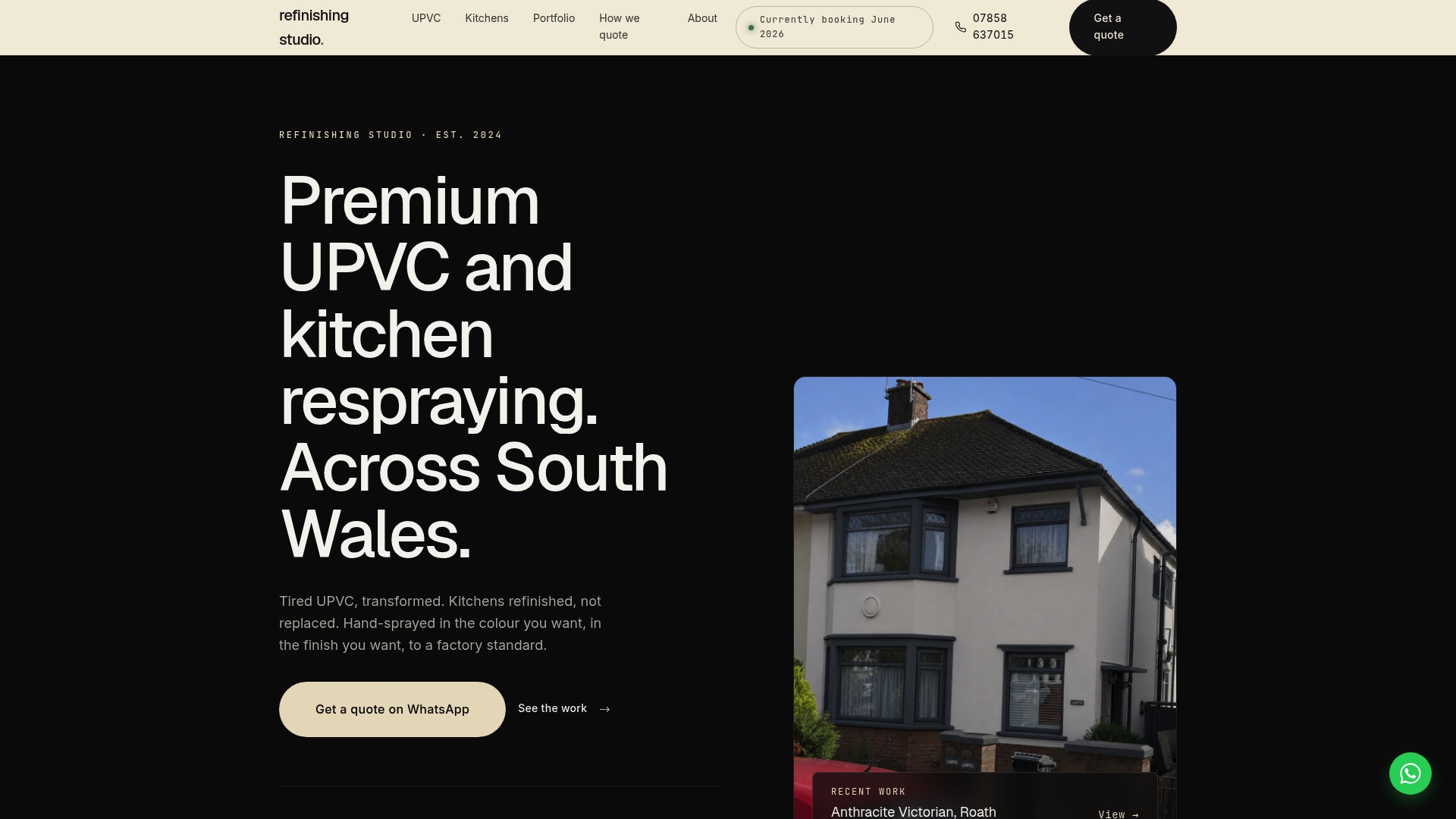
Refinishingstudio is the practical alternative to full cabinet replacement for South Wales homeowners converting to handleless: you keep your existing carcasses and worktop, and get a factory-standard hand-sprayed finish plus handleless hardware fitted as one job, backed by a five-year warranty.
Where DIY retrofit risks inconsistent spray finishes and misaligned gaps, and full replacement means weeks without a working kitchen, a professional respray and handleless conversion closes both gaps at once. No subcontractors, no rushed factory turnaround, just a hand-finished result checked against factory standards on every door. With over 1,000 completed projects across Cardiff, Swansea, and the wider region, the team has seen most of the retrofit pitfalls this article covers and plans around them before work starts.
If you're weighing up routes, get an accurate kitchen respraying cost estimate for your specific cabinet count and finish choice, or look through the kitchen respray portfolio to see handleless conversions completed nearby before you book a quote.
Frequently asked questions
Can you convert cabinets to handleless without removing the countertop?
In most cases, yes. Adding finger pulls, push-to-open hardware, or replacing door fronts doesn't touch the worktop. A Gola rail sometimes needs a small adjustment where the rail meets the countertop edge, so it's worth checking that junction during your initial measure-up.
Will a handleless kitchen date quickly?
Handleless designs have held their popularity for well over a decade because the underlying appeal, a cleaner sightline, isn't tied to a specific colour trend. Choosing a neutral or classic finish rather than a fashionable accent colour extends that further.
Can you add handles back later if you change your mind?
It depends on the system. Doors that were simply resprayed with existing handle-ready drillings can usually take handles again easily. Fronts remachined for J-pull or Gola typically cannot revert without replacing the door itself.
Is a handleless kitchen a good idea for a family with young children?
Generally yes, provided you avoid push-to-open on low, frequently used cupboards where accidental triggering is more likely. Finger pulls and J-pull tend to hold up better under constant, less careful use.
Do I need a professional for a Gola rail install?
Almost always. Gola systems need precise carcass or front engineering, and even small misalignments are visible across a whole run of cabinets, which is why most homeowners hand this specific job to a professional rather than attempting it themselves.
Sources
- The Ultimate 2026 Guide to Handleless Kitchen Cabinets
- Handleless kitchen cabinets: 4 ways to get the look
- Handleless kitchens explained: True handleless vs J‑pull
- Handleless kitchen: Design from a single mould | BORA
- Is handleless kitchen cabinet hardware right for you? A guide